AI Tour Guide Systems, Museum Audio Guides and Rental Cabinets
Updated 22 Oct 2026 · line pages list every model with its published specification
The visitor takes a device by scanning a code, hears the right track when they walk up to the right object, and drops it back in the slot on the way out. We build all four parts of that loop — the cabinet, the player, the wearable receiver and the group set — on one firmware and one management console, so a site does not end up with three vendors and no single answer when something stops working.
Cabinets from 10 units
Players & receivers MOQ 500
CE RED · FCC · RoHS · UN38.3
Payment-agnostic cabinet
OEM shell, UI & livery
The commercial case
A guide device is the only exhibit that can charge for itself
Most attractions run audio guides with a counter, a paper sign-out sheet and a staff member who is also needed somewhere else. A self-service cabinet removes the counter, keeps a record of every unit leaving the slot, and turns guide hire into something a site can measure per language, per gallery and per hour.
Small ticket, high margin, no queue. A hire device is a few euros per visitor, which is exactly the price point that does not need a decision from anyone. The revenue shows up in the ancillary line the operator already reports on, and it survives the days when the ticket desk is short-staffed.
The cabinet is the product, not the gadget. Buyers underestimate it. Slot locking, charging current per bay, what happens when a visitor walks off with a unit, how a deposit is released, how the site name gets onto the screen in four languages and how the thing survives a frosty entrance hall at 06:00 — that is where projects succeed or die, and it is where we spend most of the engineering time.
Positioning is the honest part. Auto-trigger narration works: BLE beacons indoors, satellite positioning outdoors, RFID or loop at fixed exhibits. What does not work is a supplier promising “it always knows where the visitor is” in a stone-built fortress with three-metre walls. We survey the route with you and write the trigger plan before we quote the hardware.
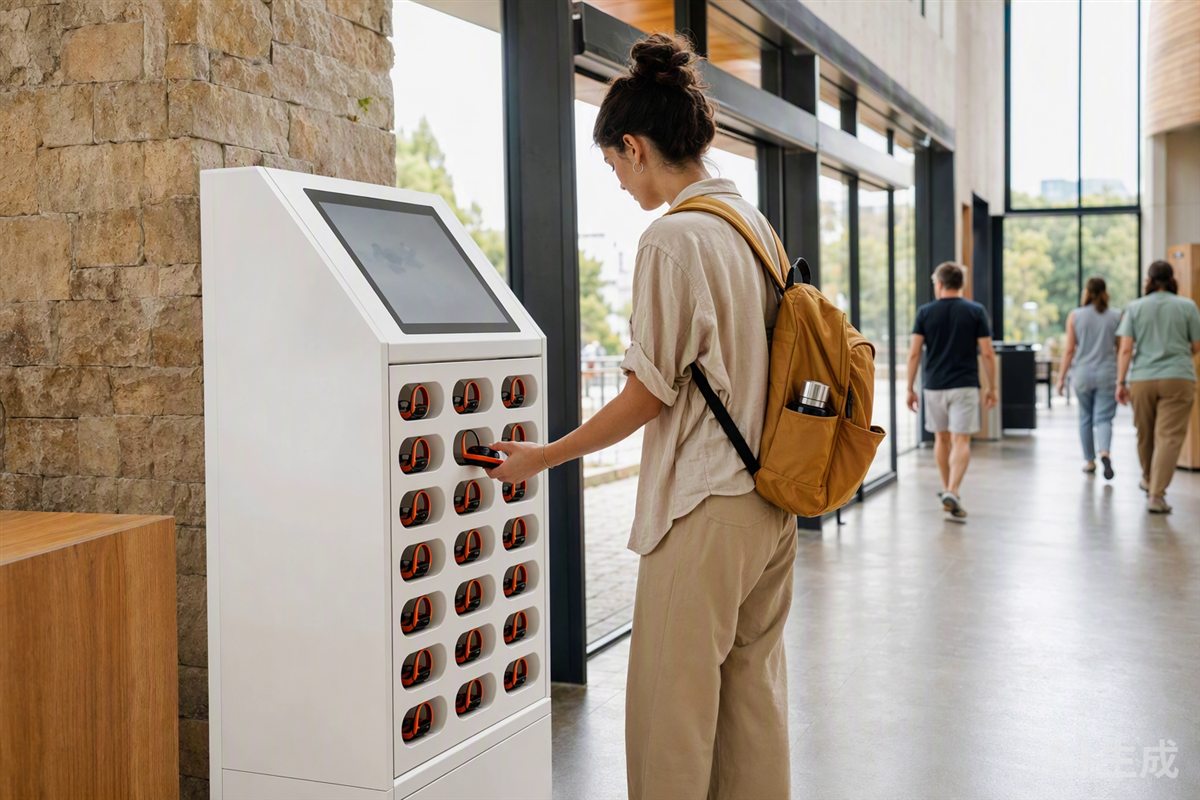
A floor-standing cabinet in a visitor centre lobby: touchscreen above, 40 charge-and-release bays below.
Who we sell this to. Museums and heritage sites, city tour operators and inbound DMCs, zoos and aquariums, vehicle and factory tours, hotels with a visitor route, and rental operators who place cabinets at several sites and manage one fleet. Distributors and AV integrators buy it as a project line, not a shelf line — the paperwork is different and we price it that way.
The line
Four components, one firmware family
Pick the shape that fits the visit: a cabinet that hands devices out and takes them back, a player a visitor holds, a wearable they forget they are wearing, or a group set for a guide with a party.
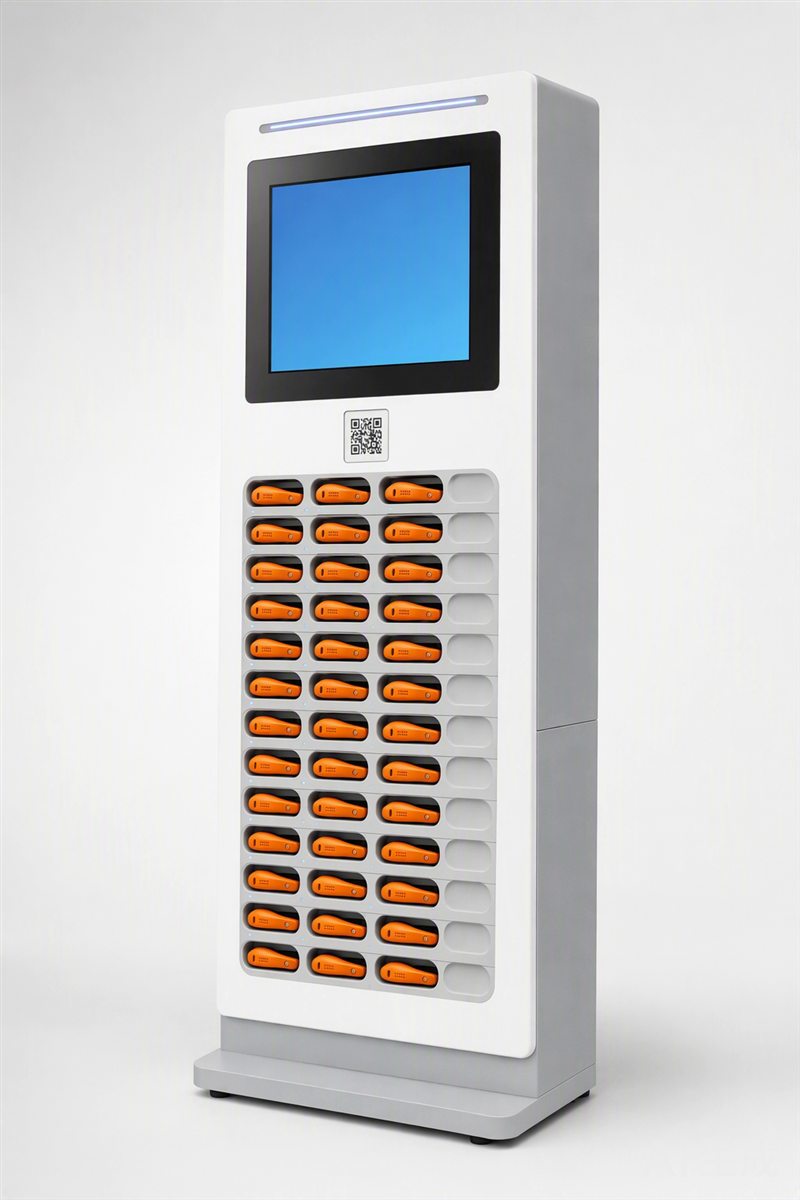
G3 Self-Service Guide Rental Cabinet
Floor-standing, wall-mounted or with a payment terminal mount. 20, 40, 60 or 80 bays, each charging and releasing independently; QR or contactless start, deposit logic you set, and a live occupancy report the site manager can read on a phone.
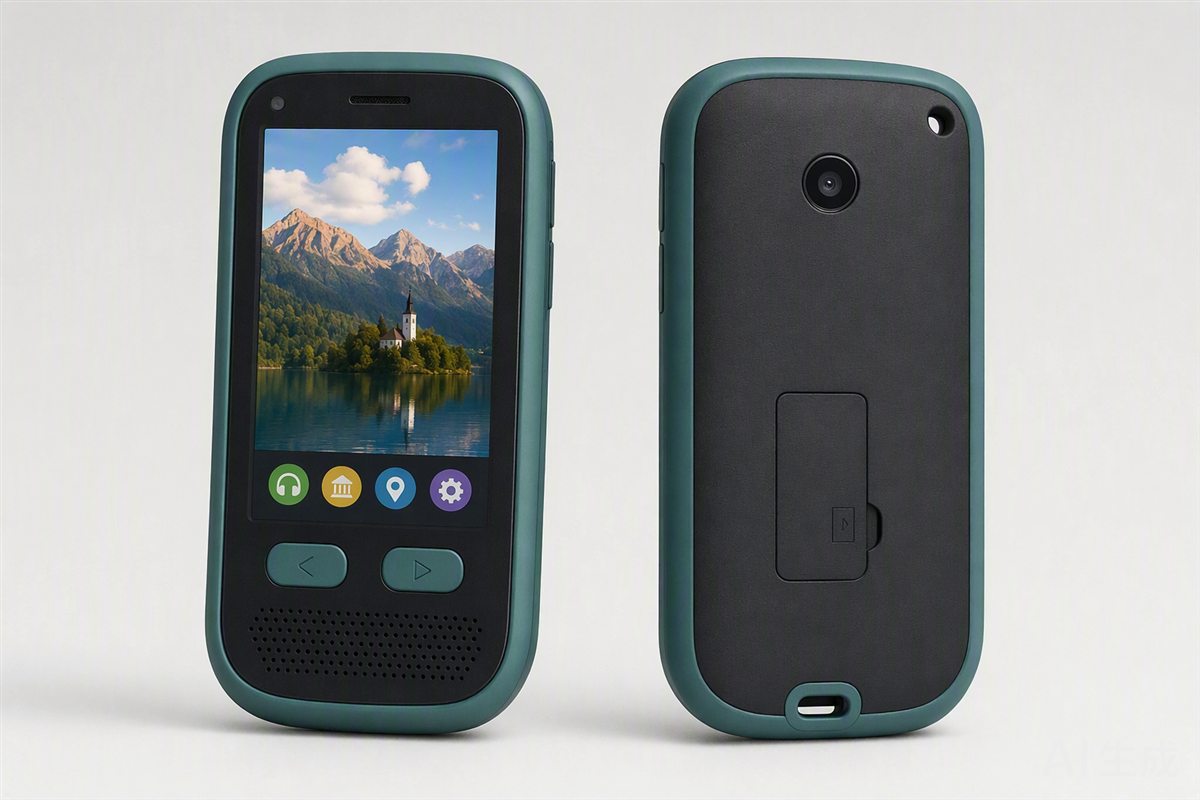
The visitor-held unit: 3.5" colour screen, satellite and beacon positioning, an AI voice answer layer over the site script, camera for exhibit recognition, and a SIM slot when the site has no usable Wi-Fi. Ships with the content console, not a locked app store.
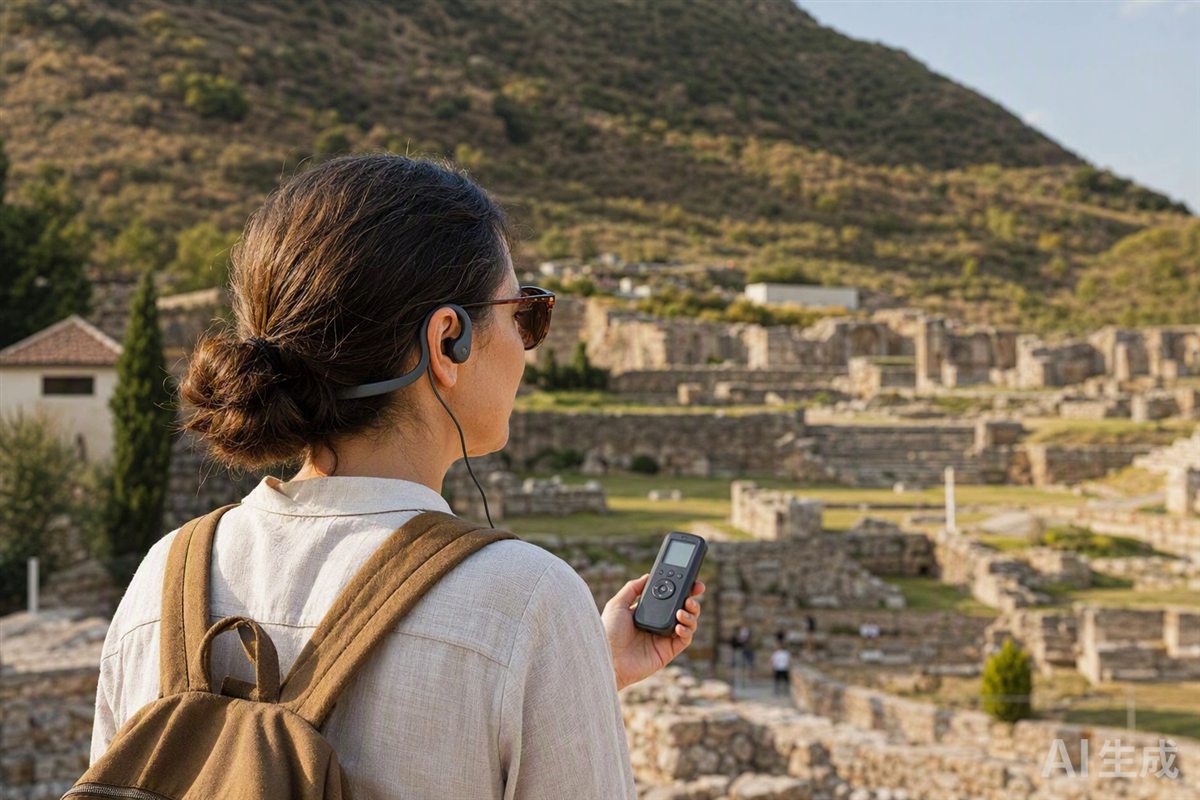
The wearable that comes out of a cabinet bay: ear-hook design that leaves the canal open so a visitor still hears the traffic, the guide and their own children. Ten-plus hours per charge, volume keys on the stem, and a shell that survives a drop on cobblestones.
One transmitter, 15 to 30 receivers, tour-channel discipline for a guide walking a party through a noisy square: short range, no queue at the headsets, and a charging tray that returns the fleet to full between departures. Quoted as a set with spares.
Desk issues a small pool; the cabinet carries the overflow and the out-of-hours arrivals.
One stock count per shift, and a role that can empty the float
Sites with a mixed season
The payment question, answered plainly. Cabinets built for the Chinese market scan a WeChat or Alipay code and hold a deposit through that wallet. That is not available to a visitor in Rotterdam or Toronto. Our export builds are payment-agnostic: the cabinet exposes a start session and waits for a confirmation, and you connect it to the contactless terminal or payment service you already hold a merchant account with. We supply the integration layer, the terminal mount and the failure behaviour — we do not become your acquirer, and no honest supplier will.
Content, languages & data
Who writes the narration, and where the audio lives
The hardware is a small part of a guide project. The script, the recordings and the trigger map are the project.
Script and audio. Sites usually already have panel text; that is not a soundtrack and should not be read out as one. We supply a script structure (stop, hook, 45–70 seconds, one idea) and a language matrix, and we can record and master in the languages you need — or take your finished MP3 package and load it. Your curators keep editorial control; we do not write history for anyone.
Delivery. Tracks are pushed to the fleet over Wi-Fi or the cellular link, with a version number per site so a gallery that closes for refurbishment does not keep narrating a case that is not there. Beacon batteries and their replacement interval are part of the maintenance plan, not a surprise in year two.
Data. The console reports device movement against trigger points — which stops actually get listened to, where visitors turn back, which language runs out first. Visitor-side personal data is not required for any of this; we run the analytics on anonymous device sessions and give you the wording your data-protection officer will want to read before the first cabinet is switched on.
Every bay, every slot and every unit is exercised on the line before packing — a dead slot is the fastest way to lose a site's trust.
What we will not claim. No “100 % accurate positioning”, no disinfection efficacy percentage without a test report against a named standard, no “works everywhere with no survey”. Send us the floor plan or the route and we will tell you which trigger technology fits which part of it.
Where this gets used
Scenic areas, museums and visitor interpretation
The same firmware family covers the three settings buyers specify it for: a scenic area or heritage site with an outdoor route and satellite triggering; a museum gallery with beacon zones and fixed exhibit triggers; and a guided-tour operation where one transmitter speaks to a group of receivers. Tourist attraction interpretation equipment is usually one of two different products — visitor interpretation (recorded or AI-answered content at an exhibit) or a group tour guide system (a live guide speaking to visitors in noise). Tell us which the plan describes and the specification changes accordingly.
A fifth form the same route can take
The route can also run on the visitor's face
The same stop list, the same narration masters and the same positioning question — delivered with nothing held in the hand. Our AI tour glasses recognise the exhibit a visitor is looking at, decide which stop that is, and speak the track in the language that visitor selected.
Treat it as a premium tier, not a replacement. Open-ear receivers stay the economical answer for a hundred schoolchildren at once, and the cabinet remains the issuing, charging and reconciliation backbone — a bay insert can be tooled for the glasses case from ten cabinets. Sites that trial it run a small glasses fleet beside the existing fleet and let the hire numbers decide the mix.
Said plainly, because the phrase is used loosely: these glasses carry no display in the lens. They see, hear and speak. If an interpretation plan needs text or arrows in the visitor's field of view, that is a different hardware family and an ODM conversation, and we would rather have it at the start of a project than in a board paper after one.
What carries over from this line unchanged: the content format your curators already write, the browser console, the per-session record, offline caching of narration, and the survey-first method for deciding which stops take beacons, which take visual matching and which need a satellite fix.
Questions buyers ask about this line
Can the cabinet work without a network?
Yes, and it should be planned that way. Sessions, takings and return records are held on the cabinet and reconciled when the link returns, so a bad signal in a basement gallery does not stop a visitor collecting a device. What needs the network is remote content push and live occupancy, and both queue rather than fail.
What happens to a device that leaves the site?
The bay records the release against a session, so you know the exact minute and which language was selected. Sites handle it three ways: a deposit that is forfeited, a contact record taken at release, or an accepted shrinkage rate priced into the hire. Tell us which and we configure the release logic and the screen wording to match — we will not pretend a lock prevents a determined exit.
Is the UV lamp in the bay a hygiene claim?
It is a maintenance feature, and it must be described that way. A short UV-C cycle between returns reduces surface contamination; it is not a sterilisation guarantee and we will not put an efficacy figure on your box unless a test report against a named standard exists for the lamp, geometry and cycle time we ship. The honest operational statement is that high-touch surfaces are also wiped on a schedule.
How many cabinets does a site need?
Start from peak arrivals per hour, not from floor area. A site that admits 400 people an hour and expects a 30 % take-up needs roughly 120 devices in circulation, which is two to three 60-bay cabinets split across entrances. We will size it with you from your ticketing numbers rather than sell you the biggest unit we make.
Can we put our own brand on it?
Yes — cabinet livery and screen skin, shell colour on the receivers, logo moulding from 3,000 units, and your own domain and language set on the console. See the OEM/ODM page for what changes at each tier.
What is an AI tour guide, and does it still need a device?
An AI tour guide is the content layer: narration, question answering and language switching driven from an approved knowledge base for the site. It still needs hardware in the room — a guide player or receiver with positioning, an audio output the visitor can hear over gallery noise, and a charging path that returns units to service. The app can carry the answers; the venue still needs devices that survive a peak day.
Museum audio guide equipment: what does a tender usually specify?
Expect device count derived from ticket data, language list, positioning method (beacon zones, satellite at open sites, or fixed triggers at exhibits), charging or rental model, content format and who owns it, accessibility provision, and a service response commitment. The specification is where a quote is won or lost, not the catalogue photo.
Is interpretation equipment the same thing as a tour guide system?
Not always — the phrase carries two meanings. Visitor interpretation is exhibition content delivered on site: audio, text and triggers at an exhibit. Simultaneous interpretation is conference equipment with microphones and channel receivers for live translation. A tender that says interpretation equipment should be read for which one it means before anyone quotes a guided-tour system.
Tour guide system rental or purchase: how do operators decide?
By duty cycle and staffing. A site with steady daily groups usually buys a fleet and runs its own charging and hygiene routine; a site with seasonal peaks or several small tours a day rents, and prices the deposit, damage and replacement terms into the ticket. The deciding numbers are peak concurrent visitors, closing-time queue at the charging bay, and who cleans between visitors.
Where this sits next to our other lines
The same visitor route can be served by three of our catalogue families, and the right answer depends on who is holding the device. A pocket translator answers a question a visitor asks; a guide player answers a question nobody asked out loud; AI glasses put the answer in front of the eyes and are still the hardest of the three to insure, charge and hand over at a desk. Most museums we supply end up with a cabinet plus a player, and the translator in the gift shop for the staff.
Buyer notes
Related reading
Short pieces from the same workshop: what a standard actually asks for, where the cost hides in an order, and what to test before you commit.
Smart glasses industrial buyers need separate validation paths for enterprise and retail — here’s how the same hardware meets both, with compliance, durability and p
What European public venues must now provide — hearing loops, captioned narration and step-free routes — and how WingPhoenix AI hardware supports compliance without
When signal is absent and failure is not an option, verify language coverage, firmware validation and compliance scope — here’s how to interrogate the supplier.
Plug type, cable marking and spares policy decide whether your AI accessory clears customs. Here is how to scope charger certification by country before you commit.
Two architectures for voice on AI devices, and why the choice decides your app-store path, your BOM and your certification scope. Read before you brief a supplier.
Number of entrances, peak arrivals per hour, languages, indoor or outdoor, and whether you want paid hire or a free loan. You get a configuration, a trigger plan and a per-unit quotation.