Smart Glasses Industrial: Two Checklists for One Hardware Platform
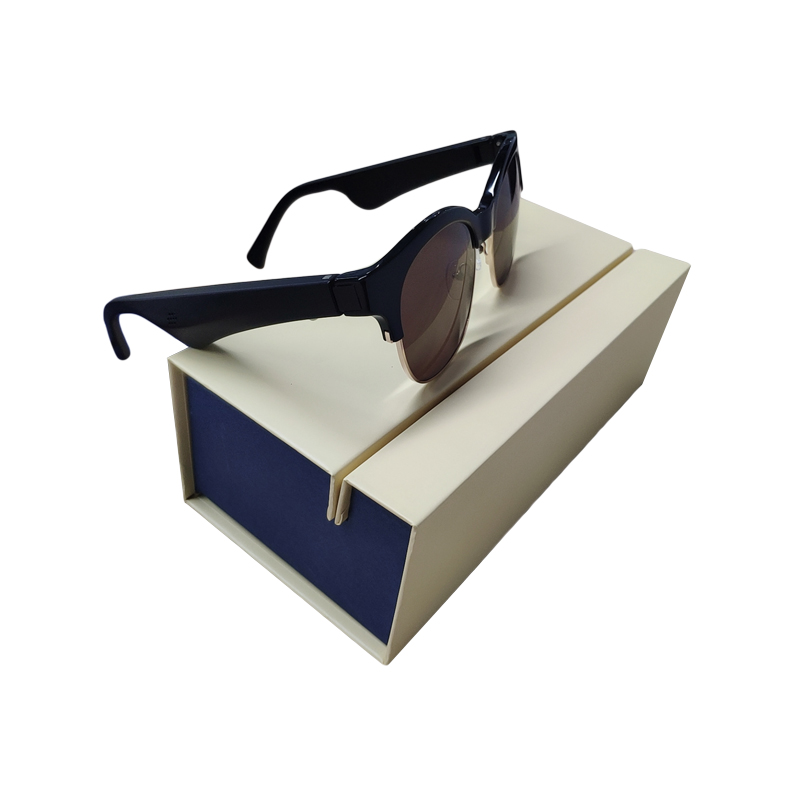
Same chassis, divergent validation
The Vox One AI glasses and Vox Ride AI cycling glasses share core optics, battery architecture and thermal design. But their acceptance criteria split at the first engineering gate. Industrial buyers must verify firmware versioning, thermal throttling logs under sustained CPU load, and mechanical retention of the temple hinge after 5,000 open-close cycles — none of which appear in the retail FQC report. Retail buyers instead inspect surface finish consistency, strap elasticity tolerance, and packaging alignment with EN 71-1 for physical hazards. Both paths begin with the same IQC gate for lens clarity and PCB solder integrity, but diverge immediately after.
Durability: Not a rating, but a test scope
Durability is not a published IP code or shock class. It is a documented test scope booked per hardware revision with an accredited laboratory. For enterprise buyers, this means specifying whether you require verification against MIL-STD-810G Appendix C (Shock), Method 516.6 (Drop), or EN 60068-2-64 (Vibration). Retail buyers confirm compliance with EN 62368-1 Clause 4.4.1 (mechanical strength) and EN 71-1 Annex A.2 (sharp edges). Neither path uses the other’s test evidence. You will receive separate test summaries — one for the factory’s quality control process, another for your deployment environment. No certificate is issued unless the test is booked, paid for and completed before mass production.
Compliance: Where the documents fork
All smart glasses ship with CE RED (EN 300 328, EN 301 489, EN 62368-1), RoHS 3 and REACH SVHC screening. But industrial deployments may require additional documentation: a Class 1 laser statement if LiDAR is enabled, an EMC report scoped to industrial frequency bands, and a formal risk assessment signed by our engineering lead. Retail shipments include EN 71-1/-2/-3 and EN 62115 only if the packaging carries an age grade — and only if that grade triggers toy scope testing, booked per build. UKCA is available on request; it is not auto-included. You decide what goes into your technical file — we supply only what is tested and verified.
Procurement thresholds shape what you get
Minimum order quantities define access to configuration options. The standard MOQ for AI glasses is 500 units. Below that, only stock configurations ship — no firmware white-label, no custom branding, no modified power management profiles. At 2,000 units, you unlock full OEM/ODM services including app rebranding and firmware partitioning. For industrial buyers needing secure boot or remote wipe capability, those features require firmware white-label — meaning the 2,000-unit threshold applies even if you intend to deploy only 300 units initially. That threshold is non-negotiable because it funds the lab time, tooling and validation required to isolate and sign firmware builds. You can read more about how these thresholds map to engineering effort in our OEM/ODM services page.
What this process cannot do
This process does not validate real-world operational reliability beyond the defined test scope. There is no long-term field study report covering 12 months of continuous wear in oil-and-grease environments, nor is there a documented failure mode analysis for lens fogging in high-humidity manufacturing zones. Those reports do not exist. If a supplier claims otherwise — or cites “field data from 500+ sites” without disclosing test duration, environmental controls or failure definitions — you should decline the claim and request the raw test summary. WingPhoenix supplies only what is measured, documented and repeatable per revision. You can review our approach to test transparency in the how we build and test section.
Deployment-ready documentation checklist
Before placing an order, confirm which documents align with your deployment context. This table reflects actual deliverables — not promises — and maps directly to the factory policy and test booking process.
| Document | Industrial Use | Retail Use | Booked Per |
|---|---|---|---|
| CE RED (EN 300 328, EN 301 489) | Yes | Yes | Hardware revision |
| EN 62368-1 (safety) | Yes | Yes | Hardware revision |
| UKCA | On request | On request | Shipment |
| EN 71-1/-2/-3 (toy safety) | No — unless age-graded packaging | Only if packaging shows age grade ≤14 years | Packaging build |
| MIL-STD-810G Appendix C | Only if booked and paid | Not offered | Hardware revision |
| Class 1 laser statement | Only if LiDAR enabled and booked | Not applicable | Firmware + hardware revision |
| Battery UN38.3 + SDS | Yes | Yes | Cell batch |
| EN 1811 nickel release | Yes — for skin-contact parts | Yes — for skin-contact parts | Build material lot |
WingPhoenix delivers consistent hardware — but industrial and retail buyers must actively select and book the validation path that matches their deployment. Do not assume cross-market compliance. Before ordering, send us the specification outlining your use case, required documents and intended distribution channel. We will confirm which tests, certifications and MOQ tiers apply — and flag where your requirements exceed current scope. You can explore broader context in our AI glasses market trends report and browse related devices including health smartwatches and translation earbuds. All product details are in the product catalogue.
Questions buyers ask
Why do enterprise and retail buyers need different acceptance criteria for the same smart glasses model?
Because industrial use cases demand verified environmental resilience, traceable firmware control and documented risk assessments — while retail prioritises consumer safety standards, packaging age grading and aesthetic consistency across units.
How does WingPhoenix handle certification when the same hardware ships to both markets?
Each hardware revision books separate test scopes: CE RED and RoHS 3 apply to all, but EN 62368-1 is validated per build, UKCA is requested per shipment, and laser or EMC reports are added only where the use case requires them.
What happens if a distributor receives a sample that passes retail QC but fails an industrial drop test?
The sample was likely built to the retail QC gate (AQL 2.5 major, 4.0 minor); industrial deployments require pre-shipment verification against MIL-STD-810G Appendix C – Method 516.6 Shock, booked separately per order.
What claim do most suppliers make about smart glasses industrial durability that WingPhoenix does not?
We do not state IP67 or MIL-STD-810G compliance as a default feature — those are test scopes booked per hardware revision with an accredited laboratory, not inherent ratings printed on the spec sheet.
Related: more on ai glasses · buyer guides · customisation tiers