Accessible Audio Guide Hardware for European Public Venues
What Venues Are Expected to Provide
European public venues — museums, galleries, historic buildings and national parks — are increasingly expected to deliver layered accessibility: audio content compatible with hearing aids via induction loop systems, real-time captioned narration for deaf and hard-of-hearing visitors, and seamless integration with physical access routes, including step-free pathways and tactile orientation cues. These expectations stem from national transpositions of the EU Accessibility Act and evolving interpretations of the UN Convention on the Rights of Persons with Disabilities. Venue operators no longer treat accessibility as an add-on but as a baseline requirement across ticketing, wayfinding, content delivery and staff training. Hardware must therefore be interoperable, durable in high-traffic settings and designed for repeated handling by diverse users.
How WingPhoenix Hardware Maps to Key Requirements
The G1 AI Guide Player supports multi-language playback with adjustable speed and volume, and connects to third-party hearing loops via standard 3.5 mm output or Bluetooth LE audio — though it does not generate the loop field itself. The G2 Open-Ear Guide Receiver delivers directional sound without occluding ambient noise, supporting situational awareness in crowded spaces. For visual alternatives, the Vox Guide AI Tour Glasses overlay captioned narration onto the user’s field of view using optical waveguide display — text size and contrast are configurable per user preference, but no eye-tracking or gaze-based control is implemented. All units ship with firmware capable of syncing with QR-triggered location markers installed along step-free routes, enabling context-aware narration without GPS dependency.
Where Importers Should Say No to Supplier Claims
WingPhoenix does not claim that any accessible audio guide device performs real-time environmental analysis to adjust narration based on lighting, crowd density or acoustic reverberation. Nor does it assert that AI glasses or guide players can autonomously detect stair edges, low-hanging obstacles or tactile paving discontinuities — these remain responsibilities of venue design and certified wayfinding infrastructure. Any supplier claiming “AI-powered fall detection”, “automatic route rerouting for wheelchair users” or “real-time sign language translation via camera feed” is making claims beyond the scope of current CE RED-certified hardware. Such functions would require additional certification layers — including MDR for health monitoring or EN ISO 13407 for human-centred design validation — none of which apply to our accessible audio guide line.
Compliance Is Built Per Revision, Not Assumed
CE RED documentation is not generic: it is booked per hardware revision with an accredited laboratory, covering radio emissions, immunity and safety. This includes EN 300 328 (wideband transmission), EN 301 489 (EMC), and EN 62368-1 (audio/video safety). RoHS 3 and REACH SVHC screening are verified per batch, and nickel release testing (EN 1811) applies where skin contact occurs — for example, on the G2 receiver’s temple arms. Battery units carry UN38.3 test summaries and SDS, with watt-hour ratings printed on each unit — no capacity figure is quoted without a published datasheet for that exact revision. Full documentation is available at CE RED document checklist.
Procurement Realities for Distributors
MOQs vary by configuration: 500 units for standard G1 players, 1,000 for custom packaging, and 2,000 for white-labelled firmware or companion app. Samples take 3–5 days if drawn from stock, or 7–15 days when pre-loaded with venue-specific audio and QR mapping — sample cost is credited against the first production order. Lead time runs 25–35 days EXW, FOB Shenzhen or DDP air/sea, with education models requiring 30–40 days. Warranty is 12 months, backed by 2 % free replacement parts shipped with the order. Quality control follows IQC / IPQC / FQC / OQC gates at AQL 2.5 major and 4.0 minor. Details on timing and thresholds are set out in MOQ, sampling and lead times.
| Requirement | Supported By | Not Supported By | Verification Method |
|---|---|---|---|
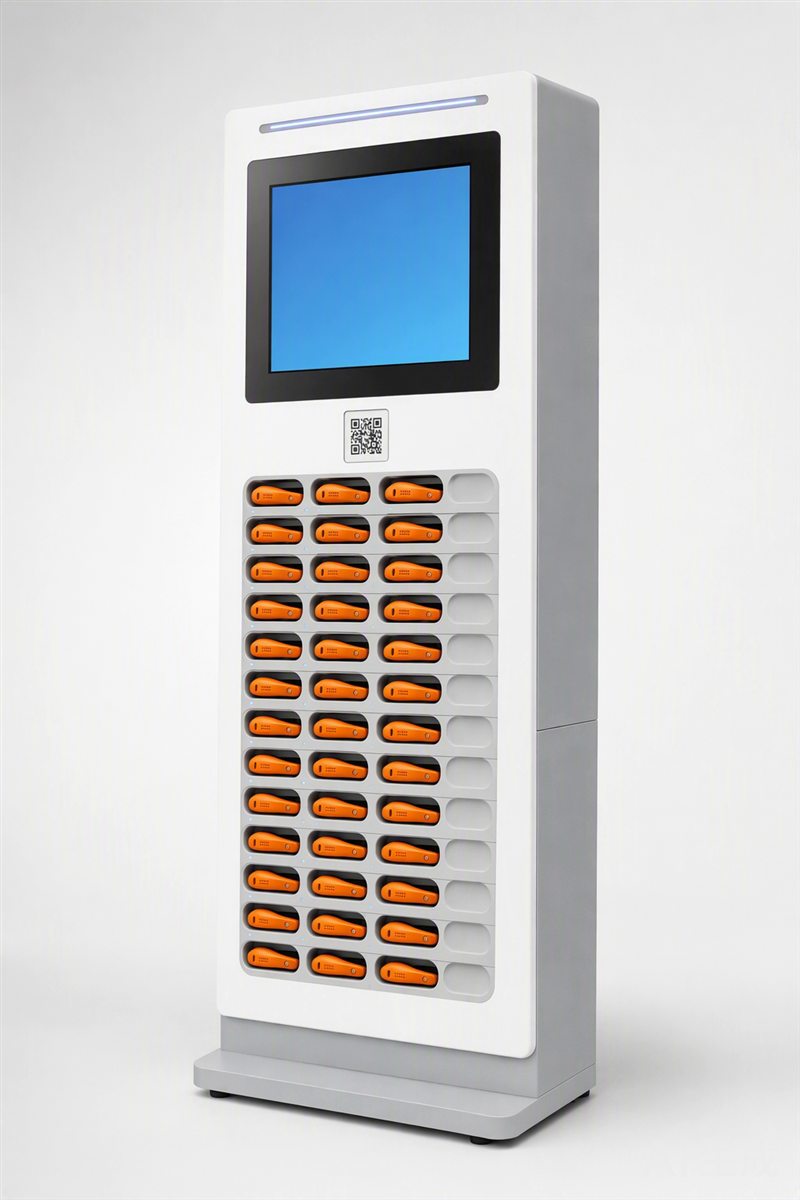
| Hearing loop compatibility | G1 player (3.5 mm & BLE), G2 receiver (BLE) | G3 rental cabinet (no loop output)Lab-tested RF immunity per EN 301 489 | |
| Captioned narration | Vox Guide glasses (configurable text overlay) | G1/G2 audio-only unitsFirmware UI validation per EN 301 549 | |
| Step-free route sync | All units via QR-triggered location markers | GPS or LiDAR-based autonomyFunctional test with venue-provided QR map | |
| Skin-contact nickel safety | G2 receiver temple arms | G1 player casing (non-contact)EN 1811 lab report per build | |
| Battery compliance | All portable units | Fixed-install cabinets onlyUN38.3 summary + SDS + WHr printed on unit | |
| Toy-grade safety | None in this line (age grading defines scope) | AI glasses, G1/G2 playersEN 71-1/-2/-3 booking per packaging age label | |
| CE RED scope | G1, G2, Vox Guide, G3 cabinet | U1 scenic robot (EMC/LVD only)Test report per EN 300 328, EN 301 489, EN 62368-1 |
- All devices are supplied through AI Audio Guides line, with full OEM/ODM options detailed at OEM/ODM services
- The rental cabinet enables shared-device deployment across seasonal venues
- For multilingual venues, the pocket translator supplements guided narration but is not integrated into tour logic
- Scenic guidance in open-air settings may involve the U1 humanoid robot, though its compliance scope differs (EMC + LVD only)
- Factory build practices — including material traceability and test gate documentation — are described at how we build and test
- Full product range is browsable at product catalogue
European venues require hardware that integrates reliably with existing accessibility infrastructure — not standalone “smart” claims that complicate procurement or misalign with duty-of-care obligations. WingPhoenix builds accessible audio guide devices to known standards, documents every test scope per revision, and avoids functionality that would trigger unbooked certification paths. To begin evaluating hardware for your next tender or venue rollout, request a configured sample using your QR map and audio script via AI Audio Guides line.
Questions buyers ask
What hardware features do European museums and heritage sites need to meet current accessibility expectations?
Devices must support multiple input modes (voice, touch, QR), deliver clear audio with hearing-loop compatibility, offer visual alternatives like captioned narration, and integrate with physical access infrastructure such as step-free routes and tactile signage.
How does WingPhoenix ensure its accessible audio guide hardware meets EU regulatory requirements?
Each hardware revision undergoes CE RED testing per EN 300 328, EN 301 489 and EN 62368-1, with RoHS 3 and REACH SVHC screening documented; UKCA is available on request, and all battery units carry UN38.3 + SDS with watt-hour rating printed on the unit.
What happens if a sample fails a venue’s real-world accessibility test?
Samples are configured to match final use-case parameters — open-ear receivers for high-noise galleries, AI glasses for hands-free navigation — and failures trigger firmware or mounting adjustments before mass production, not after.
What is one claim many suppliers make about accessible audio guides that WingPhoenix does not support?
We do not claim that any device detects, diagnoses or responds to medical conditions — including hearing loss severity, visual field restriction or mobility impairment — nor do we assert autonomous wayfinding in unstructured environments.
Related: more on ai audio guides · buyer guides · customisation tiers