OEM vs ODM AI Hardware: Where Your Money Actually Goes
A procurement-focused breakdown of OEM and ODM for AI hardware — tooling, NRE, IP control and when neither route serves your compliance or margin goals.
sourcing-compliance2026-11-02
Updated 21 Oct 2026 · line pages list every model with its published specification
The fastest-growing AI hardware ask from European toy, stationery and consumer-electronics channels — and the category where compliance and children's privacy decide the listing, not the price sheet.
Read this first if you sell to children. In the EU an educational robot aimed at under-14s is normally assessed as a toy under Directive 2009/48/EC (EN 71 mechanical/flammability, EN 62115 electric toys) in addition to radio and electronics standards; the UK equivalent is UKCA Toy Safety. Where the product is intended for ages 14+, the toy directive does not apply. Which route your model takes is decided by its marketing and age grading — tell us the target age on the box and we plan the test scope accordingly instead of guessing afterwards.
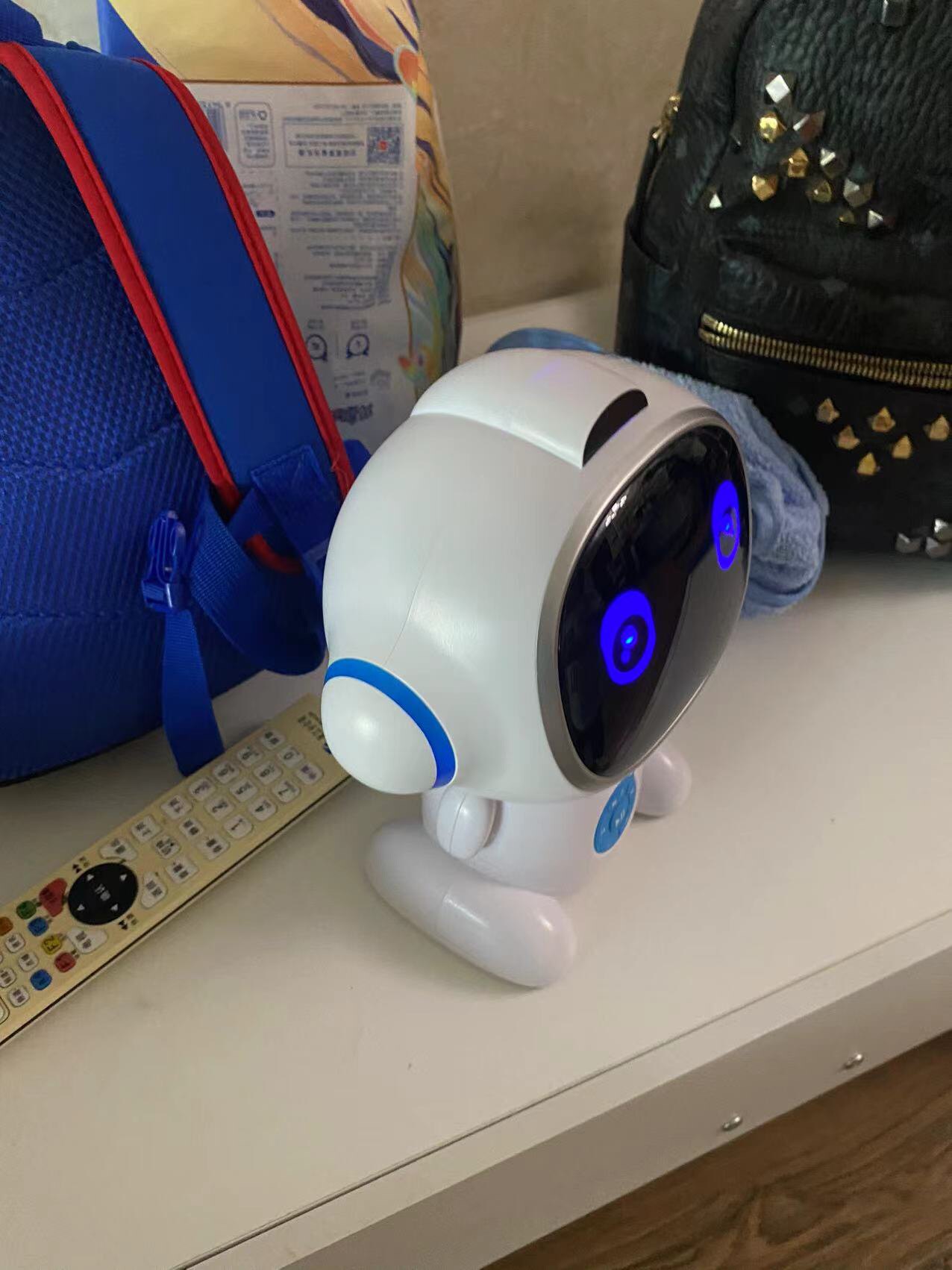
A 19 cm desktop companion that teaches phonics, spelling and first German or English conversation, with an expressive face, a physical privacy shutter over the optional camera, and a microphone kill switch that cuts the mic in hardware.
| Interaction | 2.4" round face display, 4-mic array, touch top, offline wake word |
|---|---|
| Compute | Quad-core Cortex-A55, 2 GB RAM, 16 GB storage, Wi-Fi 2.4/5 GHz, BT 5.0 |
| Voice scope | On-device commands in EN/DE; cloud NLU optional and switchable off in the parent app |
| Content | Phonics, sight words, numbers, poems, bedtime questions; no ads, no in-app purchase |
| Battery | 3,000 mAh, ~5 h active play, magnetic charge dock |
| Safety | Rounded ABS+PC shell, no removable small parts, IP54 splash only |
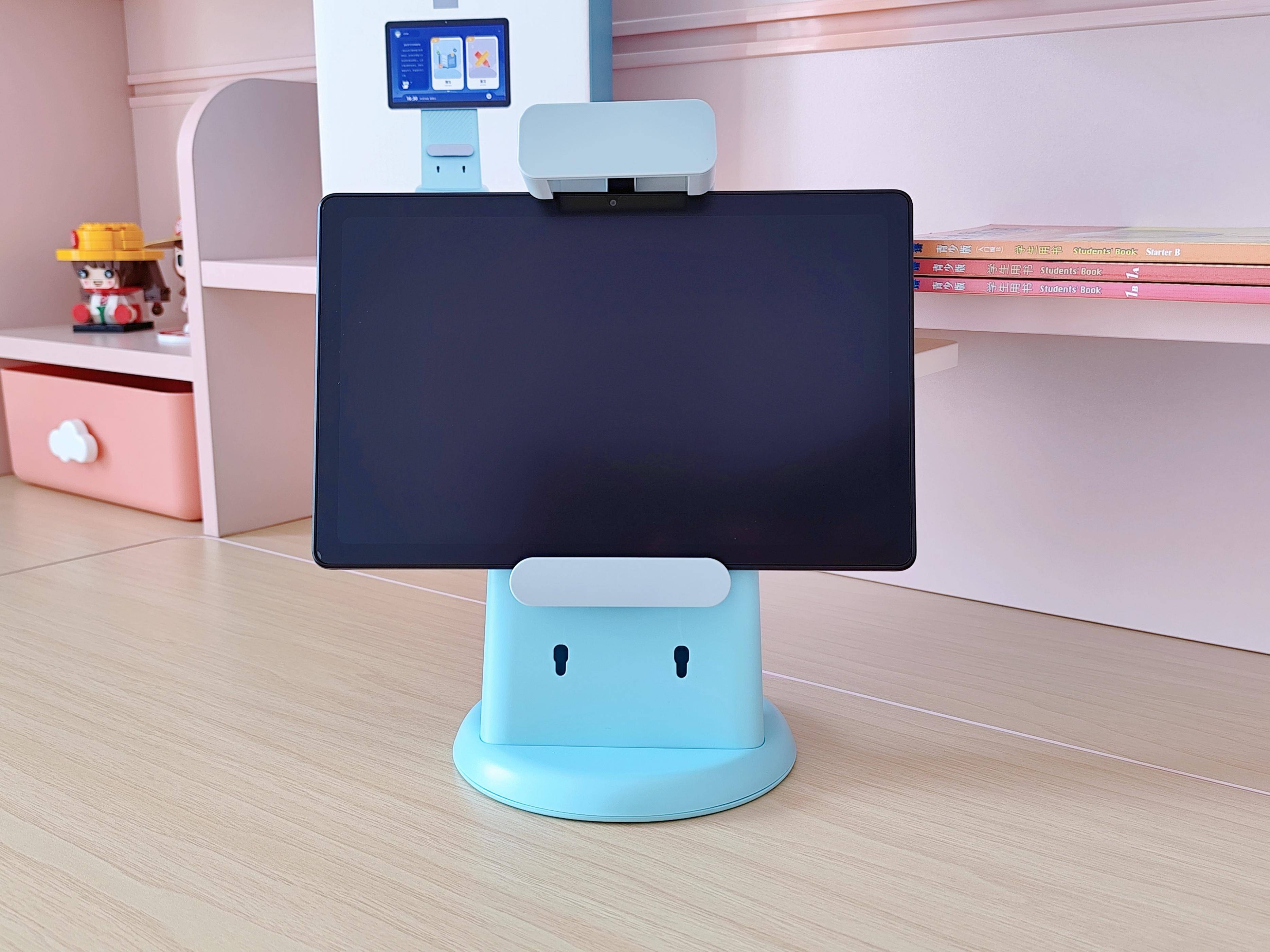
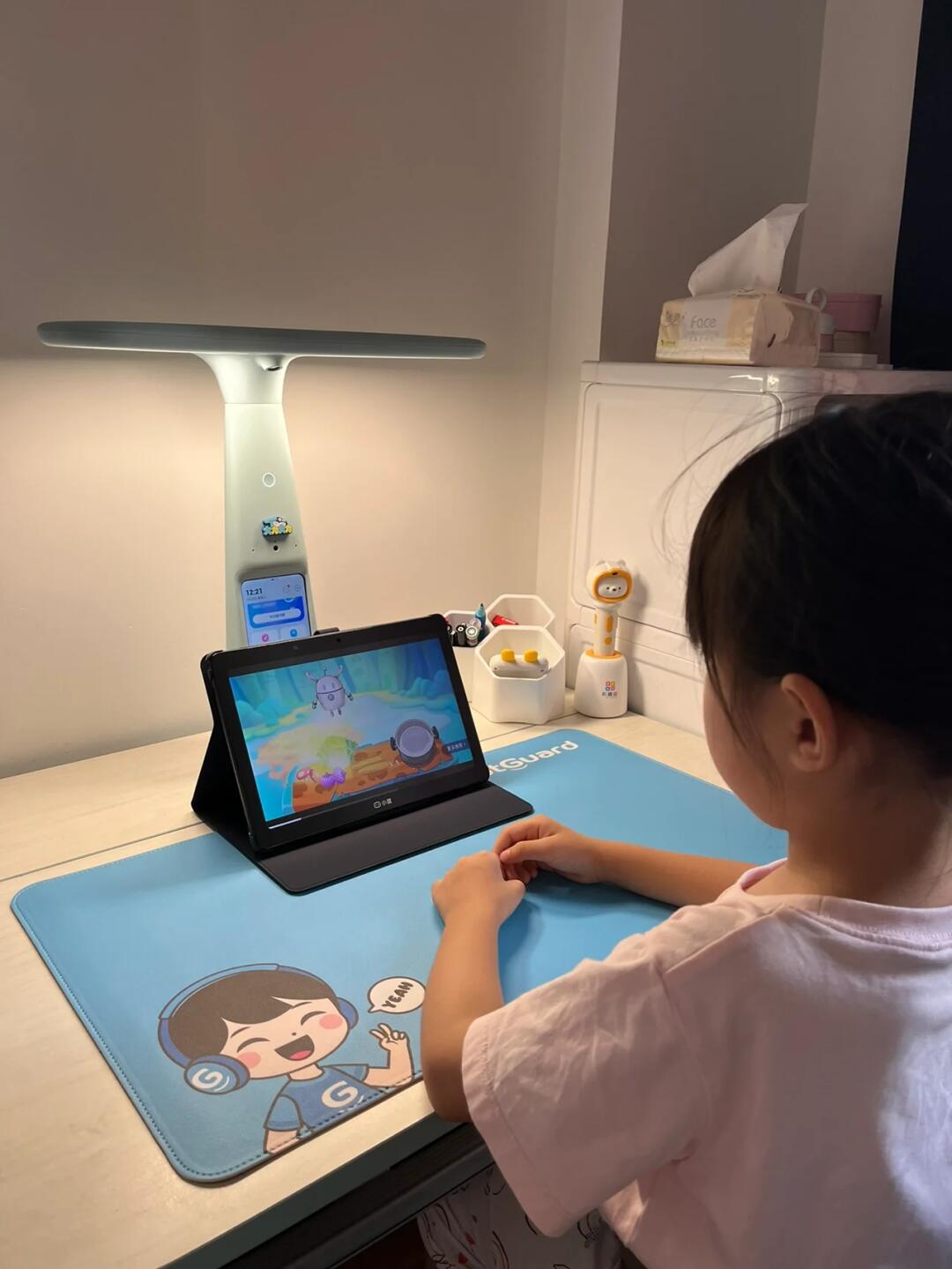
An 11-inch learning tablet for primary and lower-secondary pupils. Parental control lives in the firmware and the parent app, so a child cannot uninstall it by going into settings — the single feature European parents ask about most.
| Display | 11" IPS 1920×1200, DC dimming, matte anti-glare option, 4:3 reading layout |
|---|---|
| Compute | Octa-core, 6 GB RAM, 128 GB, microSD to 1 TB, Wi-Fi 5, optional LTE (band list per market) |
| Cameras | 8 MP homework camera + 5 MP front, physical front shutter, recorded-activity indicator |
| Controls | Time budgets, app approval list, homework timer, weekly report to the parent app, PIN gate |
| Software base | Android 13 with a locked-down launcher. Google Play / GMS is not licensed by default — see the note below |
| Battery | 7,000 mAh, ~8 h classroom use, 18 W charge, no fast-charge heat stress |
The giftable, camera-free version: same face display and voice shell, no microphone array, no camera, no network stack beyond Bluetooth. Because it records nothing and stores nothing, it clears the privacy conversation in toy retail buying meetings without a DPIA debate.
Typical buyers are promotional-gift programmes, museums and attraction retail, and stationery chains that want an affordable AI desk toy. Firmware content is limited to expressions, timer, pomodoro, simple Q&A and mood faces.
| Model | Screen | Camera / mic | Online | MOQ |
|---|---|---|---|---|
| E1 AI Learning Robot | 2.4" face | 4-mic array, optional camera + shutter | Wi-Fi | 1,000 |
| P1 AI Learning Pad | 11" IPS | Dual camera, front shutter, 2 mics | Wi-Fi, optional LTE | 500 |
| T1 Companion Robot | 2.4" face | None | Bluetooth only | 1,000 |
Google services are the trap in this category. A tablet that shows the Play Store needs a Google GMS licence, which only certain SoC platforms can provide and which we do not include by default. If your listing promises Play apps, say so before we quote — otherwise we ship a curated app store with your branding, and we write the box copy so it does not claim Google services.
Short pieces from the same workshop: what a standard actually asks for, where the cost hides in an order, and what to test before you commit.
A procurement-focused breakdown of OEM and ODM for AI hardware — tooling, NRE, IP control and when neither route serves your compliance or margin goals.
Before AI toys China reach a European shelf, every hardware revision must carry CE RED, EN 71, battery UN38.3 and age-graded toy scope — here’s what your supplier mu
Care robot privacy hinges on three written access questions—recording scope, staff permissions, and family deletion rights. This guide clarifies what must be documen
A parental control your buyer's child can undo in settings is an app. A firmware policy is not. Here is how to tell them apart before you commit to 500 units.
Plug type, cable marking and spares policy decide whether your AI accessory clears customs. Here is how to scope charger certification by country before you commit.
Two architectures for voice on AI devices, and why the choice decides your app-store path, your BOM and your certification scope. Read before you brief a supplier.
IP68 and 5 ATM describe different test conditions, and neither covers a sauna. Here is how to read the claims and brief a supplier.
Everything we publish is in the journal.
Tell us the channel — toy, stationery, electronics or school programme — and the target age on the box. We send the models, the test scope and the certification list for each.
Answers come from our published factory policy. Quotations are handled by a person.