AI Guide Glasses or Audio Guide Receivers: What a Site Should Settle First
Ask a venue which device it wants and the answer is usually a product name. Ask it what the current tour loses, and the same conversation produces a short list of operational complaints: a queue at the desk that only appears on busy days, visitors who never press the right button, headphones that go back damp, a script that nobody finishes. That second list is the one worth designing against, because it is the same list whether the tour is delivered by an open-ear receiver, a handheld player or a frame of AI guide glasses.
What each form factor actually has to survive
A receiver fleet is judged on throughput. A hundred schoolchildren arrive, ninety devices go out, ninety come back, and the housekeeping between visitors is someone's allocated task. The device is cheap enough that a lost unit is a line item rather than an incident, and staff can teach it in a sentence.
A glasses fleet is judged on attention. Nothing is held, nothing is pressed, and the narration arrives when the visitor looks at the object — which is the closest a self-guided visit gets to a good human guide. The trade is real: each unit carries more value, so issue and return become a controlled transaction with a deposit, a contact record or an accepted shrinkage rate behind it, and the charging rotation has to be planned around a higher per-unit price.
A handheld player sits between the two and is often the wrong compromise: it wants the visitor's hands and their eyes, which is precisely the resource an exhibit is competing for. Where a guide player earns its place is when the content needs a screen — maps, captions, archival images, a signed-language video — rather than when it needs a bigger speaker.
Recognition and positioning are two different questions
Sites conflate them, and the conflation is where projects go wrong. Positioning answers where the visitor is: a beacon zone, a satellite fix on an open route, or a scheduled chapter advanced by a guide. Recognition answers what the visitor is looking at, which is a different problem with different failure modes — reflection in a vitrine, two similar busts in one sightline, a plinth that has been repainted, low light in a vaulted room.
A receiver fleet is usually positioned and never recognises anything: the visitor presses the number that matches the label. A camera-equipped frame can do the matching instead, but only against the exhibit set registered for the site, and its hit rate is decided by reference photography and lighting rather than by any processing figure a supplier can quote. That is why a serious vendor asks for your floor plan and photographs before promising a configuration, and why the guide line as a whole is surveyed rather than specified from a catalogue.
What to settle before either option is costed
| Question | Receiver fleet | Guide glasses |
|---|---|---|
| Who operates the device? | The visitor, after instruction | Nobody — the route responds to where they look |
| Value at risk per issue | Low enough to accept some loss | High enough to need a deposit or a record |
| Hygiene between visitors | Ear pads or disposable covers, per cycle | Frame and temples; no in-ear contact |
| Content needs a screen? | No — use a player if it does | No — audio-first, with transcripts shipped alongside |
| Works in a vitrine or low light? | Positioning only, so unaffected | Recognition degrades; test with your own photographs |
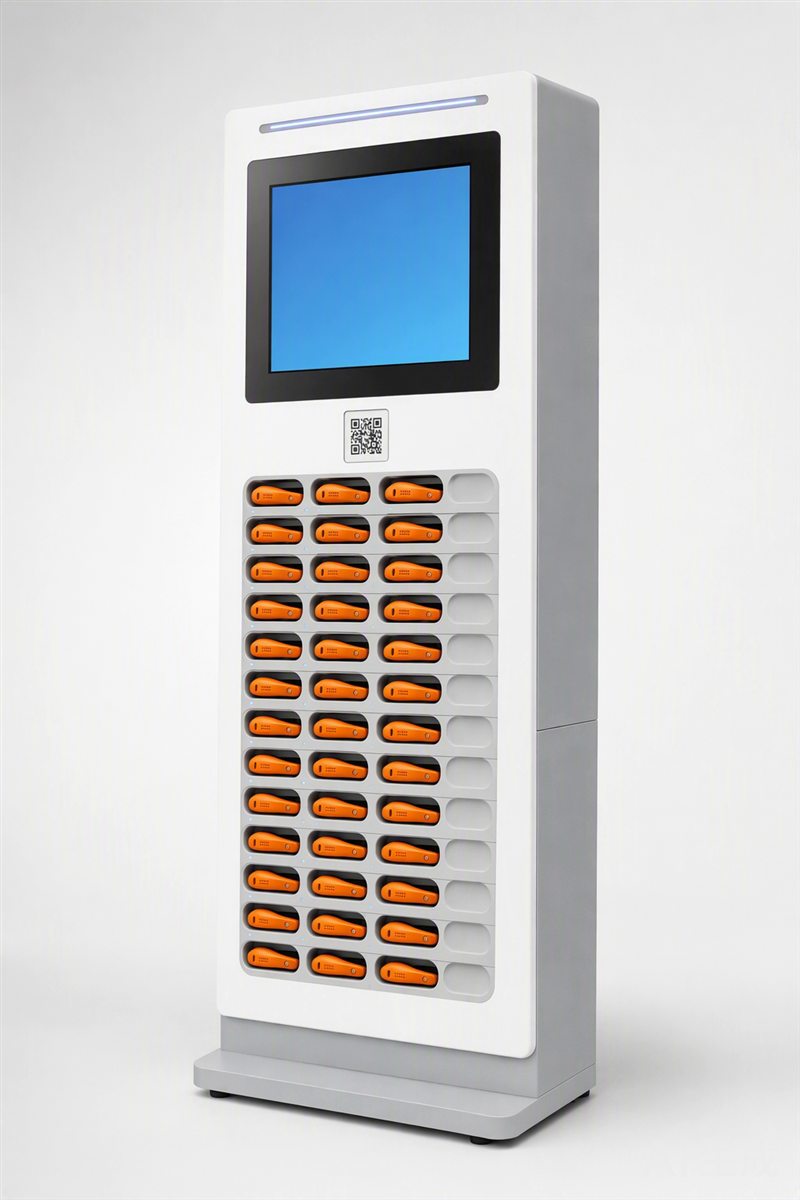
| Charging model | Bays in a rental cabinet | Same cabinet, with an insert tooled for the case |
What the AI layer has to be accountable for
Two capabilities get promised under the label and they behave very differently. Answers drawn from content your curators wrote for that stop are auditable: the same text that appears in the narration is what the visitor hears back, and a reviewer can approve it once. Open-ended questions sent to a cloud model are not auditable in the same way — they need a connection, they can be confidently wrong about an object, and they put a processing notice in front of a visitor before the first question is asked.
The governance questions are the ones a public-sector buyer will ask first: who is the controller for visitor data, what is processed on the device, whether any capture is signalled, and how long a record persists. On the frame we ship, a visible indicator on the temple cannot be hidden by artwork or manual wording, and the answer about data is written as a statement rather than a policy link. A white-label deployment inherits your notices, not ours. If a site needs a robot to answer questions in a lobby as well, that is a separate deployment with a supervision model — see the scenic guide robot — and the same content should feed both.
Pilot on one route, on one measurement set
Take a single route, in one season, and instrument four numbers: what share of entering visitors take the guide at all; how far through the stop list a session gets; dwell time at each stop against its position in the route; and staff minutes consumed at issue and return. Those four decide a fleet, and they are collected the same way for either hardware, which is what makes the comparison honest. The published sampling and lead-time ladder exists so a pilot can be time-boxed: a stock-build sample arrives inside a working week, a configured build in two to three, and the minimum production order is what you measure after the pilot rather than before it.
Two things worth testing physically before anything is committed. The first is fit across your actual visitors — frames are sized for faces, and a site with many children has a different answer from one dominated by adults. The second is the return ritual: how a unit is checked, wiped and put back into a charging bay by the last visitor of the day, when the queue has gone and nobody is watching. It is the weakest point in every fleet, and the factory's own test routine treats bay behaviour as a functional requirement rather than an accessory.
Questions buyers ask
Do AI guide glasses replace an audio guide receiver fleet?
Rarely, and the sites that get the best result treat them as tiers rather than substitutes. Receivers stay the cheaper per-unit answer for large groups issued at once, while glasses suit a higher-fee route where recognition and free hands matter more than unit cost.
Can a rental cabinet issue glasses as well as receivers?
The issuing, charging and reconciliation logic is the same, and a bay insert can be tooled for a different shell from ten cabinets. What changes is the value at risk per unit, so the deposit or contact model needs revisiting before the fleet does.
Does the visitor need a phone for a glasses tour?
Not for the route itself. Pairing, language pack download and sign-in happen once on a phone or a staff tablet; recognition, positioning and narration then run on the frame. Open-ended spoken questions are the exception, because they need a connection.
How should a site trial either option?
One route, one season, one measurement set: take-up at the point of sale, how far visitors get through the stop list, dwell at each stop, and what staff time each form factor consumes at issue and at return. Compare on those, not on novelty.
Related: more on ai audio guides · buyer guides · customisation tiers