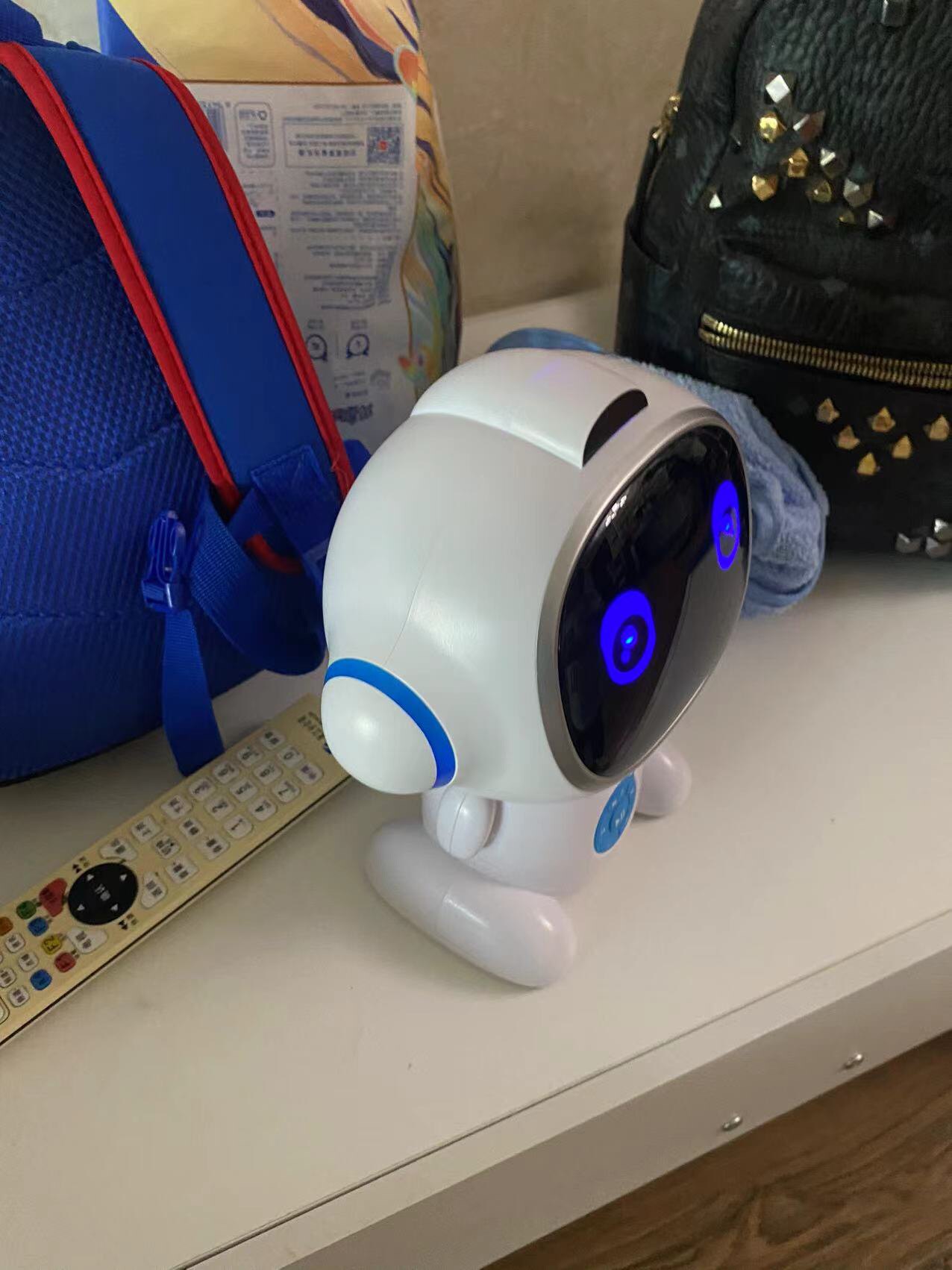
K1 AI Companion Robot
The tabletop companion for care and home settings — hardware microphone kill switch, no cloud dependency by default, and a very different budget line.
Updated 20 Oct 2026 · specifications per hardware revision
A full-size bipedal humanoid that walks a plaza, delivers an authored tour, poses for the family photo and leads an activity hour in a care home. It is deployed in scenic areas today — the images on this page are field stills, not renders — and it is sold the way this class of machine should be: one programme at a time, with the safety, privacy and service answers written down before anyone signs.
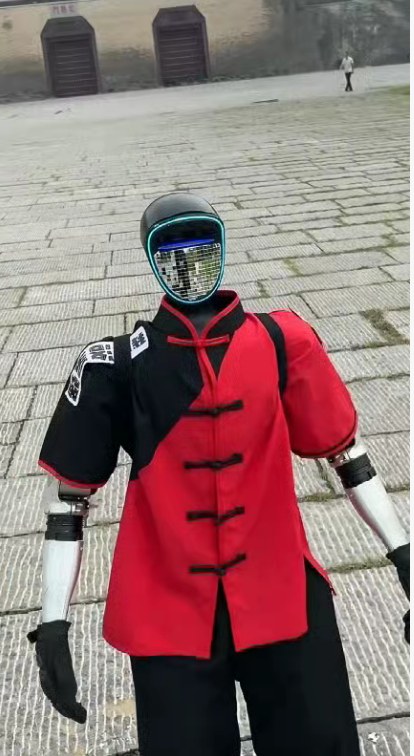
Field photographs from live deployments, supplied for discussion. Higher-resolution production photography and a reference video are sent with the project pack.
Not four hypotheticals — these are the four deployments that pay for themselves, and each one asks the machine for something different.
It meets a group, walks the first stretch of the route and narrates the opening story in the visitor's language, then hands off to the audio-guide fleet for the rest of the visit. The value is at the start: a crowd that gathers around a person in a costume is a crowd that starts the tour on time. Pair it with the AI audio-guide line — same venue, same content pipeline, one script.
Authored movement routines, music-cued sequences and a pose for the photo. This is where the custom outfit matters most: the machine has to read as part of the place, not as borrowed hardware. A plaza appearance is scheduled, supervised and repeatable — which is also what makes it safe.
Lobby, visitor centre, shop floor or trade stand: it greets, answers a bounded set of questions about what is on show, and points people to a human for anything else. The honest boundary is the question set — a humanoid that answers three questions reliably beats one that guesses at thirty.
An activity-hour presence residents approach rather than watch: greeting by name from a prepared list, leading a seated exercise or reminiscence session, telling a story, prompting a conversation. It is a companionship and activity device — see the next section for what it will never be sold as.
A care home, an insurer or a public tender will ask what the robot does about a resident. The answer is: nothing, and that is the correct answer. It does not detect falls, does not read vital signs, does not raise an alert, does not call anyone, and it is not a lifting, transfer or mobility aid. It is present, it talks, it leads an activity and it goes back on its dock.
The same discipline applies to the safety story. We do not call it autonomous until the navigation documentation supports the word, we do not claim an outdoor weather envelope it has not been tested to, and we do not put an IP rating on a datasheet that has no test report behind it.
Ask any supplier — including us — these eight. We answer all eight in writing in the project pack.
In a care or museum setting, the camera question is a data-protection question: you are the controller for anything recorded about a resident, a visitor or a child. We supply the device-side description for your assessment — the notices, consent practice and retention policy sit with the operator.
A humanoid in this class is built to a programme, not ordered off a shelf. The left column is what we will print today; the right is what the project pack for your build answers.
| Form | Full-size bipedal humanoid, walk-up public presence |
|---|---|
| Locomotion | Walking on paved and indoor flooring, authored route |
| Face | Illuminated expression panel |
| Outfit | Custom costume, colour and sleeve branding |
| Content | Authored narration, show sequences and bounded Q&A |
| Operation | Supervised, with an operator stop control |
| Deployed in | Scenic areas and public venues today (field photographs above) |
| Commercials | Pilot from 1 unit, quoted per programme |
| Physical | Height, mass, degrees of freedom, joint limits, step reach |
|---|---|
| Mobility | Walking speed, slope and threshold limits, surface list, obstacle behaviour |
| Power | Runtime per shift, charge time, dock and power draw, cold-weather behaviour |
| Voice | Languages, on-device or cloud processing, mic and speaker configuration, latency |
| Autonomy | What runs without an operator, what never does, and the fail-safe for each |
| Environment | Indoor and outdoor envelope, temperature, dust and rain limits — tested only |
| Safety file | Risk assessment, stop and recovery behaviour, standards referenced, operator training |
| Data | Camera and microphone data path, hosting region, retention, deletion, DPIA input sheet |
| Service | Spare parts, field-replaceable items, remote diagnosis, warranty, response terms |
| Commercials | Unit price, content authoring, freight, rigging, lead time, training days |
If a document you need does not exist for the build being quoted, we say so before you sign rather than after.
See MOQ, sampling and lead times for how a first programme is normally sequenced, and OEM/ODM services for what can be changed at firmware level.
There is no published unit price for this class, and we will not ask for your budget. Send the venue, the job and the audience, and the sales team returns a written programme: configuration, content scope, safety and data documentation, service terms, lead time and price.
Prefer to talk it through? WhatsApp +86 139 2465 3706 or write to wangkf@wingworld.cn.
As a project, quoted from 50 units or scoped as a single deployment. The project pack defines the route, script, languages, operator training, spares and service terms before a purchase order.
The deployment scope and floor plan, stop behaviour and risk-assessment inputs, the language and script plan, operator training, the spares list and service terms, and freight and rigging to your site.
Typically 25 to 35 days for the build itself; where new ODM tooling is involved, the tooling phase runs 12 to 20 weeks before production.
It walks on paved and indoor flooring at a show pace on an authored route, and a public deployment is designed around supervision: an operator with a stop control, a defined operating area, speed and proximity limits, and a floor plan that keeps cables, steps and wet surfaces out of the path. We supply the risk-assessment input and the stop behaviour for the build being quoted. We do not describe it as autonomously navigating crowds, because that is a documentation question, not a marketing one.
No. In a care setting it is a companionship and activity device: it greets, narrates, leads a seated exercise or reminiscence session and gives residents something to approach. It does not detect falls, take vital signs, alert staff or assist with lifting and transfer. Tender text or artwork implying clinical monitoring will be declined before supply.
Both are programme decisions. Language coverage, and whether recognition and answers run on the device or through a cloud service, decide your network dependency, your latency in a stone-walled hall, and what personal data leaves the building — so we confirm them in the project pack rather than guessing on a web page.
Yes — the photographs on this page show a custom outfit with sleeve patches, which is exactly how venues use it. Outfit, colour, face-panel treatment and narration are authored per programme, and we tell you plainly which changes are cosmetic and which need a firmware release.
This decides most humanoid purchases, so it is answered in the quotation: spare-part list and price bands, what a site technician can replace without us, remote diagnosis scope, on-site support terms, warranty period and response commitment, and how firmware and content updates reach a unit already in the field.
Not published, and not a number we will guess at. Price follows the configuration, the content scope, the training and service package, and freight and rigging to your site. Send the venue and the job and you get a written figure within one business day.
The tabletop companion for care and home settings — hardware microphone kill switch, no cloud dependency by default, and a very different budget line.
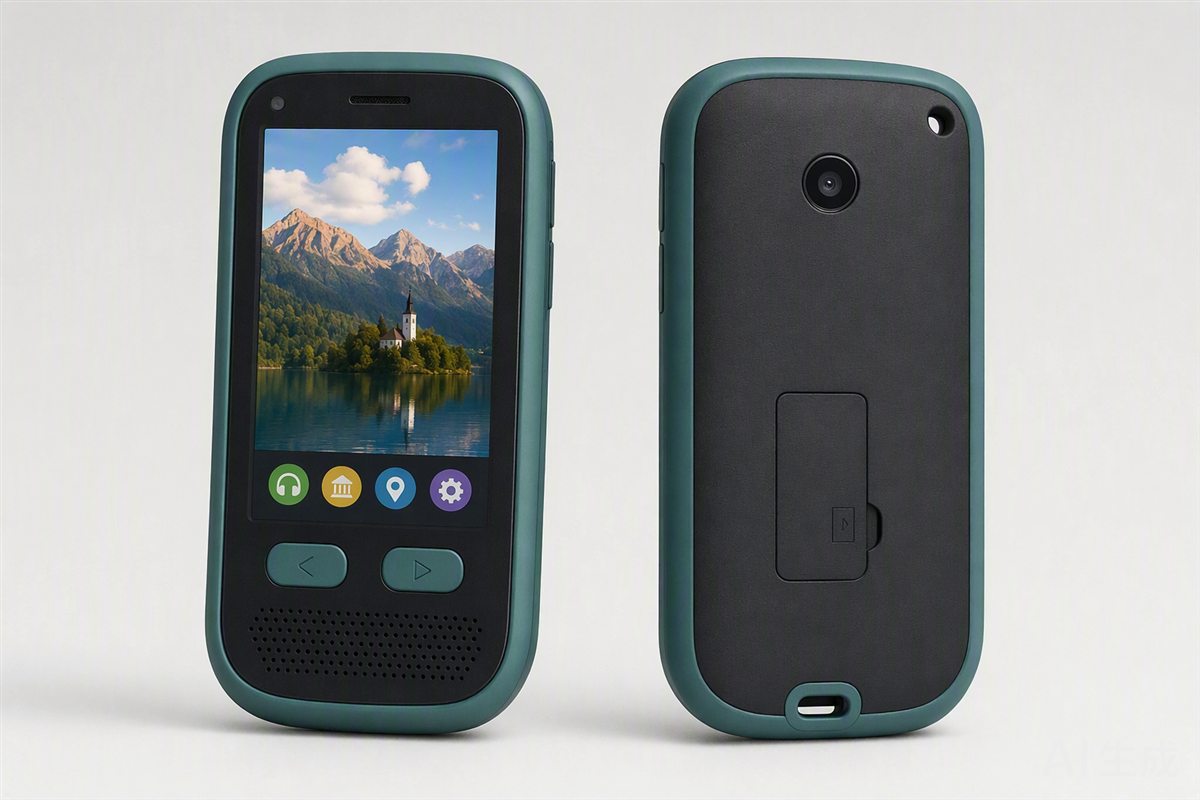
The fleet a guided tour hands off to after the robot opens the story — same venue, same script, one content pipeline.
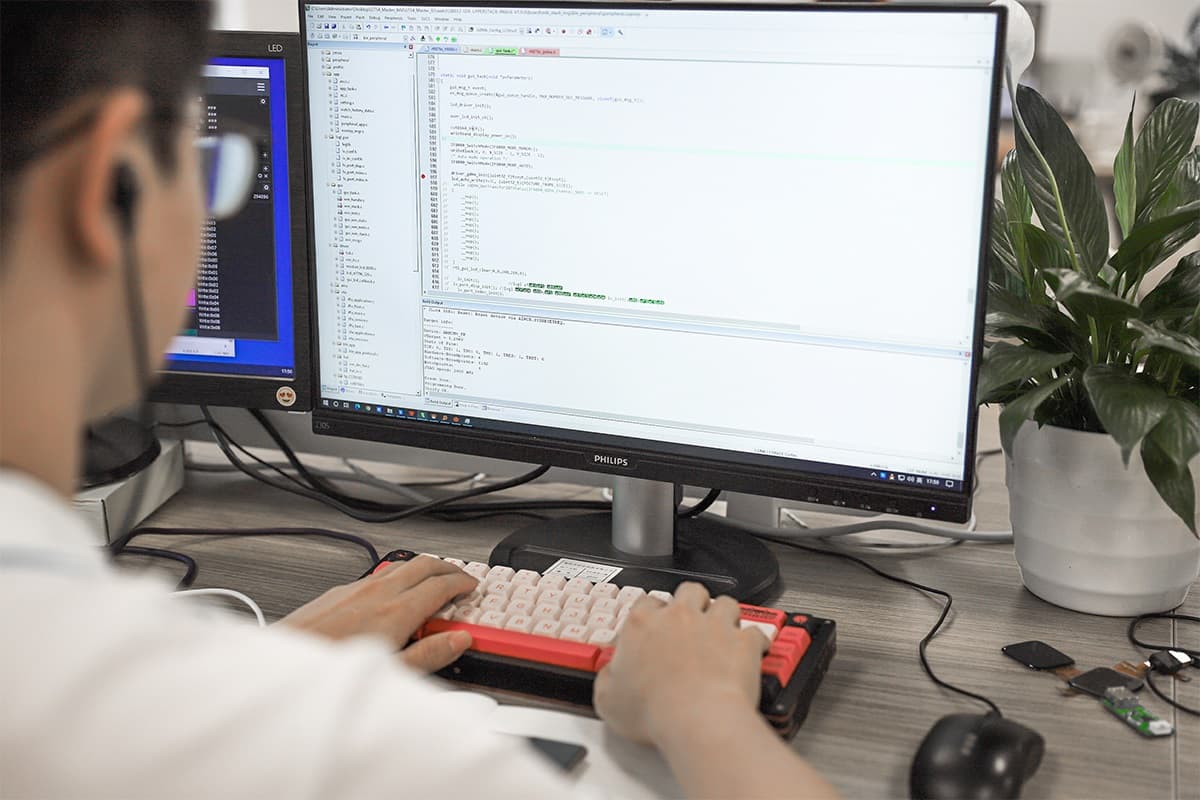
Where the stop behaviour, the battery cycle log and the content build are verified before a unit ships.
You get a written programme: configuration, content scope, the eight safety answers, service terms, lead time and price — within one business day.
Answers come from our published factory policy. Quotations are handled by a person.