Museum Audio Guide Devices: Own Fleet, BYOD, or Both
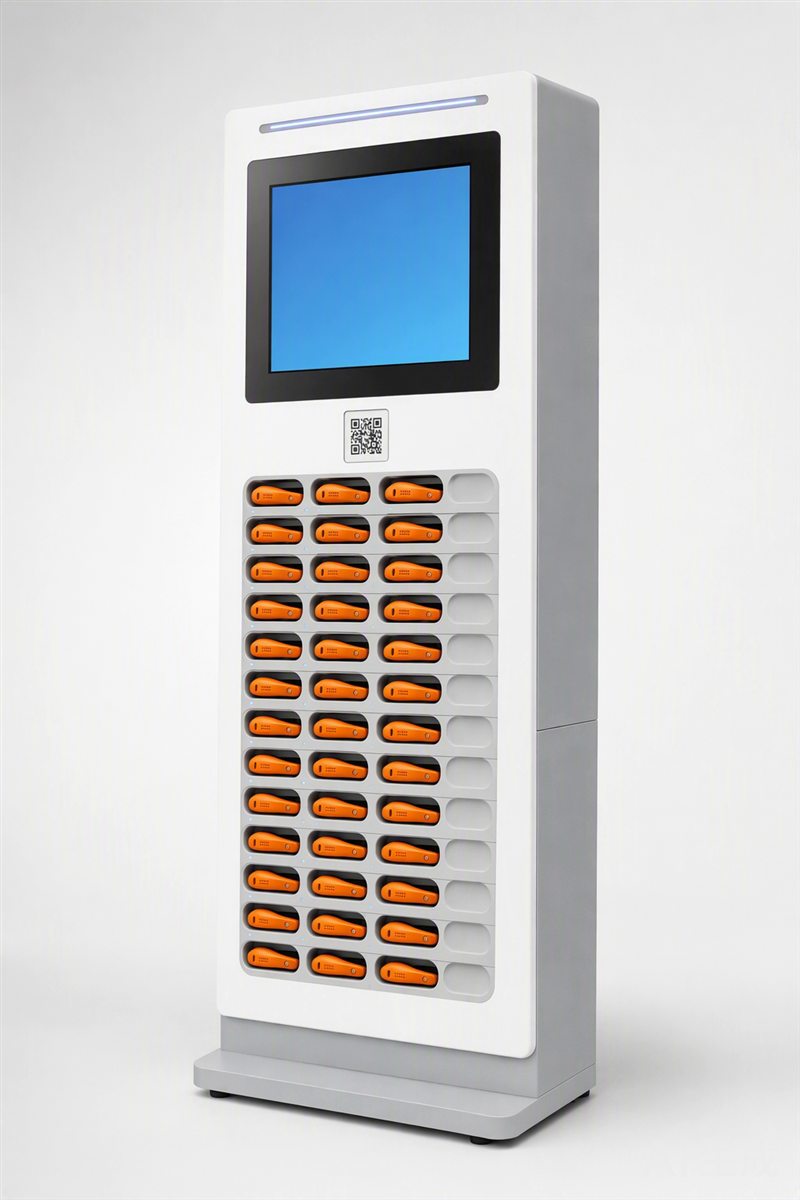
Choosing between owned museum audio guide devices, a bring-your-own-device model, or a mix of the two is a channel decision rather than a hardware one. It determines who carries the capital cost, who owns the visitor experience at the gallery door, and which compliance duties land on the importer. Venues that treat it as a procurement question early avoid renegotiating the whole programme mid-season. The useful starting point is not a feature comparison but a clear statement of who supports the device when something goes wrong on a busy Saturday.
Where each model breaks down
An owned fleet gives a consistent experience: the same audio, the same volume ceiling, the same battery life, and no dependency on the visitor's handset. It also means charging, cleaning, storage and replacement parts are the venue's problem, which is why the rental cabinet exists as a storage and charging unit rather than a simple shelf. BYOD removes that labour but hands control to the visitor: an old phone, a flat battery or a locked-down browser becomes a front-desk conversation. A hybrid usually means owned devices as the default and a BYOD path as overflow, which is the model most seasonal venues settle on.
What the visitor actually holds
The form factor drives the channel decision more than the software. A handheld guide player suits scripted tours with numbered stops and a keypad. An open-ear receiver suits guided groups where the guide speaks live and the visitor needs to hear the room as well. Where a venue serves international visitors, a pocket translator can sit alongside the guide fleet, but its output is a reference translation and must never be presented as certified, legal or medical interpretation. Group tours that need a live guide channel are a separate purchase from the self-guided fleet, and mixing the two in one budget line causes confusion later.
Compliance sits with the importer, not the factory
For EU and UK destinations, customs and take-back duties sit with the importer: WEEE, BattG, DEEE/Triman registration, EORI and VAT. The factory supplies documents per model and hardware revision, not a blanket certificate. CE RED documentation typically covers EN 300 328, EN 301 489 and EN 62368-1, alongside FCC Part 15 B/C for North America, UKCA on request, RoHS 3, REACH SVHC screening and battery UN38.3 with SDS. The CE RED document checklist is a useful template for what to request before a purchase order, even where the product category differs. If a device is age-graded as a toy on its packaging, toy scope is booked with an accredited laboratory per build; that decision follows the packaging, not the marketing copy.
| Decision point | Owned fleet | BYOD |
|---|---|---|
| Capital outlay | Units, cabinet, spares | App or web build only |
| Visitor coverage | Every visitor, including those without a phone | Limited by device age and battery |
| Cleaning and charging | Venue staff, daily routine | None |
| Compliance owner | Importer for WEEE, BattG, DEEE/Triman | Largely unchanged; app terms apply |
| Content updates | Firmware or file push per device | Server-side, immediate |
| Peak-day overflow | Requires spare stock | Absorbs demand without stock |
Planning quantities and lead times
Order volumes should be built from peak-day concurrency, not annual footfall, and then rounded up to the supplier's minimum. Published factory policy is straightforward: standard MOQ 500 units, logo 500, custom packaging 1,000, firmware or app white-label 2,000, with AI glasses at 300 and ring, education and companion models at 1,000. Service robots are quoted per project from 50 units. The MOQ, sampling and lead times page sets out how those tiers interact. Production runs 25-35 days, education builds 30-40 days, and ODM tooling 12-20 weeks, so a next-season launch needs the tooling decision this quarter. Terms are EXW, FOB Shenzhen or DDP by air or sea.
Questions worth asking before you commit
- Who replaces a failed unit during a peak weekend, and how fast?
- Does the quote include the cabinet, spares and 2 % free replacement parts, or are those separate?
- Which hardware revision is the compliance file written against, and will it be reissued after a board change?
- Is the app white-label, and is Google Play or GMS licensed? It is not licensed by default.
- What happens to the fleet at end of season: storage, refurbishment or resale?
Warranty is 12 months with 2 % free replacement parts shipped with the order, and QC runs IQC, IPQC, FQC and OQC at AQL 2.5 major and 4.0 minor. The factory page explains how those gates are applied, and the journal covers adjacent channel questions. Where a supplier cannot state a hardware revision for the compliance file, or treats WEEE and battery registration as their responsibility rather than yours, that is a reasonable point to decline and look elsewhere.
Before the next budget cycle closes, write a one-page channel statement: how many visitors arrive without a usable phone, how many devices you will own, and who services them. Then request a configured sample through OEM/ODM services and test it against your own gallery acoustics and cleaning routine before committing to a production tier.
Questions buyers ask
Should a museum buy handsets or let visitors use their own phones?
Owned handsets give a controlled, identical experience for every visitor, including those without a suitable phone. BYOD removes hardware capital and cleaning labour but shifts the experience onto the visitor's device, battery and operating system. Most venues planning a full season end up running both, with owned devices as the default and BYOD as overflow.
What is the minimum order for branded museum audio guide devices?
Standard MOQ is 500 units, with logo at 500, custom packaging at 1,000 and firmware or app white-label at 2,000. Samples run 3-5 days from stock or 7-15 days configured, and sample cost is credited against mass production.
Related: more on ai audio guides · buyer guides · customisation tiers