Robot Microphone Kill Switch: Hardware Privacy for Service Robots
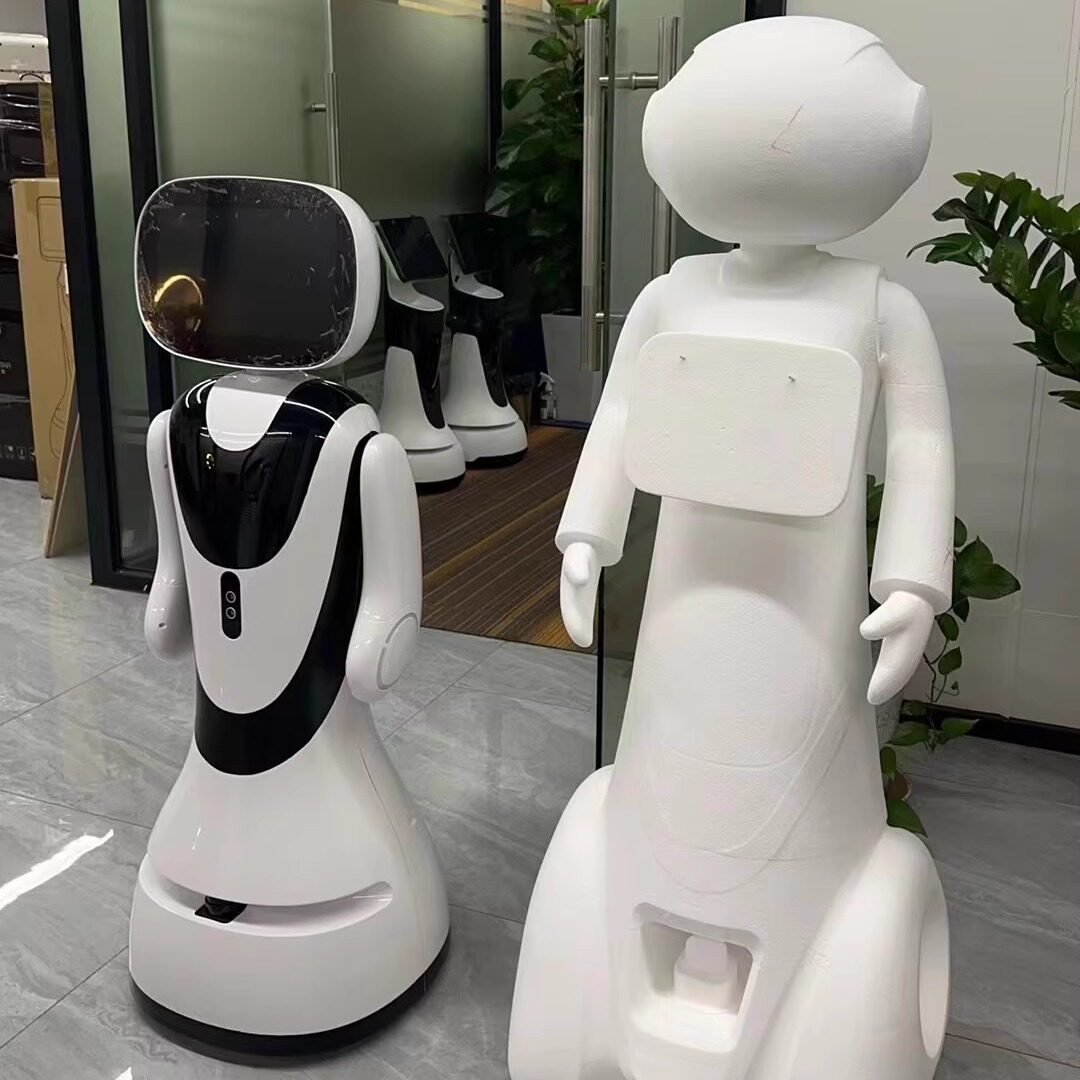
A robot microphone kill switch is not an add-on feature — it is the foundational hardware decision that determines whether a service robot can enter care facilities, hotel lobbies or municipal buildings in Germany, the UK or the Netherlands. Unlike software mute, which leaves the audio chain electrically live, a true hardware kill switch physically severs the microphone signal path at the PCB level. WingPhoenix implements this across its AI robots line, including the U1 humanoid robot platform and the K1 AI companion robot, using dual-stage tactile switches that break both power and ground to the mic array. This design meets the functional safety expectation behind EN 300 328 Clause 4.2.2 and aligns with the UK Information Commissioner’s Office guidance on “physical assurance of non-collection”.
How the Switch Is Built, Not Just Added
The kill switch is integrated into the base PCB layout — not retrofitted onto a daughterboard or controlled via GPIO. It interrupts the analog signal before the ADC stage, ensuring no residual voltage reaches the audio processing unit. Each revision undergoes dedicated EMC pre-scan at 20–2000 MHz to verify isolation integrity under RF stress. This is booked per hardware revision with the same accredited laboratory handling the CE RED compliance scope, and appears as a distinct test item in the final report. No firmware update, cloud command or app setting can override the open-circuit state.
Where It Applies — And Where It Stops
The hardware kill switch applies only to microphones used for speech interface, ambient sound analysis or voice-trigger functions. It does not affect ultrasonic proximity sensors, LiDAR timing circuits or IMU data streams. Cameras remain optically shuttered or mechanically blocked only when explicitly ordered as part of a privacy-configured variant — none are included by default on the E1 AI learning robot or AI audio guide systems. Importers must confirm with WingPhoenix whether their intended use case requires additional physical disconnects for other sensors — this is assessed per project quote, not assumed.
Compliance Documentation Reflects Physical Design
The CE RED technical file includes annotated schematics showing the switch location, BOM reference, and trace routing from mic capsule to cut point. The risk assessment references this physical interruption as the primary control for “unintended audio capture”, not as one of several mitigations. For distributors in Germany or France, this documentation supports the required conformity statement under the Radio Equipment Directive and satisfies local WEEE and BattG importer responsibilities — but only if the switch is present on the unit shipped, not just described in the datasheet. WingPhoenix supplies full test reports per hardware revision, not per model family.
Procurement and Sampling Protocol
Because the kill switch affects PCB layer count and component placement, it cannot be added post-sample. All configured samples — including those for MOQ, sampling and lead times — must specify the privacy-switch configuration at order entry. Stock units without the switch are not convertible. For OEM/ODM projects, the switch layout is locked before tooling release and verified in IPQC gate checks alongside the factory’s four QC gates. This is why the MOQ for service robots starts at 50 units quoted per project: each revision demands discrete validation.
What This Does Not Cover
This hardware kill switch does not eliminate the need for separate physical controls for Wi-Fi, Bluetooth or cellular modems — nor does it satisfy requirements for optical camera blocking, laser emission control (EN 60825-1) or battery safety (UN38.3). WingPhoenix does not ship any service robot with a built-in camera unless explicitly requested and certified per EN 62368-1 and GDPR Annex I. No model carries a medical-grade sensor, health-monitoring claim or emergency-response function. Those capabilities fall outside the OEM/ODM services scope unless contracted separately with third-party clinical validation partners.
| Requirement | Covered by Hardware Kill Switch | Requires Separate Physical Control |
|---|---|---|
| Microphone signal path | Yes — full analog disconnection | — |
| Camera image sensor | No — not included by default | Yes, if ordered |
| Wi-Fi/BT radio transmission | No | Yes — RF kill switch optional |
| LiDAR Class 1 emission | No | Yes — mechanical shutter or beam block |
| Battery charging circuit | No | No — covered by UN38.3 + SDS |
| Audio output (speaker) | No — mute is software-only | Yes — optional relay-based cut |
| Motion sensing (IMU) | No | No — no privacy implication under EN 300 328 |
- All service robot quotations include confirmation of kill switch inclusion and schematic reference
- CE RED test reports list the switch as a discrete EMC test item, not a footnote
- Importers must retain the switch’s physical actuation log if deployed in GDPR-covered environments
- WingPhoenix does not certify or support remote activation/deactivation of the switch
- The product catalogue flags models with hardware kill switches in the “Privacy Features” column
- For lobby deployments in the Netherlands or Germany, request the full test summary with EN 300 328 Clause 4.2.2 annotation
Before placing a pilot order, request the latest hardware revision schematic and ask for the kill switch BOM line item to be highlighted. Confirm whether your intended deployment site requires additional physical controls beyond microphone isolation — then contact WingPhoenix to book the appropriate EMC and low-voltage test scope with the accredited lab. This avoids rework after sample approval and ensures your service robot meets the minimum hardware assurance expected in care and public-sector settings.
Questions buyers ask
Why does a physical microphone kill switch matter more than software mute in regulated spaces?
Because only a hardware disconnect guarantees no audio path exists — a requirement for care environments, lobbies and EU public-sector deployments where continuous listening violates baseline trust and regulatory expectations.
Why can’t we just use a software toggle and document it in our risk assessment?
Software mute can be bypassed, overridden or fail silently; regulators and importers treat hardware switches as the minimum credible control for EN 300 328 and GDPR-aligned deployment policies.
What happens if a sample fails the microphone isolation test during our lab audit?
WingPhoenix reworks the PCB layout and rebooks the EMC test scope with the accredited lab — no firmware patch or documentation fix replaces physical signal interruption.
What does a “hardware kill switch” not do?
It does not disable cameras, Wi-Fi, Bluetooth or motion sensors — those require separate physical controls, and no WingPhoenix device ships with a camera unless explicitly ordered per model and certified per EN 62368-1 and GDPR Annex I guidance.
Related: more on ai robots · buyer guides · customisation tiers