Class 1 LiDAR Safety: What Robot Buyers Must Verify
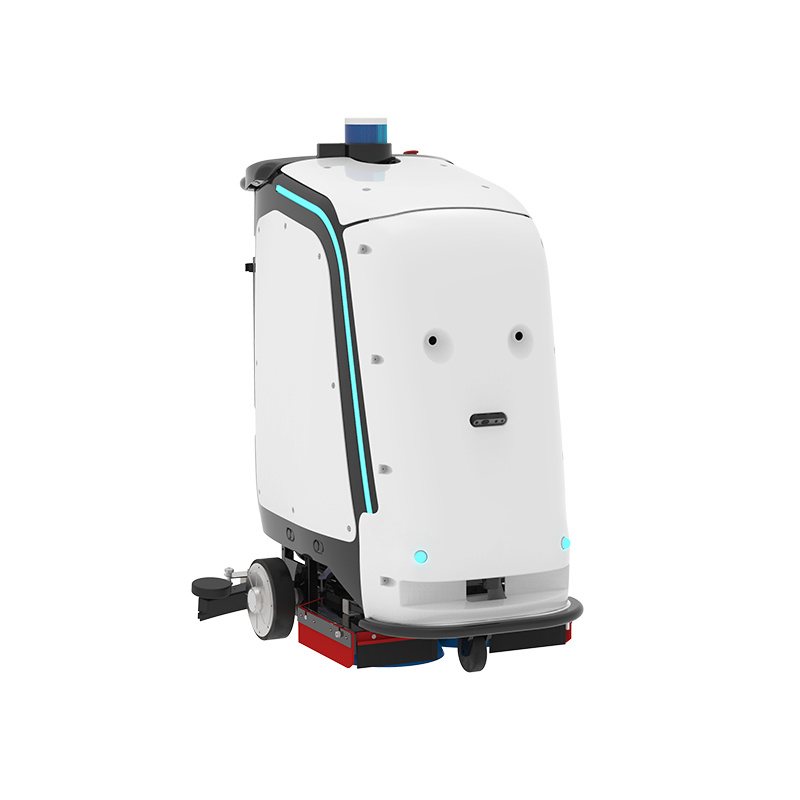
When a purchasing manager forwards a service robot for safety review, the questions that come back are rarely about the robot's function. They concern the light source. A reception or cleaning robot navigating with LiDAR carries a laser module, and the reviewer wants a class 1 laser safety statement that matches the hardware revision on the invoice. That document is not the same as an EMC report, and treating the two as interchangeable is one of the most common delays we see at the quotation stage.
What the reviewer is actually asking for
EMC evidence addresses electromagnetic emissions and immunity. It tells the reviewer that the robot will not disturb other equipment and will tolerate a noisy environment. Laser safety evidence addresses optical radiation. It tells the reviewer that the emitted light cannot injure an eye or skin under normal use and reasonably foreseeable misuse. On a service robot the two sit side by side in the technical file, produced under different standards and often by different test houses.
The phrase "class 1" is a classification under IEC 60825-1, not a marketing label. A class 1 product is safe under normal operating conditions without additional protective measures. For a LiDAR module the classification depends on wavelength, average power, pulse characteristics, beam divergence and the enclosure that surrounds the emitter. Change the scan window, the drive current or the optical path and the classification work has to be repeated. This is why the statement must be tied to a hardware revision rather than to a product family name.
Why the statement is revision-bound
A supplier who sends a class 1 laser statement from an earlier build and applies it to a new one is creating a compliance gap the importer inherits. The reviewer will compare the model designation, the revision code and the optical module listed in the report against the unit in front of them. If the LiDAR supplier changed mid-project, or if the enclosure aperture was widened for styling, the old statement no longer describes the product.
This is the same discipline that applies across the rest of the file. Our CE RED document checklist sets out how we map certificates to model and revision, and the same mapping logic applies to laser documentation. Documents are supplied per model and hardware revision, and a revision change triggers a re-test rather than a re-issued cover page.
A procurement checklist for laser and EMC evidence
| Item | What to request | Why it matters |
|---|---|---|
| Laser classification | Class 1 statement under IEC 60825-1, naming the optical module | Confirms the emitter and enclosure combination, not the product family |
| Revision link | Model and hardware revision code printed on the statement | Prevents an old report being applied to a new build |
| EMC scope | EN 301 489 series report where radio is present | Separate discipline, separately evidenced |
| Low-voltage scope | EN 62368-1 assessment for the charging and power path | Reviewers ask for it alongside EMC on service robots |
| Risk assessment | Documented assessment covering navigation behaviour | Expected for service robots in the EU technical file |
| Test house | Name of the accredited laboratory and report number | Allows the reviewer to verify the scope was booked |
| Change control | Written trigger list for when re-testing is required | Turns a one-off document into a process |
Where an importer should say no
Say no to a supplier who offers a class 1 statement without a report number, or who describes certification as "held" rather than as a test scope booked with an accredited laboratory per build. Say no to a statement that names a product family but no revision. Say no when the LiDAR is sourced from a third party and the supplier cannot produce the module-level optical data, because without it the classification cannot be reproduced by anyone else.
Say no, also, to a quotation that bundles laser documentation into a general "compliance included" line. The scope should be itemised so you can see what is booked and when. Our MOQ, sampling and lead times page shows how we structure that itemisation, and the buyer resources section collects the document templates we work from.
How this fits the wider robot file
Laser safety is one column in a table that also covers radio, electrical safety, materials and, for some SKUs, toy scope. Toy standards such as EN 71 and EN 62115 are decided by the age grading printed on the packaging and booked per build, not assumed. For a cleaning or reception robot the expected package is an EMC and low-voltage scope, a class 1 laser statement for the LiDAR and a documented risk assessment. The factory page describes how those gates sit alongside IQC, IPQC, FQC and OQC at AQL 2.5 major and 4.0 minor, and the same gates apply to the AI device line where a companion robot shares the optical and charging architecture.
- Ask for the laser statement and the EMC report as two separate files, each with a report number.
- Check that the model and revision code on both match the units you are ordering.
- Confirm whether an accredited laboratory booked the scope, and for which build.
- Agree in writing what triggers a re-test: new LiDAR, new aperture, new drive electronics.
- Keep importer-side duties such as WEEE, BattG and Triman in your own project plan.
If you are comparing suppliers for a reception or cleaning platform, the fastest way to separate them is to ask for the class 1 laser statement and the EMC report by report number before commercial terms are discussed. Suppliers who have the documents will send them quickly. Send us your specification through the contact page and we will return the document scope, the revision mapping and the sampling timeline so your reviewer can start with a complete file rather than a chase.
Questions buyers ask
Is a class 1 laser statement the same as an EMC report?
No. EMC reports cover electromagnetic emissions and immunity under standards such as EN 301 489. A class 1 laser statement addresses optical radiation safety under IEC 60825-1 and is a separate document covering the LiDAR or any other light-emitting module.
Does a reception robot with LiDAR always need a laser classification document?
Any product containing a laser or LED source should have its optical output assessed against IEC 60825-1. For a service robot with a spinning LiDAR, a class 1 statement is the normal evidence a reviewer expects, and it should match the exact hardware revision shipped.
Can a supplier simply write "class 1" on a datasheet?
A datasheet claim is not evidence. The statement should come from a test scope booked with an accredited laboratory, tied to a specific hardware revision, and be re-issued if the optical module or its drive electronics change.
Is a class 1 laser statement the same as an EMC report?
No. EMC reports cover electromagnetic emissions and immunity under standards such as EN 301 489. A class 1 laser statement addresses optical radiation safety under IEC 60825-1 and is a separate document covering the LiDAR or any other light-emitting module.
Related: more on ai robots · buyer guides · customisation tiers