Service Robot Pilot Programme: What a Defensible Two-Unit Trial Requires
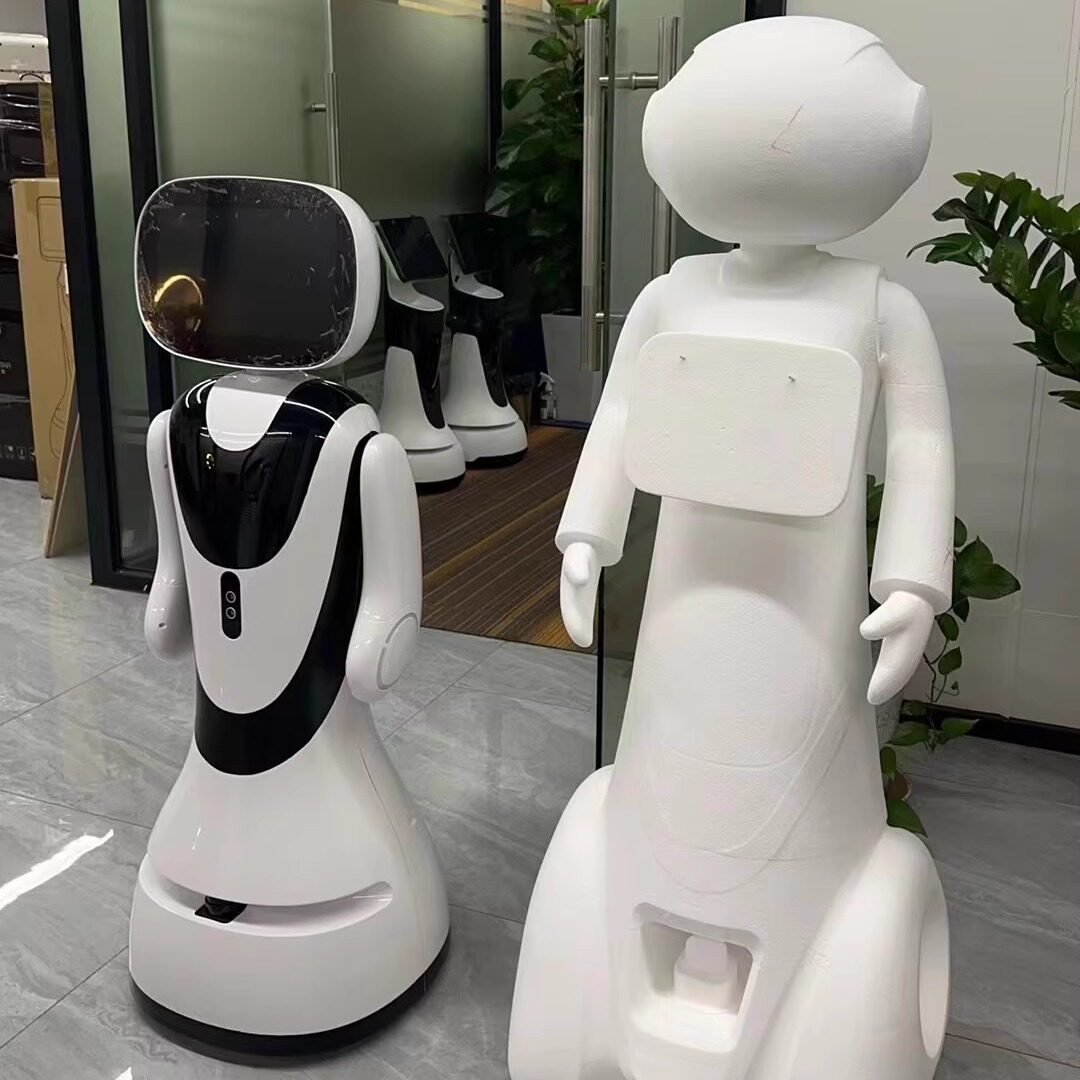
A service robot pilot programme is not a demonstration. It is a controlled test of repeatability, compliance alignment and operational integration. Two units are sufficient only when each is deployed in identical physical environments, configured to the same firmware version and validated against the same set of acceptance criteria — not vendor promises. This requires upfront agreement on which metrics are tracked, how they are measured, and what constitutes failure before the first unit powers on.
What Makes a Pilot Defensible
A defensible pilot begins with a signed technical annex that references the exact hardware revision number, firmware hash and CE RED test report ID for the units supplied. It excludes any claim about cloud service uptime, third-party API latency or AI model accuracy beyond what is covered in the factory’s OQC gate. The pilot must also specify whether the units operate offline or require continuous internet access — because network dependency shifts liability for downtime from hardware to infrastructure. All units ship EXW Shenzhen unless DDP air is selected, and importers must hold valid EORI and VAT numbers to clear customs without delay. For full context, review the MOQ, sampling and lead times policy and confirm sample configuration lead time matches your pilot schedule.
Pilot Acceptance Criteria Must Be Binary
Acceptance criteria cannot be subjective. “Good navigation” is not a criterion; “95 % of autonomous path completions within ±15 cm lateral deviation across 100 repeated routes in the target corridor, logged by internal telemetry” is. Each criterion maps to a single test method, a defined pass threshold and a documented measurement tool — for example, LiDAR point-cloud drift measured using the onboard IMU fusion output, not visual observation. These criteria appear in the quotation and are cross-referenced to the AI robots line product specifications. Any deviation from the agreed criteria voids the pilot’s validity for fleet decision-making.
The Four KPIs That Actually Matter
Three KPIs are easily gamed; one is not. Battery runtime under load, autonomous recharge success rate and voice command recognition rate can all be inflated through selective testing. The only non-negotiable KPI is mechanical reliability: mean cycles between functional failure of drive motors, gripper actuators or docking alignment sensors. This is tracked via internal diagnostic logs, not user reports. WingPhoenix supplies raw log export capability for this purpose on all humanoid robot platform and companion robot models. For service robots, mechanical reliability is the sole KPI tied to the 12-month warranty and 2 % free replacement parts allocation.
Where Compliance Anchors the Pilot
A pilot fails if the units shipped do not match the exact test scope booked for that hardware revision. For service robots, this means verified EMC immunity (EN 61000-4-3/4-6), low-voltage safety (EN 62368-1), class 1 laser statement for LiDAR, and a documented risk assessment covering pinch points, emergency stop response and unintended motion. No CE RED certificate covers firmware updates — each new firmware version requires retesting of radio emissions and immunity. Review the CE RED document checklist to confirm which reports apply to your revision. Note that UKCA is issued only on request and carries separate test requirements.
What This Pilot Cannot Do
This pilot does not validate AI model generalisation across unseen environments, nor does it cover cloud-based speech-to-text accuracy under variable accent or background noise conditions. WingPhoenix does not supply benchmark datasets, inference latency reports or NLP confidence scores for field-deployed models — those remain internal development metrics. If your use case depends on real-time translation accuracy, refer instead to the pocket translator line, where reference translation output is documented per language pair. Similarly, if your pilot assumes integration with building management systems, confirm compatibility via the OEM/ODM services team before quoting — no standard service robot includes BACnet or KNX drivers out of the box.
| Decision Point | Pilot Requirement | Evidence Required |
|---|---|---|
| Hardware Revision Match | Identical PCB layout, sensor model numbers and motor gear ratio | FQC report ID and revision stamp on main board |
| Firmware Consistency | No patch-level difference between units or across trial days | SHA-256 hash logged at boot and verifiable via serial console |
| Compliance Alignment | EMC, LVD and laser class verified for the exact build shipped | Test report ID matching hardware revision, not model name |
| KPI Measurement Method | Telemetry exported raw, not summarised or filtered | Log format spec and timestamp validation procedure |
| Failure Response | Replacement unit drawn from same production batch | Batch code and FQC date stamped on unit and packing list |
| Importer Obligations | EORI, VAT and WEEE registration confirmed pre-shipment | Importer declaration signed and filed with customs broker |
Before placing a pilot order, confirm with WingPhoenix that the requested hardware revision has passed IQC, IPQC and FQC gates at AQL 2.5 major and 4.0 minor — and request the OQC summary for that batch. Then book your CE RED retest scope with an accredited lab if firmware changes post-pilot. To begin, review the full product catalogue, select your candidate model from the audio guide or learning robot lines if environment or age grading dictates, and submit your technical annex using the OEM/ODM services portal.
Questions buyers ask
How do I run a service robot pilot that justifies a fleet order?
Define measurable operational thresholds before deployment, verify hardware revision against documented test scopes, and confirm that all units in the pilot match the exact firmware, sensor calibration and mechanical build of the quoted production batch.
How does finance assess ROI on a two-unit pilot?
They compare total landed cost per unit — including DDP air freight, importer duties, CE RED retesting if firmware changes, and spare parts allocation — against pre-agreed uptime, task completion rate and manual labour displacement logged over 30 consecutive operational days.
What happens if one unit fails during the trial?
The replacement unit must be from the same hardware revision and firmware version; no substitution is permitted unless both parties agree in writing before dispatch, and the original failure triggers an immediate review of the risk assessment and FQC gate data for that build.
What question do most suppliers avoid about pilot data?
Whether the reported KPIs — such as navigation accuracy or voice command success rate — are measured under real-world environmental conditions (e.g., reflective floors, ambient noise >65 dB, variable lighting) or only in factory-controlled settings. WingPhoenix reports only what is verified at OQC per revision; no field performance claim exists beyond the documented EMC and low-voltage scope.
Related: more on ai robots · buyer guides · customisation tiers