Reception Robot for Office Lobby: First-Week Failure Points
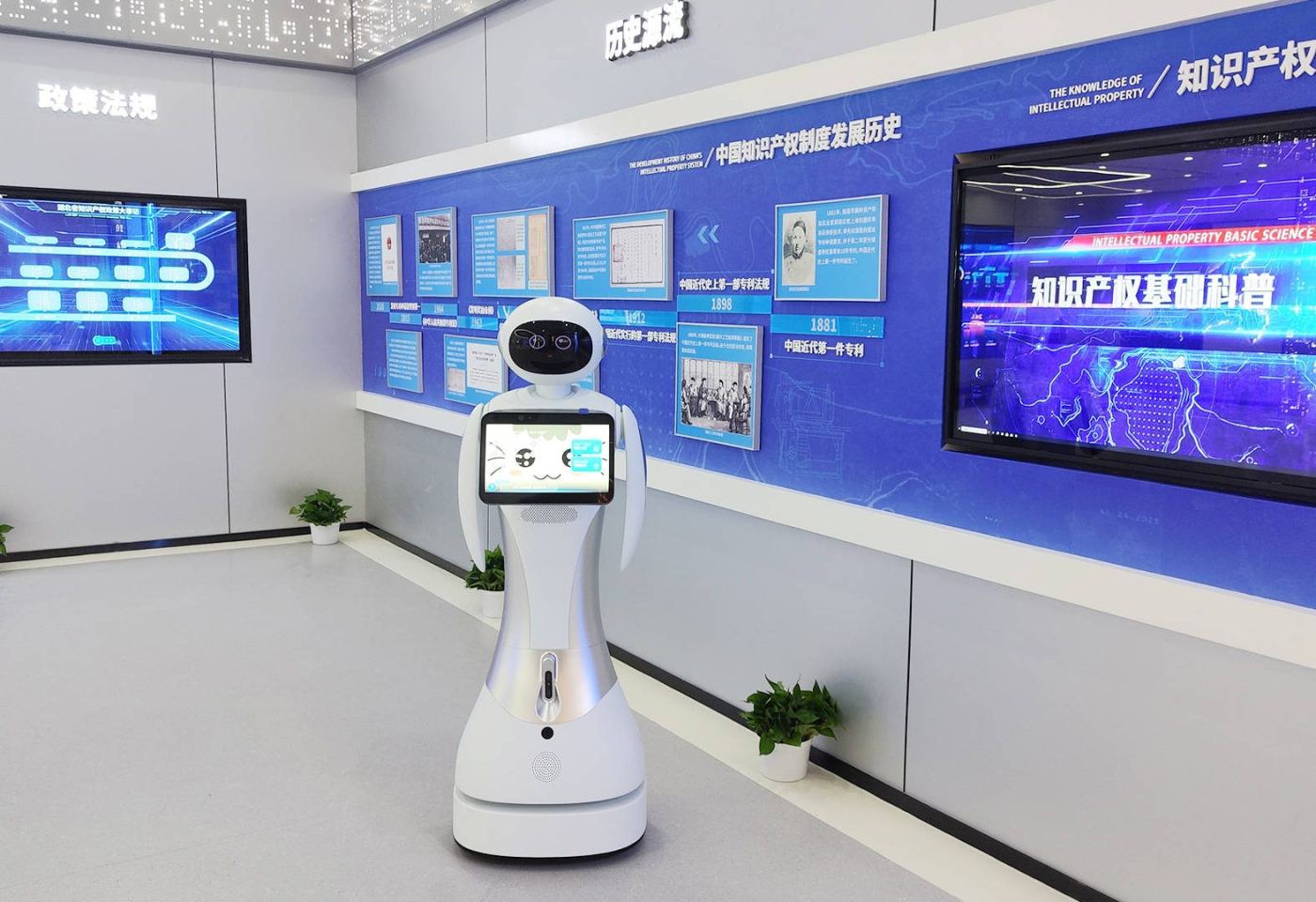
Microphone Saturation Is Not a Software Bug — It’s a Hardware Boundary
Ambient noise in a modern office lobby regularly exceeds 72 dB(A) during peak hours. Standard MEMS microphones on AI robots saturate at 65–68 dB(A) unless actively gated or beamformed. A reception robot for office lobby must include hardware-level acoustic echo cancellation and directional mic arrays — not just post-processing filters. WingPhoenix tests all AI robots under controlled broadband noise (60–85 dB, 100 Hz–8 kHz) before release. If your venue has glass atriums, marble floors or HVAC ducts near the robot’s position, request the acoustic test report for the specific model — it is issued per hardware revision, not per order.Crowd Navigation Fails Before Collision Avoidance Does
LiDAR-based navigation assumes static or predictably moving obstacles. In lobbies, people move laterally, stop abruptly, carry bags, wear backpacks or push trolleys — all of which break standard SLAM assumptions. A reception robot for office lobby must tolerate >40% occlusion of its primary sensor field without freezing or spinning. This requires multi-sensor fusion: time-of-flight + stereo vision + ultrasonic edge detection. Our U1 humanoid robot platform uses this stack; the K1 companion robot does not. Choose accordingly.Venue Wi-Fi Is a Contractual Assumption — Not a Technical Guarantee
Most vendors assume “Wi-Fi available” means “stable, low-latency, authenticated, prioritised”. It does not. Guest networks throttle UDP traffic, block STUN/TURN, and rotate DHCP leases every 90 minutes. A reception robot for office lobby must support: (1) local speech-to-text and intent resolution, (2) cached response trees for common queries, (3) graceful degradation to pre-recorded audio when cloud handoff fails, and (4) automatic re-authentication without user input. None of these are optional — they are engineering prerequisites. Review the CE RED document checklist to confirm whether your model’s radio certification includes dynamic channel-hopping and coexistence testing across 2.4 GHz and 5 GHz bands.Queue Behaviour Is Not Code — It’s a Policy Decision
A robot cannot “decide” to join a queue. It must be instructed — by you — how to behave when multiple people approach. Does it hold position? Rotate to face the next speaker? Display a soft LED pulse? Pause speech output until ambient noise drops? These are not defaults. They are configurable behaviours, defined in your firmware build. WingPhoenix offers white-label firmware builds from 2,000 units — see OEM/ODM services. For smaller runs, use the standard AI audio guide firmware as a baseline: it supports timed, context-aware audio triggers without cloud dependency.What This Process Cannot Do — And Where to Say No
No current WingPhoenix robot — including the U1, K1 or E1 learning robot — is certified for continuous operation in environments exceeding 1.5 persons/m² for more than 90 seconds. No model carries a documented test report for sustained voice command concurrency above two simultaneous speakers. No factory-issued CE RED scope includes real-time RF interference mapping in multi-AP venues. If your supplier claims otherwise, ask for the accredited lab report number, test date, and exact environmental parameters. If those are unavailable, decline the claim. Compliance is not aspirational — it is evidenced. See how we build and test: factory process.Procurement Checklist: Pre-Deployment Validation
| Validation Point | Supplier Must Provide | WingPhoenix Practice |
|---|---|---|
| Acoustic Test Report | Lab-signed PDF showing dB(A) saturation threshold and noise band coverage | Issued per hardware revision; available on request |
| Crowd-Density Stress Log | Video timestamp + sensor log showing operation at ≥1.2 p/m² for ≥5 min | Performed at factory; summary in FQC report |
| Wi-Fi Handoff Latency | Measured time from AP loss to local ASR activation (max 800 ms) | Tested with 3 AP handoffs per minute; logged |
| Offline Intent Coverage | List of minimum 42 intent phrases resolved without cloud call | Configurable per firmware build; validated in OQC |
| CE RED Dynamic Coexistence | Report citing EN 300 328 Annex D.2 (multi-radio stress) | Booked per hardware revision with accredited lab |
| Battery UN38.3 + SDS | Test summary and Safety Data Sheet with Wh rating printed on unit | Shipped with every order; no exceptions |
| MOQ & Sampling Timeline | Clear lead time for configured samples (not stock units) | See MOQ, sampling and lead times |
Before placing an order for a reception robot for office lobby, schedule a technical alignment call with our engineering team. We will review your venue floor plan, Wi-Fi architecture diagram, and peak-hour footfall data — then confirm which models meet your operational envelope. Start here: product catalogue.
Questions buyers ask
Why does a reception robot for office lobby stop responding after three days in a busy building?
It is not the battery or firmware. It is microphone saturation from ambient noise, untested LiDAR occlusion in moving crowds, and reliance on unstable venue Wi-Fi without local fallback logic.
Why does finance reject the second order when the first batch passed compliance paperwork?
Because the CE RED scope covered only static EMC testing — not dynamic RF stress from concurrent Wi-Fi 6 access points, Bluetooth beacons and security scanners in a live lobby.
Why did the distributor’s demo unit freeze during a morning rush, even with full signal bars?
Signal strength ≠ stable throughput. The robot attempted cloud speech recognition over a shared guest network with no local ASR buffer or offline intent parsing — and no queue-behaviour logic to pause, wait or escalate.
What do most suppliers refuse to document about their reception robot for office lobby?
That no functional test exists for simultaneous voice command overlap (three people speaking at once), no crowd-density stress test above 1.2 persons/m², and no documented fallback path when venue Wi-Fi drops below 15 Mbps sustained.
Related: more on ai robots · buyer guides · customisation tiers