Audio Guide System for Museums: Transmitter, Receiver or BYOD App
Staffing load by architecture
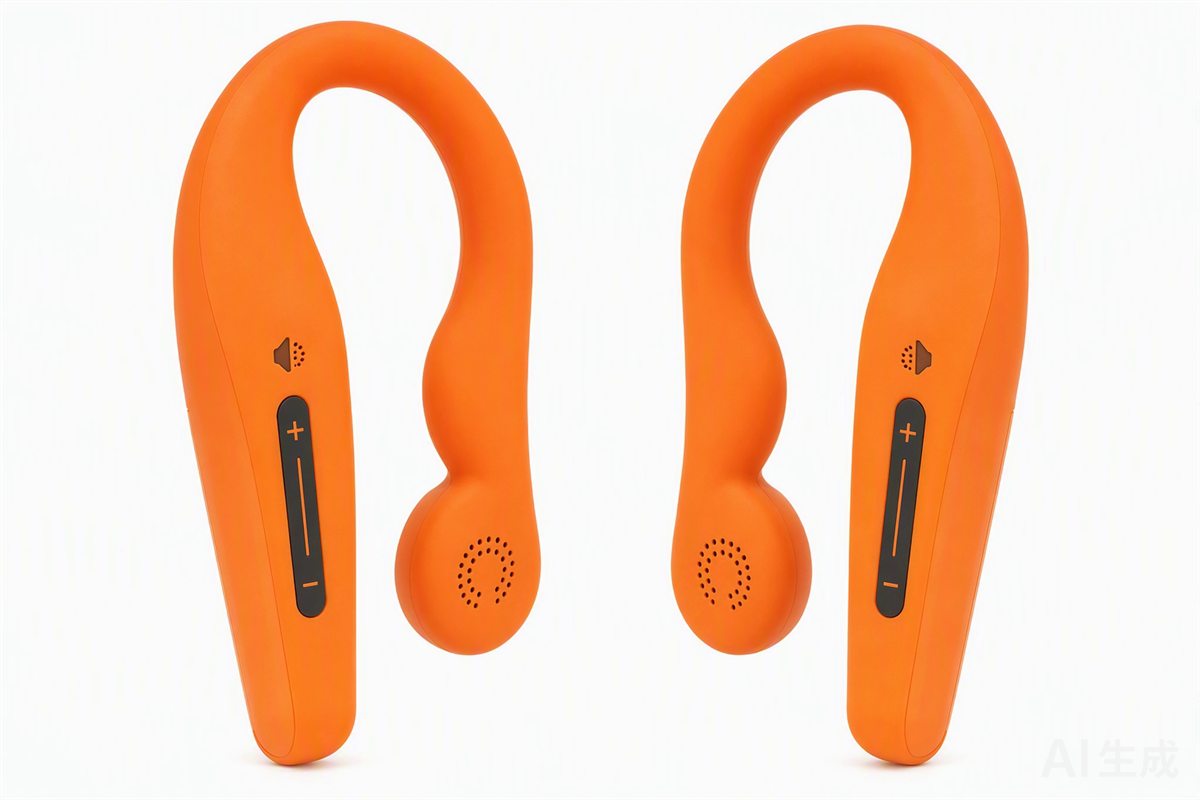
Transmitter-receiver systems require daily reconciliation of paired units, firmware updates on both ends, and visual inspection for physical damage before reissue. Dedicated receivers like the G2 open-ear guide receiver simplify this: one device per visitor, no pairing logic, no visitor-side app install. BYOD shifts staffing effort to front-desk guidance, troubleshooting iOS/Android permissions, and managing QR code expiry — tasks that scale poorly during peak hours. Staff time saved on device handover does not offset time spent resolving connectivity dropouts mid-gallery.
Charging cycles and battery accountability
A transmitter-receiver pair doubles the number of batteries under management versus a single-player model. Each receiver must be charged, tested and logged; each transmitter requires separate charge scheduling and voltage verification. The G1 AI guide player consolidates this into one charge cycle per unit. No battery specification is published until the datasheet exists for the hardware revision being quoted — every order includes UN38.3 and SDS, with watt-hour rating printed on each unit. Claims about “2,000-cycle batteries” or “fast-charging in 15 minutes” are invalid without those documents.
Unit loss and replacement economics
Receiver-based systems see higher loss rates than player-only deployments, especially where visitors remove earpieces or misplace compact units. BYOD eliminates hardware loss entirely but introduces indirect cost: lower engagement, higher support calls and unmeasured attrition from app abandonment. Transmitter loss is rare — they remain fixed at entry points — but receiver loss directly impacts available capacity. The G3 rental cabinet logs insertion and removal but cannot confirm functional state on return; defective units only surface during QC.
Compliance scope and importer duty
Transmitters operating in 2.4 GHz fall under CE RED, FCC Part 15 and UKCA — all verified per hardware revision with accredited labs. Receivers and players carry the same scope. BYOD models shift RF compliance entirely to the visitor’s device; only the transmitter remains in your regulatory remit. WEEE, BattG and DEEE/Triman obligations sit with the EU or UK importer, not WingPhoenix — confirmed in our factory policy. You must appoint an authorised representative if importing into the EU.
What this comparison does not cover
This analysis excludes audio content creation, multilingual voice synthesis latency, offline map rendering and real-time beacon triangulation — none of which are validated or supported across our current AI Audio Guides line. We do not supply indoor positioning SDKs, BLE mesh firmware or custom TTS engines. Those capabilities require third-party integration, and we do not certify interoperability with external beacon networks or CMS platforms. If a supplier claims “seamless iBeacon handoff” or “sub-50ms translation sync”, request test reports — we do not generate them.
Procurement decision checklist
| Decision point | Transmitter-receiver | Dedicated player | BYOD app |
|---|---|---|---|
| CE RED scope | Transmitter + receiver both certified | Player fully certified | Transmitter only |
| Battery documentation | Two UN38.3 + SDS per set | One UN38.3 + SDS per unit | None (visitor device) |
| MOQ for branded units | 500 units | 500 units | Not applicable |
| Firmware white-label | 2,000 units | 2,000 units | App white-label not offered |
| Charging infrastructure | Rental cabinet required for scale | Compatible with G3 rental cabinet | None |
| Lost-unit replacement | Per receiver, covered by 2% free parts | Per player, covered by 2% free parts | No replacement cost |
| Staff training burden | Moderate (pairing, charging, logging) | Low (single-device workflow) | High (OS fragmentation, permissions, QR expiry) |
| Import compliance duties | Importer handles WEEE, BattG, EORI/VAT | Importer handles WEEE, BattG, EORI/VAT | Importer handles WEEE, BattG, EORI/VAT for transmitter only |
Transmitter-receiver systems suit venues prioritising visitor anonymity and avoiding smartphone dependency. Dedicated players offer predictable staffing and battery logistics — particularly when deployed with the G3 rental cabinet. BYOD lowers upfront hardware cost but increases long-term support overhead and reduces control over playback fidelity. To begin evaluation, review the MOQ, sampling and lead times, then request configured samples of the G1 AI guide player and G2 open-ear receiver for side-by-side operational testing.
Questions buyers ask
Which architecture minimises staff time spent on daily device reconciliation and battery management?
Dedicated receiver models like the <a href="https://wingphoenixai.com/products/ai-audio-guide/g2-open-ear-guide-receiver/">G2 open-ear guide receiver</a> reduce manual intervention versus BYOD, while transmitter-receiver pairs require no app onboarding but demand physical unit tracking.
How does CE RED compliance differ between a self-contained player and a Bluetooth-dependent BYOD model?
The <a href="https://wingphoenixai.com/products/ai-audio-guide/g1-ai-guide-player/">G1 AI guide player</a> carries full CE RED (EN 300 328, EN 301 489, EN 62368-1) per hardware revision; BYOD shifts RF responsibility to the visitor’s device, leaving only the transmitter in scope — verified via the <a href="https://wingphoenixai.com/resources/ce-red-compliance-smart-watches/">CE RED document checklist</a>.
What happens when a rented unit fails mid-tour and the visitor returns it damaged?
Rental cabinets such as the <a href="https://wingphoenixai.com/products/ai-audio-guide/g3-audio-guide-rental-cabinet/">G3 audio guide rental cabinet</a> log usage and charge status per slot, but do not detect internal component failure — that requires post-return FQC at your facility or ours, per the <a href="https://wingphoenixai.com/factory/">factory test gates</a>.
What claim about battery longevity should you refuse from any supplier before seeing UN38.3 + SDS?
Any stated cycle count, watt-hour rating or “5-year battery life” without the <a href="https://wingphoenixai.com/factory/">UN38.3 test summary and SDS</a> shipped with the order is unsupported — battery performance is revision-specific and documented only after lab testing.
Related: more on ai audio guides · buyer guides · customisation tiers