AI Memoir Recording for Older Parents: How a Device Collects the Story
What the device actually does with spoken input
The process begins with a physical interaction: a button press or voice wake word triggers a session. Preloaded life story prompts — such as “What was your first job?” or “Tell us about your wedding day” — play sequentially. Audio is captured in mono, 16-bit, 16 kHz, stored locally in encrypted WAV format, and synced only after explicit user confirmation. Transcription occurs either on-device (using quantised Whisper variants) or via secure TLS upload to a regional endpoint — configurable per distributor requirement. Output is plain UTF-8 text, segmented by prompt, with timestamps and speaker ID where multiple voices are detected. No metadata beyond date, time and session ID is retained unless enabled by the operator.
Consent is built into the workflow — not just the packaging
Consent is not a one-time checkbox. It is enforced at three points: first, during initial setup, where the user confirms recording intent via voice or touch; second, before each session, where playback of the prior prompt is followed by a verbal “Yes, record now” or equivalent; third, before export, where the user reviews and approves the transcript before PDF or DOCX generation. This flow satisfies baseline expectations under GDPR Article 7 and UK Data Protection Act 2018. Consent status is logged but not transmitted — logs remain on-device and expire after 90 days. For full traceability, importers should verify that their app layer implements audit-ready consent logging; guidance on supplier vetting is in how to vet a supplier.
Prompt design shapes the memoir — and constrains the AI
Prompts are static, human-written, and grouped into six thematic modules: early years, education, work, relationships, travel and reflections. Each module contains 12–15 questions, phrased openly but neutrally — no leading language, no assumptions about marital status, nationality or health. Prompts are delivered in the language selected at setup (English, German, French, Dutch, Spanish), with no real-time translation during recording. Translation output is reference-only and never certified — consistent with all WingPhoenix AI wearables in the AI wearables line. Prompt sets cannot be edited post-deployment without firmware update and retesting.
What the device does not do — and why that matters
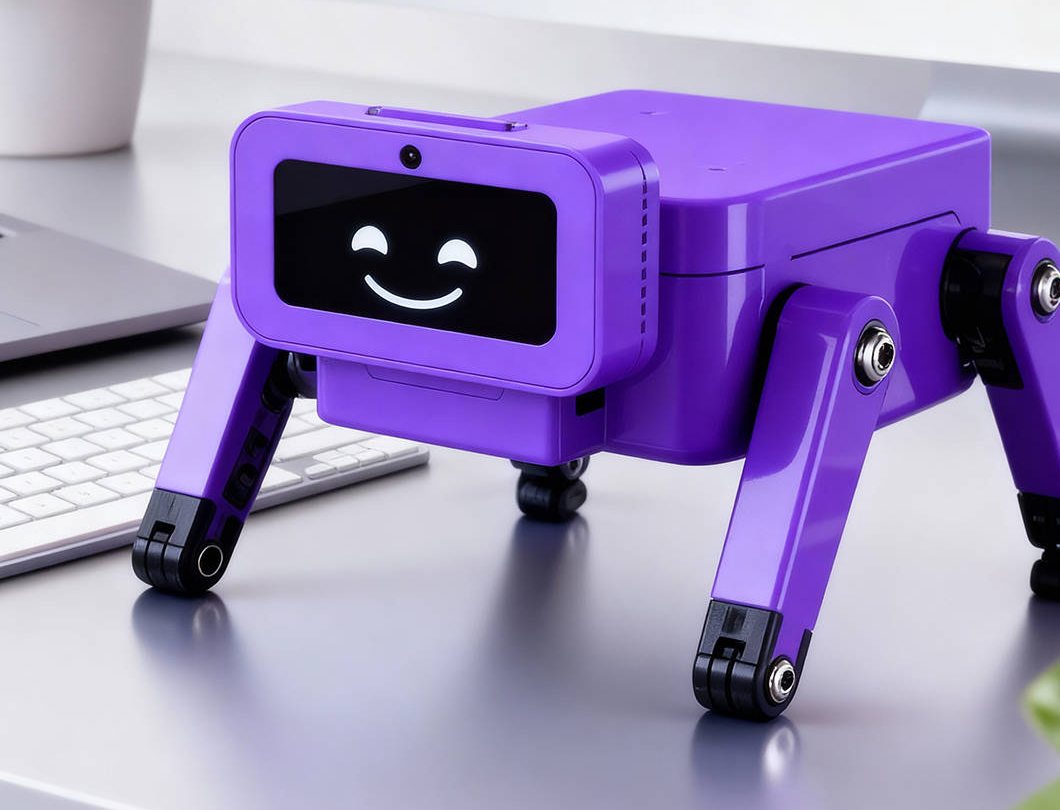
This device does not monitor vocal biomarkers, detect cognitive decline, flag emotional distress or trigger alerts. It does not connect to health platforms, EHRs or emergency services. It does not generate summaries, suggest edits or reorder responses for narrative flow. There is no sentiment analysis, no named-entity recognition beyond basic capitalisation, and no integration with photo or document archives. These functions fall outside the published factory policy and are not supported by any certification — including CE RED, FCC or UKCA. Importers should reject supplier claims that imply clinical, diagnostic or automated editorial capability. A companion robot, for example, operates under the same strict boundaries: the K1 AI companion robot is explicitly non-monitoring and non-responsive to emergencies.
Hardware and compliance alignment
All models used for AI memoir recording — whether a dedicated handheld unit, a companion robot or a tabletop audio station — share the same core compliance profile: CE RED (EN 300 328, EN 301 489, EN 62368-1), RoHS 3, REACH SVHC screening and battery UN38.3 + SDS. Skin-contact items, like wearable companions, also carry EN 1811 nickel release testing. Every hardware revision requires fresh test booking — no grandfathering. Documentation is issued per build, not per model name. Full factory testing methodology, including IQC/IPQC/FQC/OQC gates at AQL 2.5 major, is detailed in how we build and test.
| Requirement | Covered? | Tested per | Notes |
|---|---|---|---|
| CE RED (RF & EMC) | Yes | Hardware revision | EN 300 328, EN 301 489 required; retest needed for firmware/audio prompt changes |
| EN 62368-1 (Safety) | Yes | Hardware revision | Applies to all power sources and audio circuitry |
| RoHS 3 / REACH SVHC | Yes | Material batch | Screening reports supplied with order |
| Battery UN38.3 + SDS | Yes | Cell model | Watt-hour rating printed on each unit |
| Audio transcription accuracy | No | Not certified | Reference output only; no ISO/IEC 25010 claim |
| Consent workflow validation | No | Not tested | Importer responsible for local legal alignment |
| Voice biomarker detection | No | Not implemented | Falls outside product scope and all certifications |
Procurement and configuration options
Standard MOQ is 500 units. Custom prompts or branding require firmware white-label (2,000 units minimum), while custom packaging starts at 1,000. Samples ship in 3–5 days if stock is available, or 7–15 days if configured — sample cost is credited against mass production. Lead time is 25–35 days EXW or FOB Shenzhen; DDP air or sea options are available. All configurations — including those for the R1 AI health ring, H3 health smartwatch or P1 AI learning pad — follow the same compliance and documentation rules. Full OEM/ODM service terms are in OEM/ODM services.
Contact WingPhoenix AI to request the latest CE RED test summary for your chosen hardware revision, confirm prompt language availability and schedule a compliance briefing with our technical documentation team. All documentation is issued per build, not per model — so specify your exact revision number before requesting files.
Questions buyers ask
How does the device turn a parent’s spoken answers into a usable memoir?
It records audio during guided sessions using preloaded life story prompts, then applies on-device or cloud-based speech-to-text conversion. The resulting text is organised by theme — childhood, career, family — and exported as editable files. No AI generates new content or edits meaning.
What compliance checks apply before shipping AI memoir devices to the EU or UK?
CE RED (EN 300 328, EN 301 489, EN 62368-1), RoHS 3 and REACH SVHC screening are mandatory per hardware revision; UKCA is available on request. Battery UN38.3 + SDS is included, and consent workflows must align with local data handling expectations — see the <a href="https://wingphoenixai.com/resources/ce-red-compliance-smart-watches/">CE RED document checklist</a> for full scope.
Why did our sample fail the privacy review when we added custom voice prompts?
Because untested firmware revisions require rebooking of CE RED and EMC tests at an accredited lab — even minor audio prompt changes affect RF exposure and immunity margins. Firmware white-label starts at 2,000 units and includes test coordination; details are in the <a href="https://wingphoenixai.com/resources/moq-sampling-lead-times/">MOQ, sampling and lead times</a> guide.
What do most suppliers misrepresent about “AI memoir” functionality?
They imply automatic editing, emotional tone analysis or narrative synthesis — none of which occur. This device captures, transcribes and structures; it does not interpret, summarise or infer. That capability remains outside current firmware scope and is not covered by any certification or factory policy.
Related: more on ai companions · buyer guides · customisation tiers