Companion Robot Care Home Procurement: Staff Time, Not Replacement
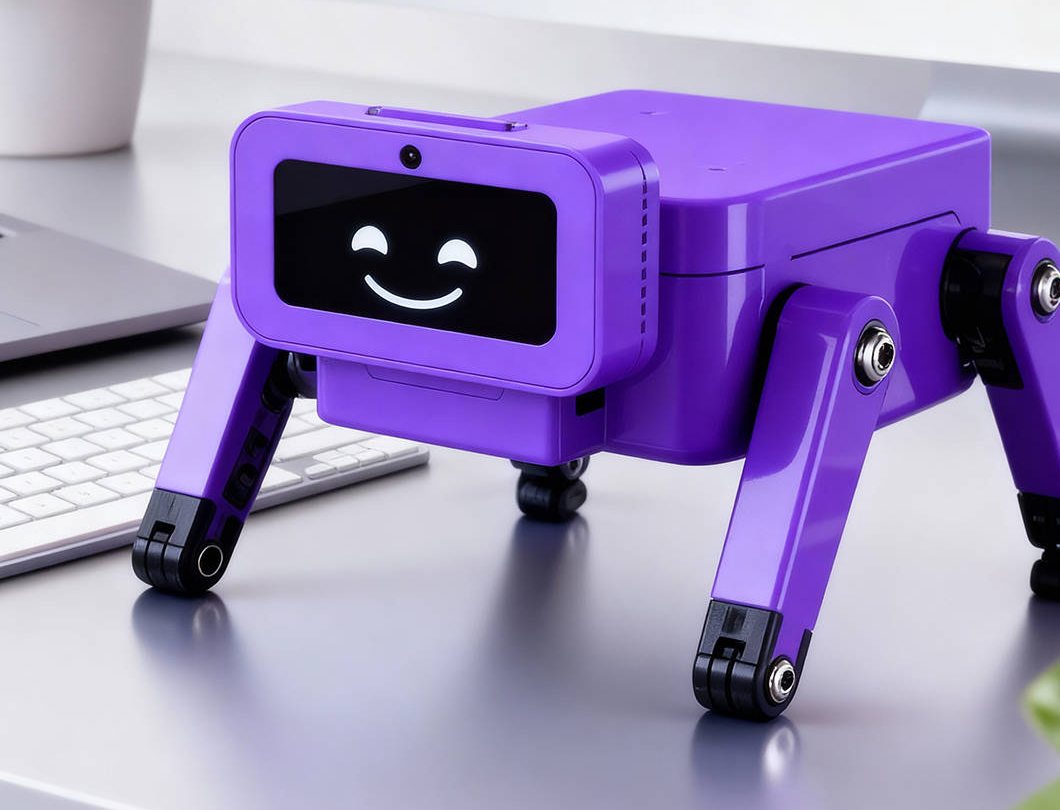
A companion robot in a care home is bought by a facility manager, not by a consumer, and that changes the specification. The device will be handled by residents with reduced grip strength, charged overnight in a shared room, and cleaned by staff who did not read the manual. The procurement question is not whether the robot is charming, but whether it adds usable engagement minutes without adding a maintenance burden. Treat the purchase as an operational tool with a defined duty cycle, and the rest of the evaluation becomes straightforward.
What the device does, and what it must never be sold as
A companion robot is a conversational and activity device. It can prompt a quiz, play music, read a message, or hold a simple exchange. It is not a monitoring or emergency-response device, and no supplier should imply otherwise, because the liability sits with whoever made that claim. Health metrics presented by any companion or wearable are wellness guidance, never diagnosis, and translation output is a reference translation rather than a certified one. If a tender document asks for fall detection or alert escalation, that requirement belongs to a separate, certified care system, not to this category. Buyers who keep those boundaries in the specification avoid the most common post-installation complaint.
The staff-time argument, stated honestly
Engagement rates are the metric that matters, and they are not a property of the robot alone. They depend on whether staff introduce the device, whether the activity library matches the resident group, and whether the robot is left charged and reachable. A realistic operational case is that a companion robot gives an activity coordinator a repeatable tool that runs a fifteen-minute session without preparation, and gives night staff something to offer a restless resident that does not require a second pair of hands. That is a workload argument about redeployed minutes, not a headcount argument. Facility managers who test this properly run a two-week trial with a written log of sessions and staff time, then decide.
Certification and document scope per hardware revision
Certification is not a one-off badge for a product family. It is a test scope booked per hardware revision with an accredited laboratory, and any change to the radio module, enclosure material, or battery pack can invalidate the previous report. Ask for the document set that matches the exact revision you are importing, and ask what changed since the last report. The CE RED document checklist is a useful template for the radio and safety paperwork even when the product is not a wearable, because the underlying standards overlap. For service robots, expect an EMC and low-voltage scope, a class 1 laser statement for the LiDAR, and a documented risk assessment. Toy scope under EN 71-1/-2/-3, EN 62115 and the Toy Safety Directive is decided entirely by the age grading printed on the packaging, and it must be booked per build.
| Requirement | What to request | Who owns it |
|---|---|---|
| Radio and safety | CE RED report covering EN 300 328, EN 301 489, EN 62368-1 for the exact revision | Supplier provides, importer verifies |
| Substances | RoHS 3 declaration and REACH SVHC screening; EN 1811 nickel release if skin contact | Supplier provides |
| Battery transport | UN38.3 report and safety data sheet for the shipped pack | Supplier provides |
| Service robot scope | EMC and low-voltage scope, class 1 laser statement for LiDAR, documented risk assessment | Supplier provides |
| Extended market access | UKCA on request; FCC Part 15 B/C for US and Canada | Supplier provides, on request |
| Take-back duties | WEEE, BattG, DEEE/Triman registration, EORI and VAT | Importer, not the factory |
| Software licensing | Confirm whether Google Play and GMS are licensed; they are not by default | Importer decides, supplier confirms |
Commercial terms and where to say no
Published factory terms for this category are worth knowing before a negotiation starts. Standard MOQ is 500 units, logo at 500, custom packaging at 1,000, and firmware or app white-label at 2,000; companion models sit at 1,000 units, while service robots are quoted per project from 50 units. Samples ship in 3-5 days from stock or 7-15 days configured, with the sample cost credited against mass production. Production runs 25-35 days, EXW, FOB Shenzhen, or DDP by air or sea, with a 12-month warranty and 2 % free replacement parts shipped with the order. QC runs through IQC, IPQC, FQC and OQC at AQL 2.5 major and 4.0 minor.
- Say no to a supplier who quotes a certification number without naming the hardware revision it covers.
- Say no to a claim that the robot monitors residents or contacts emergency services.
- Say no to a white-label firmware promise below the published 2,000-unit threshold unless the tooling cost is quoted separately.
- Say no to a quotation that leaves WEEE, BattG, Triman or VAT registration unassigned.
- Say no to a sample that arrives without a matching document pack.
Running the pilot and scaling it
Start with a small configured sample order and a written trial protocol: which residents, which sessions, which staff member logs the time. The companion robot is the natural pilot unit, and if the facility also wants to test wearable engagement alongside it, the smart health ring covers that ground under the same wellness-not-diagnosis rule. Where the trial involves younger residents or school-adjacent settings, the learning pad is a different product with a different age grading and a different certification path, so keep the two tenders separate. Before committing to a supplier, work through how to vet a supplier, then review the full product catalogue and the OEM/ODM services page to see which terms apply to your volume. It also helps to understand how we build and test before you audit anyone, and the buyer resources section collects the document templates you will be asked for.
The practical next step is to write the trial protocol before you write the purchase order: name the residents, the session length, the staff member who logs time, and the document set you will accept per hardware revision. Send that specification to the factory and ask for a configured sample against it, so the pilot tests the same revision you intend to import at volume.
Questions buyers ask
Can a companion robot replace care staff?
No. A companion robot is a social engagement device, not a monitoring or emergency-response device. It should be procured to add activity and conversation capacity alongside staff, never to reduce headcount on a rota.
What certification should a care home companion robot carry?
Expect CE RED for radio, RoHS 3, REACH SVHC screening, battery UN38.3 with SDS, and a documented risk assessment for service robots. Toy scope applies only if the age grading on the packaging places it there, and it is booked per build with an accredited lab.
Related: more on ai companions · buyer guides · customisation tiers