Companion robot charging dock: runtime and dock questions
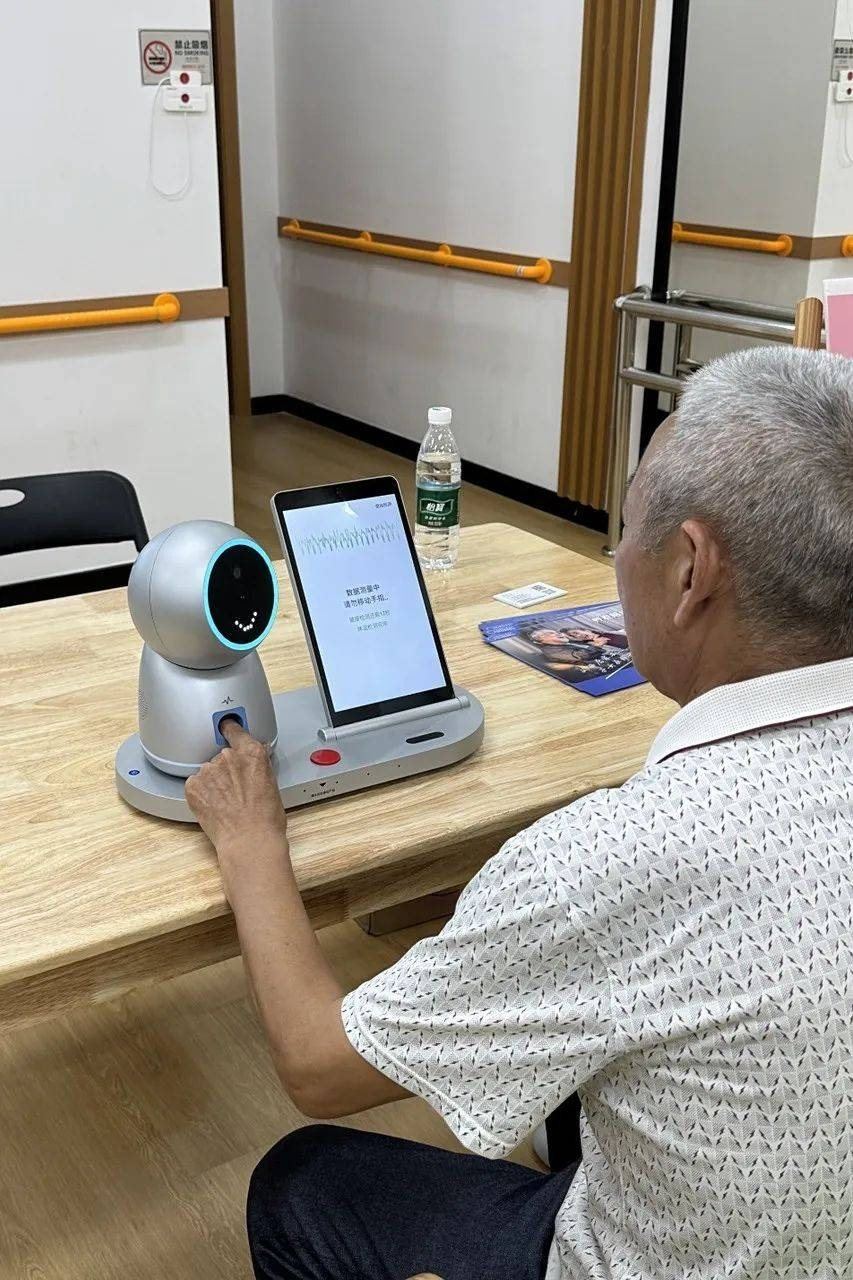
A companion robot that lives on a side table is judged by whether it is ready when the owner picks it up, not by a runtime figure on a specification sheet. That makes the charging dock part of the product rather than an accessory, and it moves always-on device power into the procurement conversation. For a distributor, the practical questions are about standby drain, dock contact design, thermal behaviour in a living room and which documents cover the dock as a separate item. None of these are answered by a glossy hero image.
Ask for a discharge curve, not a runtime claim
Runtime is a function of cell capacity, duty cycle and how often the device wakes to listen, display or move. A supplier who quotes a single hour figure without stating the test condition is giving you a number you cannot defend to a retail buyer. Ask instead for a discharge curve at a defined duty cycle, plus the standby current in microamps or milliamps and the quiescent draw of the dock itself. If the device is a companion robot that idles on a table for most of the day, the standby figure matters more than peak runtime. A companion robot is not a monitoring or emergency-response device, so you are not buying uptime guarantees; you are buying predictable behaviour.
Dock mechanics decide the return rate
Most field failures in this category are mechanical, not electrical. Pogo pins that rely on gravity, a cradle that needs two hands to seat, or a charging contact that sits where a child's fingers reach will generate returns. Walk the dock design against the questions below before you approve tooling.
| Checkpoint | What to ask for | Why it matters |
|---|---|---|
| Seating | Drop-in or guided alignment; single-hand placement | Reduces user error and support tickets |
| Contacts | Plating spec, cycle life, corrosion statement | Contact wear is the usual cause of intermittent charging |
| Thermal | Temperature rise at the dock and cell during charge | Sealed enclosures on soft furniture trap heat |
| Dock power supply | Its own safety and EMC file, or shared with the host | Determines whether the dock is a separate hardware revision |
| Cable and connector | Strain relief, captive or standard connector | Affects WEEE handling and user replacement |
| Battery documentation | UN38.3 report and SDS per cell | Required for air freight and for many retail listings |
Compliance follows the hardware revision
Certification is a test scope booked per hardware revision with an accredited laboratory, not a badge a factory holds. If the dock changes, the scope changes. Expect the radio and safety file to cover CE RED (EN 300 328, EN 301 489, EN 62368-1) and FCC Part 15 B/C, with UKCA on request, plus RoHS 3 and REACH SVHC screening. Battery cells need UN38.3 and an SDS. If any surface is designed to be handled, EN 1811 nickel release applies. Where the packaging age grading puts the product in toy scope, EN 71-1/-2/-3, EN 62115 and the Toy Safety Directive are booked separately. The CE RED document checklist is a useful structure for listing what you expect per revision, including the dock.
What the importer owns, and where to say no
EU and UK importer duties sit with the importer: WEEE registration, BattG in Germany, DEEE and Triman marking in France, plus EORI and VAT. A supplier cannot absorb these on your behalf, and any offer to do so should be treated as a red flag. Google Play and GMS are not licensed by default, so if the roadmap assumes an app store, confirm the plan in writing before tooling. The same discipline applies across a wider range: the Health & Wellness line and a smart health ring carry their own battery and skin-contact questions, and a learning pad brings age-grading and toy-scope decisions into the dock discussion if it shares a power architecture.
Run the supplier against a written checklist
- Request the discharge curve, standby current and dock quiescent draw at your duty cycle.
- Ask for the dock's own safety and EMC scope, or written confirmation that it is covered by the host file.
- Confirm battery UN38.3 and SDS are supplied per cell, per revision.
- Ask which QC gates apply and at what AQL — the published gates are IQC, IPQC, FQC and OQC at AQL 2.5 major and 4.0 minor.
- Confirm MOQ against your channel: standard 500 units, custom packaging 1,000, firmware or app white-label 2,000.
- Check warranty terms — 12 months with 2 % free replacement parts shipped with the order — and who pays return freight.
- Book samples: stock in 3-5 days, configured in 7-15 days, with sample cost credited against mass production.
Use the supplier vetting guide to turn those answers into a scored comparison rather than a conversation. Production runs 25-35 days after approval, so a dock redesign discovered late costs a quarter, not a week. If you need a different enclosure or a branded cradle, OEM/ODM services cover tooling at 12-20 weeks, which is the honest timeline to plan around. Reviewing how we build and test and the wider product catalogue before the first call will sharpen your questions considerably.
Send us the specification with your intended duty cycle, dock placement and target markets, and we will return a document scope per hardware revision plus a sample plan. That single document is the fastest way to find out whether the dock you have been shown can actually survive a side table.
Questions buyers ask
What runtime should a buyer expect from a companion robot?
Runtime depends on the cell, the duty cycle and how the dock is used. Ask the supplier for a discharge curve at your intended duty cycle rather than a single headline figure, and treat any number that is not tied to a test condition as marketing.
Does the dock change the compliance scope?
Yes. A dock with its own power supply adds an enclosure, a connector and often a separate safety file. It should be listed as a distinct hardware revision in the CE RED and safety documentation, not folded into the robot's certificate.
Related: more on ai companions · buyer guides · customisation tiers