How to Choose an AI Wearable Supplier
Most of the problems in a wearable order are decided before the first sample arrives. The quotation looks competitive, the chat is fast, and the difference between a real factory and a trading company is invisible — until a container lands late, or a Bluetooth certification number turns out to belong to a different model than the one in your cartons. This page is a sequence of questions and small requests you can run in about a week, without an engineer on staff.
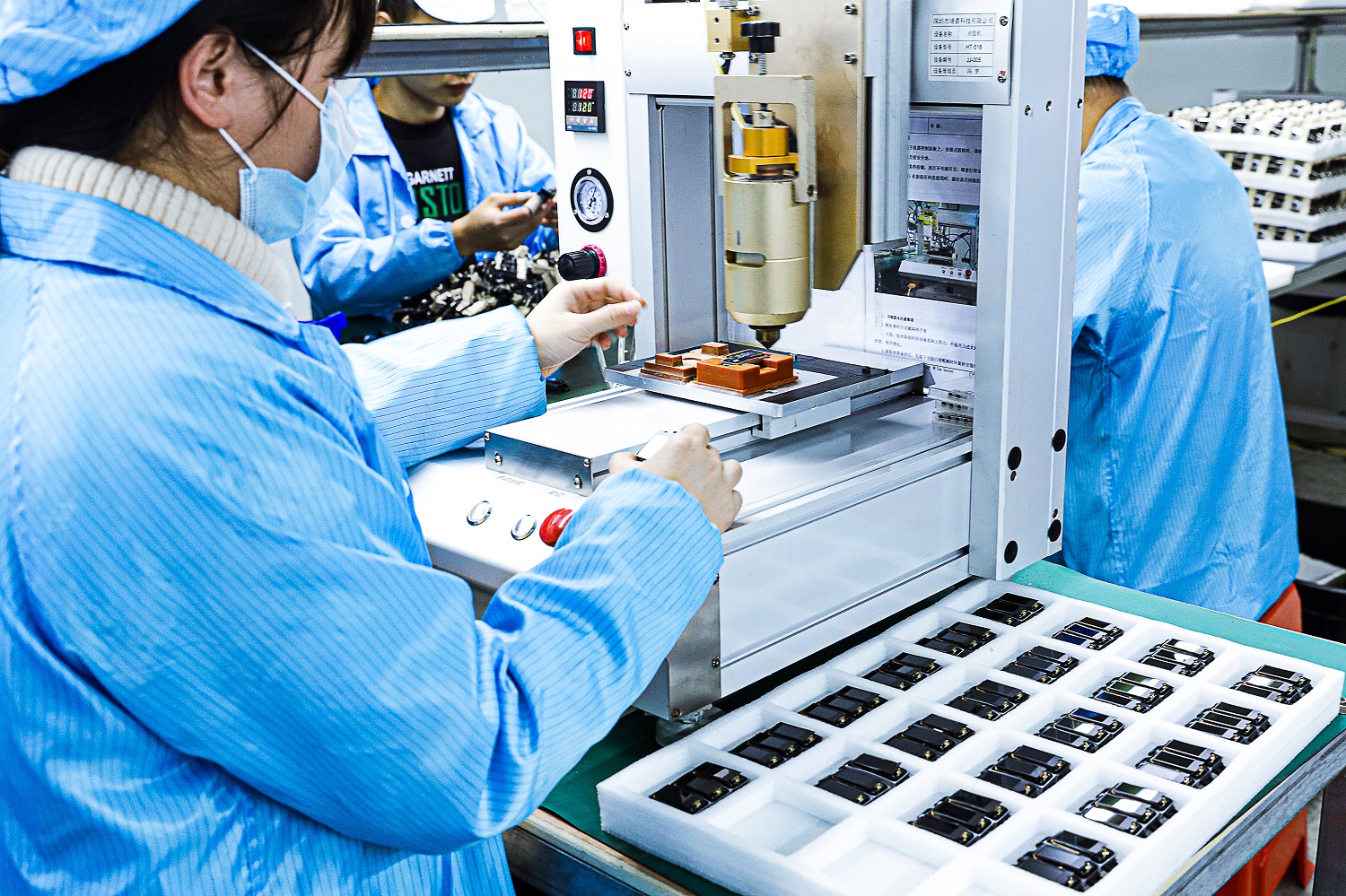
Factory or trader: the ten-minute test
The distinction matters for price, but far more for accountability. A factory can re-run a battery test, change a firmware build, or let you watch the line on a call. A trader relays messages and adds a margin. You cannot always tell them apart from a website, so ask for small pieces of evidence and watch where the answers come from.
| Check | Sign of a factory | Sign of a trader |
|---|---|---|
| Business licence scope | Lists manufacturing and a plant address in Bao'an or Dongguan | Import / export or trading scope only |
| Live video call | Walked through SMT, assembly and a QC lab in real time | Shows a showroom or office; “the plant is far today” |
| Model ownership | Names its own PCB, tooling and firmware revision | Describes whatever sold well last month, no revision control |
| Certificates | Report numbers traceable to the exact hardware you are buying | Generic CE image, cannot share the underlying test report |
| Technical depth | Same engineer answers a hard question a day later | Every reply echoes the words in your own message |
Documents to demand before you quote
Ask for paper early. A supplier that has actually built the model treats these as routine; one that is reselling finds them awkward. Request:
- A business licence showing manufacturing scope, not just trading.
- The ISO 9001 certificate issued to this factory, with its number and address.
- For each model, the CE RED test report and the EU Declaration of Conformity, identified by report number.
- An FCC ID you can look up yourself in the FCC equipment database.
- RoHS and REACH statements, plus an SDS or UN38.3 summary for the lithium cell.
- A written spec sheet that names sensor part numbers rather than saying only “heart rate and SpO2”.
What to ask your supplier: “Can you send the test report and DoC for this exact hardware revision?” A builder sends it within a day; a reseller stalls.
Audit the factory without flying to Shenzhen
You do not need a trip to get a real look. Run a short, repeatable sequence:
- Book an unscripted video call and ask to be walked from surface-mount through assembly to packing.
- Photograph the board silkscreen and the label on a finished unit, then check the model and revision against the paperwork.
- For a first order, hire a third-party pre-shipment inspection to open cartons and run a functional test to your instructions.
- Ask for QC photos from your own batch before goods ship — not images from a demo unit shot last spring.
Watch the sample-to-production gap
The most common disappointment is that the golden sample is not the box. Samples are often hand-built by an engineer who cares about that one unit; production runs on a shift with a tester jig and a throughput target. Ask, plainly, how the sample was made and whether production units are tested on the same jig at the same pass thresholds. Keep the approved sample, and sign off a “limit sample” that defines the cosmetic tolerance you will and will not accept, so both sides point at the same object when a dispute arises.
What to ask: “What differs between a sample and a production unit of this model, and how do you hold the line between them?”
Who owns the tooling, the firmware and the app
Get ownership in writing before money moves. For a custom case or a bespoke retail box, the mould and the dieline should be yours once you have paid the tooling charge — confirm the tool can be moved to another supplier if you ever need to. Firmware and the companion app are a different matter: the factory usually owns the base firmware and grants you a licence, while a white-label app can carry your brand, colours and language. If data hosting region matters to you (it will, for EU retail), ask where the app stores user data and whether that region can be chosen. Our own terms are consistent with the OEM/ODM page.
What a real spec sheet contains
A spec sheet that only lists features is a marketing page. A useful one lets you predict behaviour in the field. Look for:
- Display type, size, resolution and typical brightness.
- Main controller and Bluetooth version, and whether BLE audio is actually supported.
- Sensor part numbers and what each one measures, with stated accuracy ranges, not just “SpO2”.
- Battery capacity in mAh, charging time, and real-world life against a defined usage profile.
- Water rating (IP68 or 5ATM) and whether it is tested per unit or only declared.
- Working temperature range — easy to forget, painful when a band ships to a warm market.
FAQ
- Is it always better to buy direct from a factory than from a trader?
- Not always. A good trader can consolidate small orders and handle paperwork. But for anything with radio, a battery or custom firmware, a factory is accountable in a way a relay is not, and you can change a build or audit a line without a middle layer.
- How many samples should I order before committing?
- Order at least two units of the exact configuration you intend to sell: one to open and test, one to keep as a signed reference. Compare them to each other first — if two samples differ, production will vary more.
- Is a video call enough to trust a supplier?
- A live, unscripted walk-through from surface-mount to packing tells you a great deal, but confirm it with the paperwork: report numbers that match the hardware, and QC photos from your own batch before goods ship.
- What single request exposes a reseller the fastest?
- Ask for the CE RED test report and EU Declaration of Conformity for the exact hardware revision you are buying, by report number. A builder sends it; a reseller stalls or sends a generic certificate image.