Top AI Hardware Manufacturers: What Rankings Hide from Buyers
Rankings of top AI hardware manufacturers offer no procurement utility. They reflect search volume, press releases or paid placements — never audited capacity, revision-specific test coverage, or importer duty allocation. For buyers sourcing AI glasses, companion robots or smart rings in Europe or North America, what matters is traceable evidence: a CE RED report matching the BOM of the unit you ordered, a documented IQC gate for battery cells, and MOQ terms that match your channel’s velocity. This article maps the evidence that replaces rankings — and identifies where a supplier’s claim ends and your due diligence must begin.
Rankings Are Not Audit Trails
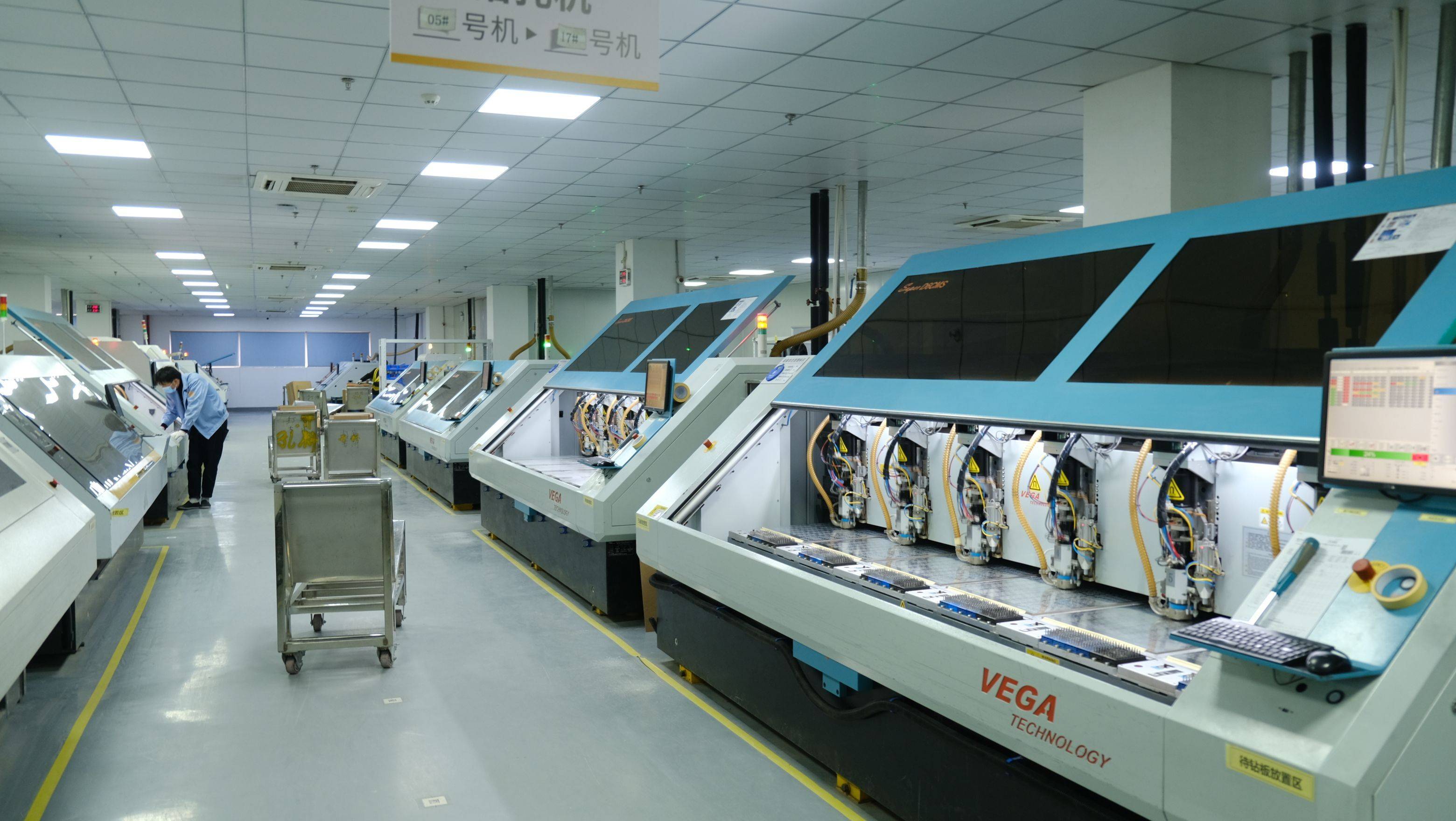
A list titled “top AI hardware manufacturers” contains zero verifiable data about factory throughput, revision-controlled firmware signing, or third-party lab accreditation. Procurement requires proof that each hardware revision passes IQC (incoming component checks), IPQC (in-process verification), FQC (final functional test) and OQC (outgoing quality control) at AQL 2.5 major and 4.0 minor. That evidence lives in internal audit logs, not press kits. WingPhoenix publishes its how we build and test process to show where those gates sit — not to claim status, but to let buyers assess alignment with their own QA protocols. If a supplier cites “ISO 9001”, ask for the scope certificate and the last internal audit summary for AI device lines — not a general facility certificate.
Certifications Are Revision-Specific, Not Brand-Wide
No CE RED, FCC Part 15 or UKCA mark applies across product families. Each hardware revision — defined by PCB layout, antenna placement, power supply topology and firmware version — requires separate test booking with an accredited laboratory. WingPhoenix supplies product catalogue documentation per revision: EN 300 328 and EN 301 489 for radio, EN 62368-1 for safety, RoHS 3 and REACH SVHC screening, plus UN38.3 + SDS for batteries. For service robots, this includes EMC and low-voltage scope, class 1 laser statements for LiDAR, and a documented risk assessment — none of which appear in a ranking. Ask for the test lab name, report number and date for the exact revision you’re quoting.
MOQ and Lead Time Reflect Real Capacity, Not Promises
Stated MOQs expose actual line flexibility. WingPhoenix’s standard MOQ is 500 units; logo imprint adds no increment, but custom packaging starts at 1,000 and firmware white-label at 2,000. AI glasses require 300, service robots 50 per project quote. Production is 25–35 days (education devices 30–40, ODM tooling 12–20 weeks). These figures are grounded in slot availability on SMT lines, battery cell allocation and lab booking windows — not sales targets. Compare against your forecast: if your UK distributor needs 300 units per quarter, a 2,000 MOQ signals mismatched scale. Review our OEM/ODM services page to see how build parameters map to timing and minimums.
What This Process Cannot Confirm
This process does not verify health-diagnostic capability, medical-grade accuracy, or regulatory clearance for clinical use. WingPhoenix does not make or claim FDA 510(k), CE MDR Class IIa or UK MHRA registration for any device. Smart rings carry EN 1811 nickel release testing for skin contact, but no glucose, blood-pressure or sleep-apnoea monitoring claim appears on packaging or firmware. Companion robots deliver wellness guidance only — they do not monitor, detect falls or initiate emergency calls. Translation output is reference-level, not certified legal or medical text. Google Play / GMS licensing is not included by default. These limits are stated in our published how to vet a supplier guide because buyers must reject suppliers who blur them.
Compliance Is Shared — Not Transferred
EU and UK importer duties — WEEE, BattG, DEEE/Triman, EORI and VAT registration — remain legally with the importer. WingPhoenix supplies documentation required to meet those obligations (e.g., RoHS 3, battery SDS, CE declarations), but does not act as EU/UK authorised representative unless separately engaged. This is non-negotiable under Directive 2009/48/EC for toys and Regulation (EU) 2017/745 for health-adjacent devices. Our OEM versus ODM comparison clarifies where responsibility sits at each handover point — especially for branded AI learning devices sold into schools.
| Evidence Type | What to Request | Why It Matters |
|---|---|---|
| Radio Certification | CE RED report number, lab name, test date, exact hardware revision ID | EN 300 328 and EN 301 489 apply per antenna design and RF path — not per brand |
| Safety Compliance | EN 62368-1 test summary, signed declaration of conformity per model | Required for CE, UKCA and FCC — and invalid if firmware or enclosure changes |
| Battery Documentation | UN38.3 test summary + SDS, watt-hour rating printed on each unit | UN38.3 is mandatory for air freight; printed Wh rating prevents customs delays |
| Toy Safety | EN 71-1/-2/-3, EN 62115 reports tied to age grading on packaging | Age grade determines test scope — not marketing language or app features |
| Supplier Capacity | MOQ per configuration, sample lead time, production calendar slots | Reveals true line utilisation — not theoretical “top manufacturer” headcount |
| Importer Obligations | Written confirmation of WEEE/BattG/EORI responsibility allocation | Shifts liability — no supplier can assume these duties without formal mandate |
| Quality Gates | IQC/IPQC/FQC/OQC checklists, AQL sampling plan per revision | Shows defect containment — not just final pass/fail rate |
Rankings distract from what procurement actually controls: documentation traceability, revision-matched testing, and contractual clarity on duties and MOQs. WingPhoenix makes no claim to “top AI hardware manufacturers” status — but does publish its AI device line, AI learning devices and full buyer resources so you can verify claims against evidence. If your next step is to validate a specific hardware revision against EU or UK requirements, send us the specification
Questions buyers ask
Why do “top AI hardware manufacturers” lists fail procurement teams?
They confuse marketing visibility with production capability, omit audit evidence, and ignore regional compliance scope. A ranking cannot show whether a factory holds valid test reports for your target market’s hardware revision.
What does finance or compliance need before signing an NDA?
Proof of current, model-specific certification documentation, MOQ alignment with forecast volume, and clarity on who bears WEEE, BattG and EORI obligations.
What does a distributor ask after a sample fails EMC testing in Germany?
Whether the failure relates to the quoted hardware revision, whether the CE RED test report covers that exact build, and if retesting is included in the quoted lead time.
What do most suppliers dodge when asked about “top AI hardware manufacturers” status?
Confirmation that their listed certifications are tied to a specific hardware revision tested at an accredited lab — not a generic certificate reused across models or years.
Related: more on ai smart hardware · buyer guides · customisation tiers