Smart Watch OEM Manufacturer: OEM or ODM Sets Your Tooling Budget
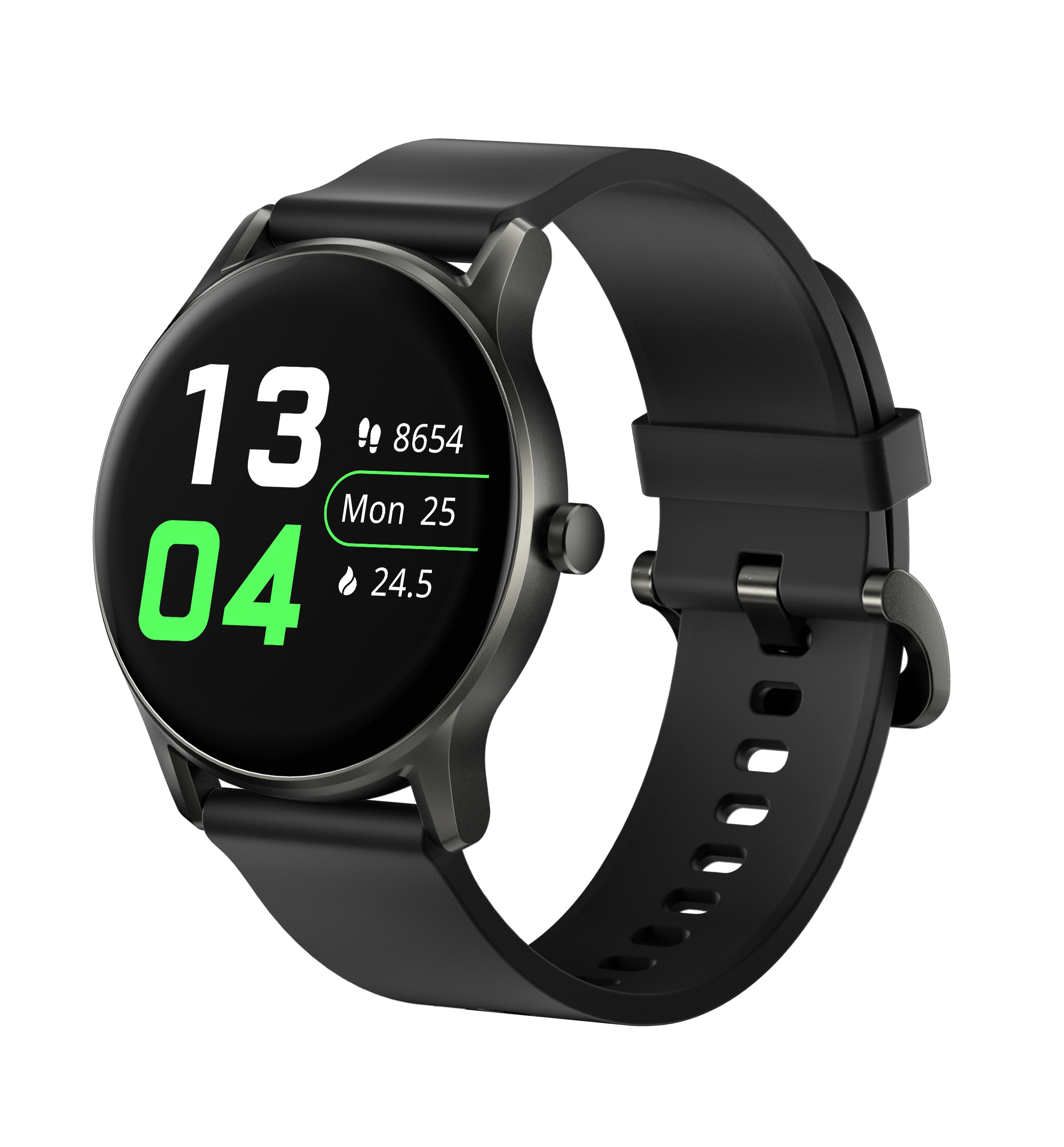
Choosing between OEM and ODM is not a quality decision; it is a budget and calendar decision. OEM means you buy an existing platform and change what the buyer sees: logo, packaging, firmware skin, app branding. ODM means the enclosure and structure are developed for you, and the industrial design becomes yours to control. The moment you ask for a private shell, you are no longer buying units, you are buying tooling, and that changes the negotiation entirely. This article sets out where a shared platform is the better commercial call and where a shell of your own earns its cost.
What you actually buy in each model
In an OEM engagement the supplier has already absorbed the mechanical development. Your spend sits in branding, packaging and the software layer, and the unit economics improve quickly because the mould exists. In an ODM engagement you fund the industrial design, the mould, the structural validation and the first-article approval. That is why ODM tooling runs 12-20 weeks against 25-35 days for standard production, and why the NRE line on the quotation deserves more attention than the unit price. A supplier who quotes ODM tooling without a separate NRE line is either hiding the cost in the unit price or has not understood the brief. Our OEM/ODM services page sets out the two routes as separate scopes for that reason.
Where a shared platform wins
A shared platform is an advantage when your differentiation lives in software, packaging or channel rather than in the object itself. Health and wellness ranges are the clearest case: the sensor stack, the optical window and the skin-contact materials are already validated, so your engineering effort goes into the app, the reporting language and the retail presentation. If you are building a range rather than a single hero product, look at the Health & Wellness line and the AI wearables line as platform families you can extend across several SKUs without paying for tooling twice. The same logic applies to a GPS sport watch, where the antenna and positioning performance are the hard part and the case is not.
Where a shell of your own is worth paying for
Pay for tooling when the shape is the brand, when the product must fit a channel that no shared platform serves, or when a competitor is already selling the same silhouette. A distributor buying for a national retail chain often cannot accept a case that appears under three other labels, and that is a legitimate reason to fund ODM. The same applies to a smart health ring or a smart ring with charging case, where fit and finish are felt rather than seen. Before you commit, decide what you are protecting and write it into the contract.
| Decision point | Shared platform (OEM) | Private tooling (ODM) |
|---|---|---|
| Industrial design | Supplier's existing enclosure | Developed to your brief |
| Tooling and NRE | Not charged; already amortised | Quoted separately, paid before build |
| Typical schedule | 25-35 days production after sample approval | 12-20 weeks tooling before production |
| Minimum order | 500 units standard; logo 500 | Set per project with the tooling quote |
| Exclusivity | Needs a written annex, scope and term defined | Wider room to negotiate, still not automatic |
| Certification scope | Re-tested per hardware revision | Re-tested per revision, booked with an accredited lab |
| Best fit | Software, app or channel differentiation | Shape and fit are the product |
The exclusivity annex is where projects fail
Exclusivity is never implied by paying for tooling. It is a separate commercial term, and it should state the territory, the channel, the term and what happens if volumes fall short of the agreed level. A supplier cannot reasonably promise never to sell a similar shape to anyone else in perpetuity; a buyer cannot reasonably expect protection without a volume commitment. Put both in the annex and sign it before the mould is cut. The same discipline applies to the software layer: Google Play and GMS are not licensed by default, so if your roadmap depends on them, that is a licensing conversation, not a firmware setting.
Documents, samples and the compliance calendar
Certification is a test scope booked per hardware revision with an accredited laboratory, not a badge that transfers with a platform. A new shell changes the radio environment, so CE RED evidence under EN 300 328, EN 301 489 and EN 62368-1 has to be re-established for the revision you ship. Work through the CE RED document checklist before tooling starts, not after, and confirm the battery paperwork: UN38.3 plus SDS, with the watt-hour rating printed on each unit. Skin-contact items need EN 1811 nickel release evidence. EU and UK importer duties such as WEEE, BattG, Triman and EORI/VAT sit with you, not the factory.
- Decide whether differentiation is in the object or in the software, and write that down.
- Request the sample route first: stock samples in 3-5 days, configured samples in 7-15 days, with sample cost credited against mass production.
- Ask for the tooling and NRE quote as a separate line, with a first-article approval gate.
- Draft the exclusivity annex with territory, channel, term and volume commitment.
- Book the certification scope for the hardware revision you intend to ship.
- Confirm QC gates: IQC, IPQC, FQC and OQC at AQL 2.5 major and 4.0 minor, and 12 months warranty with 2 % free replacement parts shipped with the order.
If you are still comparing platforms, the published MOQ, sampling and lead times page gives you the thresholds to test a supplier against, and the factory page shows how the build and test gates are actually run. A practical next step is to send one brief with two versions: the platform you would accept as OEM, and the shell you would fund as ODM. Comparing those two quotations side by side, including tooling, NRE, certification re-testing and the exclusivity term, is the fastest way to see which route your budget can genuinely carry.
Questions buyers ask
What is the practical difference between OEM and ODM in a smart watch project?
OEM means you take an existing platform and change the branding, packaging or firmware layer. ODM means the enclosure, structure and tooling are developed for you, so the industrial design is yours to control and the schedule stretches to 12-20 weeks.
When does a private shell justify the tooling spend?
When the shape carries your brand, when the product must fit a specific channel or use case, or when you need a form factor no shared platform offers. If none of those apply, a shared platform with your own firmware and packaging usually reaches the market faster.
Related: more on ai wearables · buyer guides · customisation tiers