Smartwatch Manufacturers in China: Vetting Before the First Call
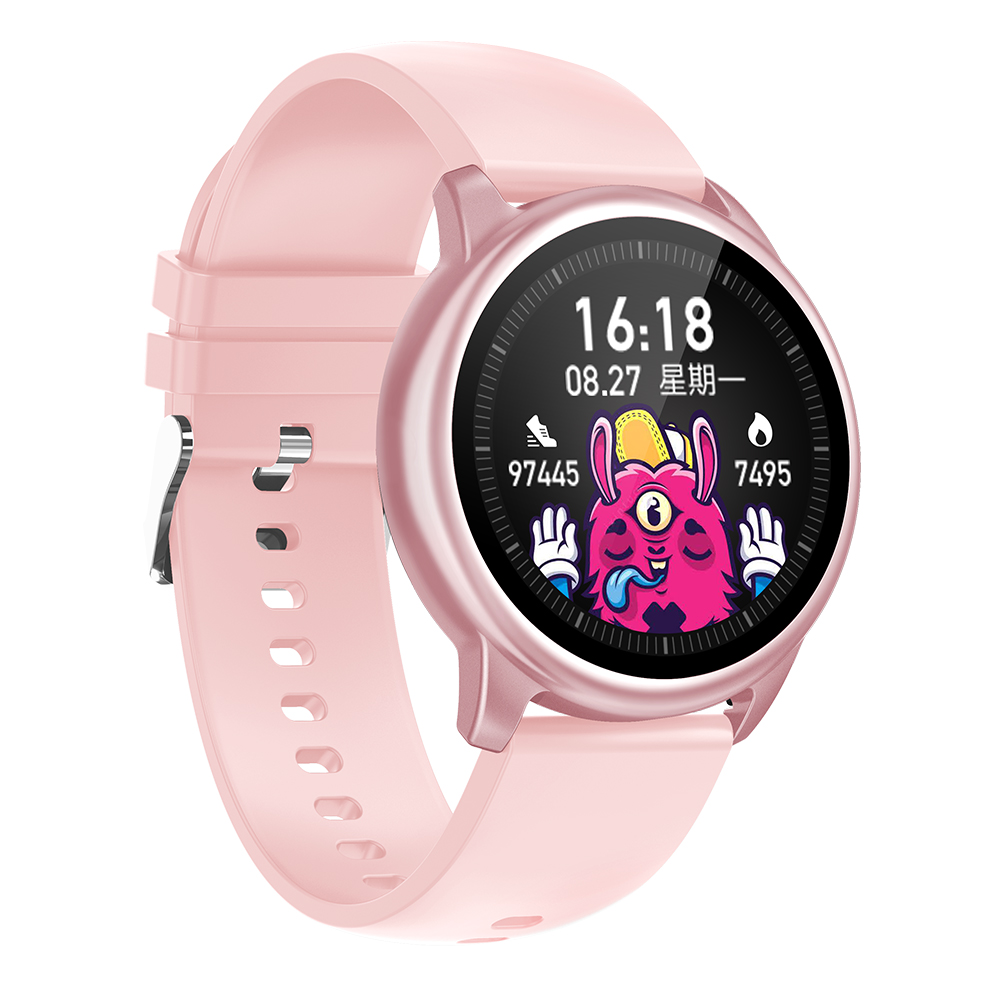
Almost every smartwatch sold in Europe and North America passes through Shenzhen at some point, which makes the sourcing question less about geography and more about identity. The company quoting you may own an SMT line, or it may own a website and a WeChat account. The difference shows up later: in tooling ownership, in who signs the declaration of conformity, and in whether a firmware change invalidates the radio test report. Before the first call, a buyer can settle most of this from documents.
Business scope, address and the trading company tell
Start with the business licence. Chinese companies register a business scope, and a genuine manufacturer usually carries terms covering research, development, production and sales of electronic products. A scope limited to trade, import and export, or technology services is not disqualifying on its own, but it changes what you are buying: a sourcing agent rather than a production partner. Cross-check the registered address against the address printed on the CE RED test report and the ISO certificate. When those three differ, ask which entity actually runs the line and which entity will appear on your invoice.
The second tell is the answer to a simple question: who owns the tooling? A factory will describe mould ownership, amortisation and what happens to the tool if you leave. A trading company often cannot answer without calling someone else. Our own OEM/ODM services page sets out how tooling and firmware ownership are handled, which is a useful comparison when you read a competitor's reply.
What an SMT line actually proves
An SMT line is not a marketing asset; it is a capability with a visible footprint. Ask for a live video walk, not a photo gallery, and ask them to pan across the loader, printer, placement machines, reflow oven and AOI station in one continuous shot. Then ask what happens downstream: is there an assembly area for the case, display bonding and battery fitting, and is there a separate final test bench where each unit is powered, paired and charged before packing?
For wearable categories the test bench matters more than the placement machines. A watch or a ring is a small battery, a radio and a skin-contact surface in one package, so the QC gates need to be named: incoming inspection, in-process, final and outgoing, with defined AQL levels. Our factory page describes how we structure IQC, IPQC, FQC and OQC at AQL 2.5 major and 4.0 minor. If a supplier cannot state AQL levels, they are not running a controlled gate system.
The document set that decides the call
Certification is where trading companies and factories diverge most sharply. A factory books a test scope against a specific hardware revision and can tell you what changes would require a re-test. A trading company forwards a PDF from an unknown source. Ask for the report number, the laboratory, the hardware revision covered and the date. Then ask the question that exposes the gap: if we change the display supplier or the battery cell, does the existing CE RED report still apply?
Treat certification as a test scope booked per hardware revision with an accredited laboratory, not as a badge the company holds. The CE RED document checklist is a reasonable template for what to request, and it applies to watches, rings and glasses alike.
| Verification point | What to request | Red flag |
|---|---|---|
| Legal entity | Business licence with production in scope; entity on invoice matches entity on certificate | Scope limited to trade or import/export only |
| Manufacturing | Continuous video walk of SMT, assembly and final test | Photos only, or a "partner factory" that cannot be named |
| Radio and safety | CE RED scope per hardware revision: EN 300 328, EN 301 489, EN 62368-1 | Undated report with no revision reference |
| Battery | UN38.3 test summary and SDS with watt-hour rating on each unit | Capacity or cycle claims with no datasheet for the revision quoted |
| Materials | RoHS 3, REACH SVHC screening, EN 1811 for skin-contact items | Skin-contact claims without nickel release testing |
| Toy scope | EN 71-1/-2/-3 and EN 62115 where the packaging age grading requires it | Child-oriented marketing on a device graded for adults |
| Software | Written statement on GMS and Google Play licensing | Assumption that Play services are included by default |
Commercial terms and the questions behind them
Once the entity and the documents line up, move to the terms that determine whether the project survives contact with your channel. Published policy is easier to compare than a negotiated verbal offer, so ask each candidate to state its standard position on the points below, then compare like for like. Our own MOQ, sampling and lead times page is written in that format deliberately.
- MOQ: 500 units standard, 500 for logo, 1,000 for custom packaging, 2,000 for firmware or app white-label; 1,000 for ring, education and companion models; 300 for AI glasses; service robots quoted per project from 50 units.
- Samples: stock in 3-5 days, configured in 7-15 days, with sample cost credited against mass production.
- Production: 25-35 days, 30-40 for education models, 12-20 weeks where ODM tooling is involved.
- Terms: EXW, FOB Shenzhen, or DDP by air or sea, with the Incoterm named in the quotation rather than assumed.
- Warranty: 12 months with 2 % free replacement parts shipped alongside the order.
- Importer duties: WEEE, BattG, DEEE/Triman, EORI and VAT registration sit with the importer, not the factory.
Two category notes belong in the same conversation. Health metrics on any wearable, including the health smartwatch and the smart health ring, are wellness guidance and never diagnosis, and translation output is a reference translation. If your marketing copy implies otherwise, the compliance problem is yours, not the factory's.
Where a buyer should say no
Walk away when the entity on the certificate cannot be matched to the entity quoting you, when the supplier refuses a live line walk, or when firmware changes are described as having no effect on the radio report. Say no when a companion or child-oriented device is pitched with monitoring or emergency-response language, and when GMS availability is assumed rather than confirmed in writing. None of these are negotiation positions; they are structural gaps that surface as customs holds or marketplace delistings.
For the wider range of form factors, from the GPS sport watch to the smart ring with charging case, the same verification sequence applies, which is why the AI wearables line and the product catalogue are organised by model and revision rather than by category alone. Send your target specification and destination market before the first call, and ask for the business licence, the certification scope per revision and a proposed QC gate plan in return; that single request separates the factories from the intermediaries faster than any call will.
Questions buyers ask
How do I tell a smartwatch factory from a trading company in Shenzhen?
Check the business scope on the licence, ask for the address on the certification documents, and request a live video walk of the SMT and assembly lines. A trading company can quote your project, but it cannot show you the line that will build it.
What documents should a smartwatch supplier send before a first call?
Ask for the CE RED test scope per hardware revision, the battery UN38.3 summary and SDS, and the QC gate structure with AQL levels. Anything described as "certified" without a report number tied to a revision is a claim, not a document.
Related: more on ai wearables · buyer guides · customisation tiers