Smart Ring vs Smartwatch Retail: When a Ring Earns Its Shelf Slot
Shelf Logic Is Not About Novelty — It’s About Footfall Alignment
A smart ring earns its place beside smartwatches only when it serves a distinct shopper intent within the same aisle: one that starts with a glance at the wrist but ends with a deliberate reach for the finger. That intent is not ‘more data’ — it’s discretion, durability across daily rituals (washing, typing, sleeping), and continuity of presence where watches are removed. If your current basket includes both fitness trackers and smartwatches, adding a ring without clarifying its functional boundary risks cannibalisation, not complementarity. The smart ring line is built to that boundary: no camera, no medical claim, no battery rating published until UN38.3 test summary and SDS ship with the order.
Compliance Must Map to Placement — Not Just Product Type
A device placed next to smartwatches is assessed by regulators and retailers as part of the same category. That means CE RED scope must cover the full operating band, not just Bluetooth LE advertising packets. EN 62368-1 applies identically whether the device sits on wrist or finger. Nickel release under EN 1811 is non-negotiable for skin-contact items — and rings are always skin-contact. All models meet this, but only if size kits are used pre-production and unopened wrong sizes exchanged within the same run. Failure to verify sizing before launch triggers rework, not re-certification — because the build remains identical. For full traceability, each hardware revision books its own lab test scope: how we build and test documents this gate-by-gate.
Category Planning Starts With What You Already Stock
Smart rings do not expand the wearable category — they refine it. If your current assortment includes AI wearables with voice-first interfaces, the ring adds silent input fidelity. If your health segment relies on Health & Wellness positioning, the ring anchors wellness guidance in passive, long-duration wear. But if your basket lacks clear segmentation — say, mixing diagnostic-grade devices with lifestyle tools — adding a ring blurs rather than sharpens your value proposition. Use the how to vet a supplier guide to audit whether your vendor separates wellness output from clinical inference in documentation and packaging.
Demo Strategy Must Reflect Real-World Wear, Not Lab Conditions
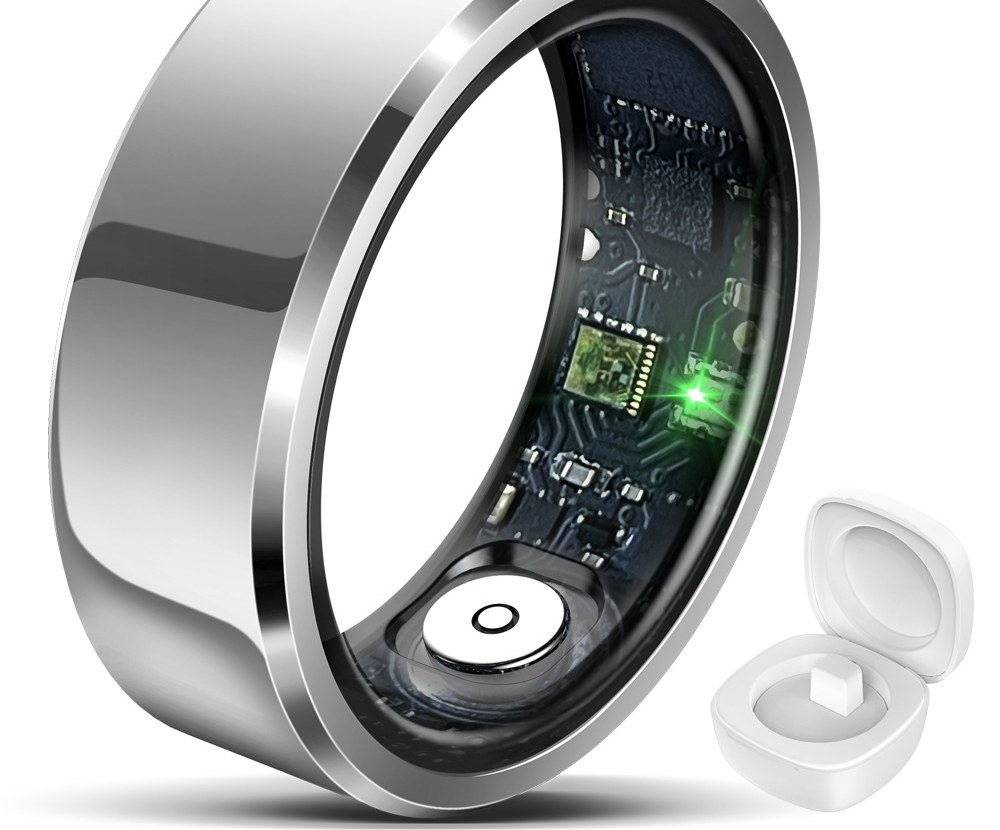
A ring demo that shows pairing, gesture control and battery status is incomplete. It must show removal and reinsertion, wet-hand usability, and how the charging case integrates into existing power accessory displays. Unlike watches, rings have no screen real estate — so the demo must lean into haptic feedback clarity and app handoff timing. This is why the R2 smart ring with charging case ships with a pre-configured demo mode that simulates three days of passive wear without requiring live sensor feeds. Do not accept a supplier who insists on demonstrating biometric accuracy without disclosing test conditions — none of our rings claim continuous physiological monitoring.
What This Process Cannot Do — And Where to Say No
This process cannot validate medical-grade performance, nor does it produce reports for glucose, blood pressure or sleep apnoea detection. No WingPhoenix smart ring model — including R1 or R2 — carries such claims, and no certification path exists for them under current EU or UK frameworks for wellness devices. If a supplier presents white papers, clinical summaries or “validated accuracy” language for these metrics, reject the submission outright. Regulatory bodies treat such claims as misrepresentation — and your importer liability remains unchanged. The OEM/ODM services page states clearly: health metrics are wellness guidance only. Translation output is reference translation. Companion robots are not monitoring devices. These are policy boundaries, not marketing caveats.
| Decision Point | Ring Requirement | Watch Equivalent | Risk If Mismatched |
|---|---|---|---|
| Regulatory Scope | CE RED (EN 300 328, EN 301 489), EN 62368-1, EN 1811 | Identical | Import refusal at EU border |
| Battery Documentation | UN38.3 + SDS, watt-hour printed on unit | Identical | Customs hold, air freight rejection |
| Sizing Logistics | Sizes 6–13 stocked; size kit required pre-run | N/A — one-size-fits-most | Unsellable stock, no returns |
| Firmware Flexibility | White-label app MOQ 2,000 units | Same MOQ applies | Branding inconsistency, delayed launch |
| Certification Timing | Booked per hardware revision, not per SKU | Identical | Invalid CE marking, market withdrawal |
| Toy Classification | Age grading on packaging determines EN 71 scope | Same logic applies | Non-compliant product recall |
- Verify CE RED scope covers full operating band — not just Bluetooth advertising
- Confirm EN 1811 nickel release test applied to final skin-contact build, not prototype
- Use the MOQ, sampling and lead times page to align production timing with your shelf reset calendar
- Request the UN38.3 summary and SDS before approving battery shipments
- Reject any supplier documentation referencing glucose, blood pressure or sleep apnoea detection
Before allocating shelf space, request a size kit and confirm your distributor has access to the product catalogue with updated CE RED and EN 1811 certificates for the intended hardware revision. Then schedule a joint demo using the R2’s pre-configured mode — not live sensors — to assess haptic clarity, case integration and app handoff in context. That is the only way to determine whether footfall shifts toward the finger, or simply bypasses it.
Questions buyers ask
Should I allocate shelf space to smart rings alongside smartwatches?
Yes — when the ring meets the same regulatory thresholds as wrist-worn devices, fits established sizing logistics, and supports a demonstrable use case that does not overlap with or dilute watch functionality.
What financial or compliance risk does this introduce for my import operation?
None beyond standard importer duties (WEEE, BattG, DEEE/Triman, EORI/VAT), provided CE RED, UKCA, RoHS 3 and EN 1811 nickel release documentation is supplied per hardware revision — all of which WingPhoenix books with accredited labs before shipment.
A distributor says their sample failed EMC testing — what should I check first?
Confirm whether the unit was tested at the same hardware revision level as the certified CE RED scope; if firmware or antenna layout changed post-certification, retesting is required — <a href="https://wingphoenixai.com/resources/ce-red-compliance-smart-watches/">CE RED document checklist</a> applies equally to rings.
What do most suppliers avoid naming outright?
That no smart ring — including the <a href="https://wingphoenixai.com/products/health-wellness/r2-smart-ring/">R2 smart ring with charging case</a> or <a href="https://wingphoenixai.com/products/health-wellness/r1-ai-health-ring/">R1 smart health ring</a> — carries clinical claims, camera capability, or continuous physiological monitoring. These are wellness reference tools only, and no report exists for glucose, blood pressure or sleep apnoea detection.
Related: more on ai smart rings · buyer guides · customisation tiers