Smart Ring Sensors: The Small Aperture Problem
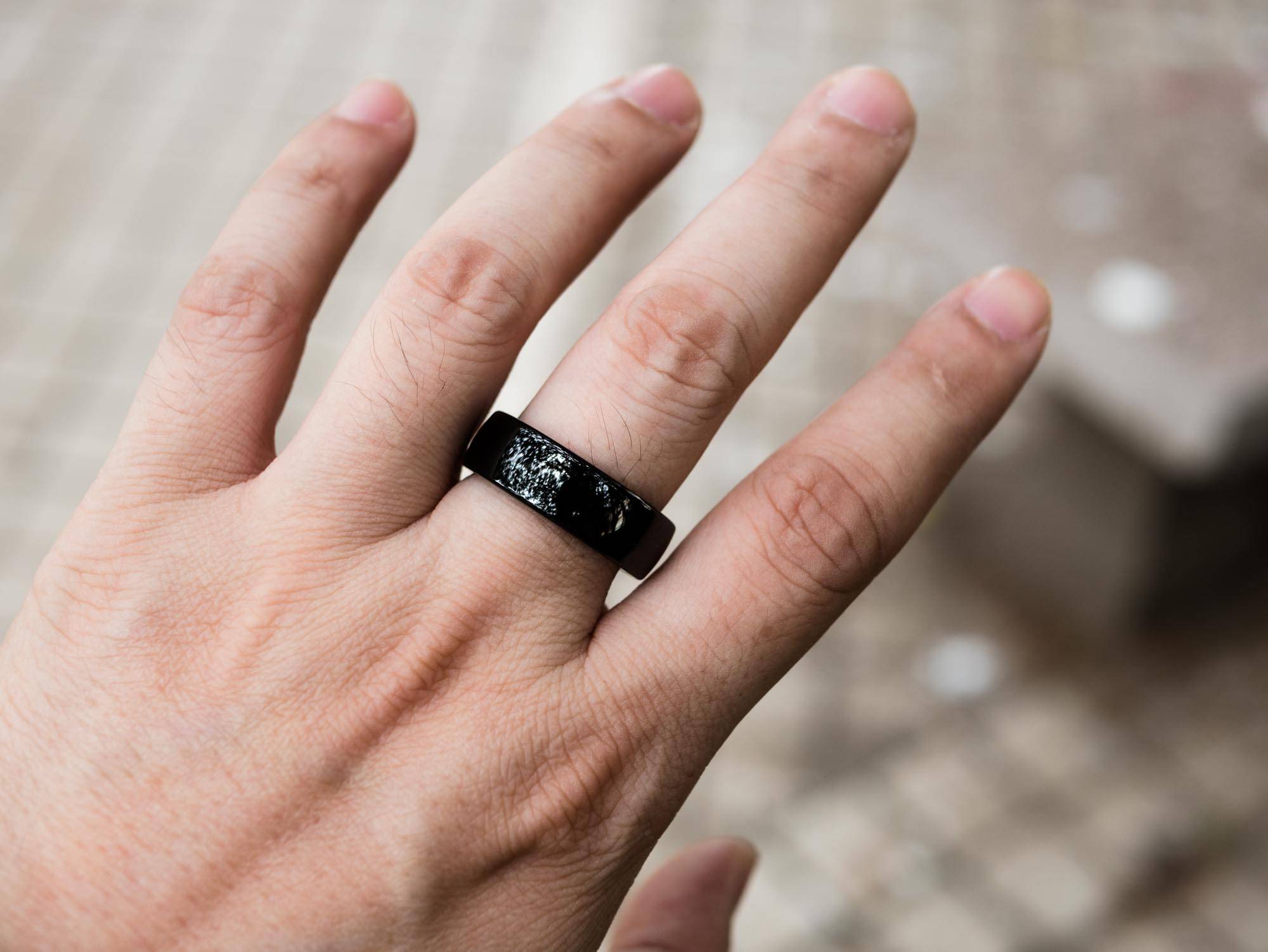
A smart ring is a mechanical compromise before it is an electronic one. The finger gives you a stable, well-perfused site with good bone backing, which is why the form factor appeals to buyers in the health and wellness category. It also gives you a curved, small, thermally exposed surface where the optical path has almost no room to work. This article sets out what the aperture actually changes, so a purchasing manager can write a specification that a supplier can be held to. The engineering constraints below apply to any ring platform, including the R2 smart ring with charging case and the R1 smart health ring.
What the aperture does to the optical path
Photoplethysmography works by sending light into tissue and reading what scatters back. In a watch, the emitter and detector sit several millimetres apart on a flat caseback, which gives the light a defined path through dermis and a reasonable chance of returning to the detector. In a ring, the window is narrow, the curvature forces the emitter and detector close together, and much of the emitted light is lost sideways. The result is a lower signal-to-noise ratio at the same drive current, and a signal that is more sensitive to how the ring sits on the finger.
That has three procurement consequences. First, the optical window material and its surface finish become a specification item, not a cosmetic one, because scatter and haze directly reduce returned light. Second, mechanical tolerance on the inner diameter matters more than on a watch strap, because a ring that rotates or lifts loses contact. Third, the firmware has to do more work to reject motion, so the algorithm budget is part of the bill of materials conversation rather than an afterthought.
Specification points that survive a factory audit
When you visit a supplier, ask to see how the optical window is bonded and how the inner surface is finished. Ask what happens to the reading when the wearer's hands are cold, when the ring is worn on the index versus the ring finger, and when the wearer is typing. A supplier who has thought about this will have a test method; one who has not will answer with a chipset name.
| Item | What to ask for | Why it matters |
|---|---|---|
| Optical window | Material grade, surface finish, bonding method | Haze and delamination both reduce returned light over the product life |
| Inner diameter tolerance | Stated tolerance band and sizing set offered | Fit drift changes contact pressure and therefore signal stability |
| Skin contact materials | EN 1811 nickel release test booked per hardware revision | Skin-contact items carry a nickel release obligation in the EU |
| Firmware behaviour | How motion and low-perfusion states are handled or flagged | Decides whether the app shows a gap or a misleading number |
| Documentation set | CE RED, FCC, RoHS 3, REACH SVHC, UN38.3 and SDS per revision | Documents are issued per model and hardware revision, not per brand |
| Claim wording | Wellness guidance only, never diagnosis | Protects the importer from a regulatory and reputational problem |
Test scope, booked rather than assumed
Certification is a test scope booked with an accredited laboratory per hardware revision, not a status a supplier holds in perpetuity. For a ring you should expect CE RED covering EN 300 328, EN 301 489 and EN 62368-1, FCC Part 15 B/C for the North American market, UKCA on request, RoHS 3 and REACH SVHC screening, and a battery file with UN38.3 plus SDS. The CE RED document checklist is written for watches but the same document logic applies to a ring, because both are radio devices with a rechargeable cell.
Two traps catch importers here. The first is a supplier who sends a certificate from a previous hardware revision. The second is a supplier who treats the ring as a toy accessory when the packaging carries an age grading that puts it in toy scope. Toy scope under EN 71-1/-2/-3 and EN 62115 is decided by the age grading printed on the packaging, and it is booked per build. If your ring is marketed to adults, say so in writing and keep the packaging consistent with that.
Commercial terms and where to say no
Ring platforms sit in the same MOQ band as education and companion models, at 1,000 units, with logo at 500 and custom packaging at 1,000. Firmware or app white-label starts at 2,000 units. Samples are 3-5 days from stock and 7-15 days configured, with sample cost credited against mass production, and production runs 25-35 days, or 12-20 weeks where ODM tooling is involved. These figures are published in the MOQ, sampling and lead times reference and should be the baseline for your negotiation.
- Say no to a supplier who will not name the optical window material or the bonding process.
- Say no to a supplier who quotes a health metric as a diagnostic measurement rather than wellness guidance.
- Say no to a supplier who offers a certificate without naming the hardware revision it covers.
- Say no to a supplier who cannot describe how the app behaves when the signal is unusable.
- Say no to a supplier who will not put the inner diameter tolerance in the specification annex.
Before you commit tooling, ask for the full document set against the exact revision you intend to buy, and ask for a written statement of what the device does when it cannot get a clean reading. The supplier vetting guide sets out the questions in order, and the factory page shows how IQC, IPQC, FQC and OQC gates are applied at AQL 2.5 major and 4.0 minor. If you are building a range rather than a single SKU, review the AI wearables line and the wider Health & Wellness line before you fix your aperture and sizing strategy, then send your target specification and target market to the OEM/ODM team for a quote against a named hardware revision.
Questions buyers ask
Why is PPG harder to get right in a ring than in a watch?
The aperture is small, the skin contact area is limited and the device sits on a finger where perfusion varies with temperature and posture. A watch can trade size for optical power and spacing; a ring cannot, so the mechanical and optical tolerances matter far more.
Can a supplier claim their ring measures blood oxygen or blood pressure?
Treat any such claim as a red flag unless it is framed as wellness guidance rather than diagnosis. WingPhoenix states health metrics as wellness guidance only, and a companion or wearable device is never a monitoring or emergency-response device.
Related: more on ai smart rings · buyer guides · customisation tiers