Smart Glasses Optical Parameters: Why PD, Vertex and Tilt Break Off-the-Shelf Frames
PD Is Not Just a Number — It’s a System Constraint
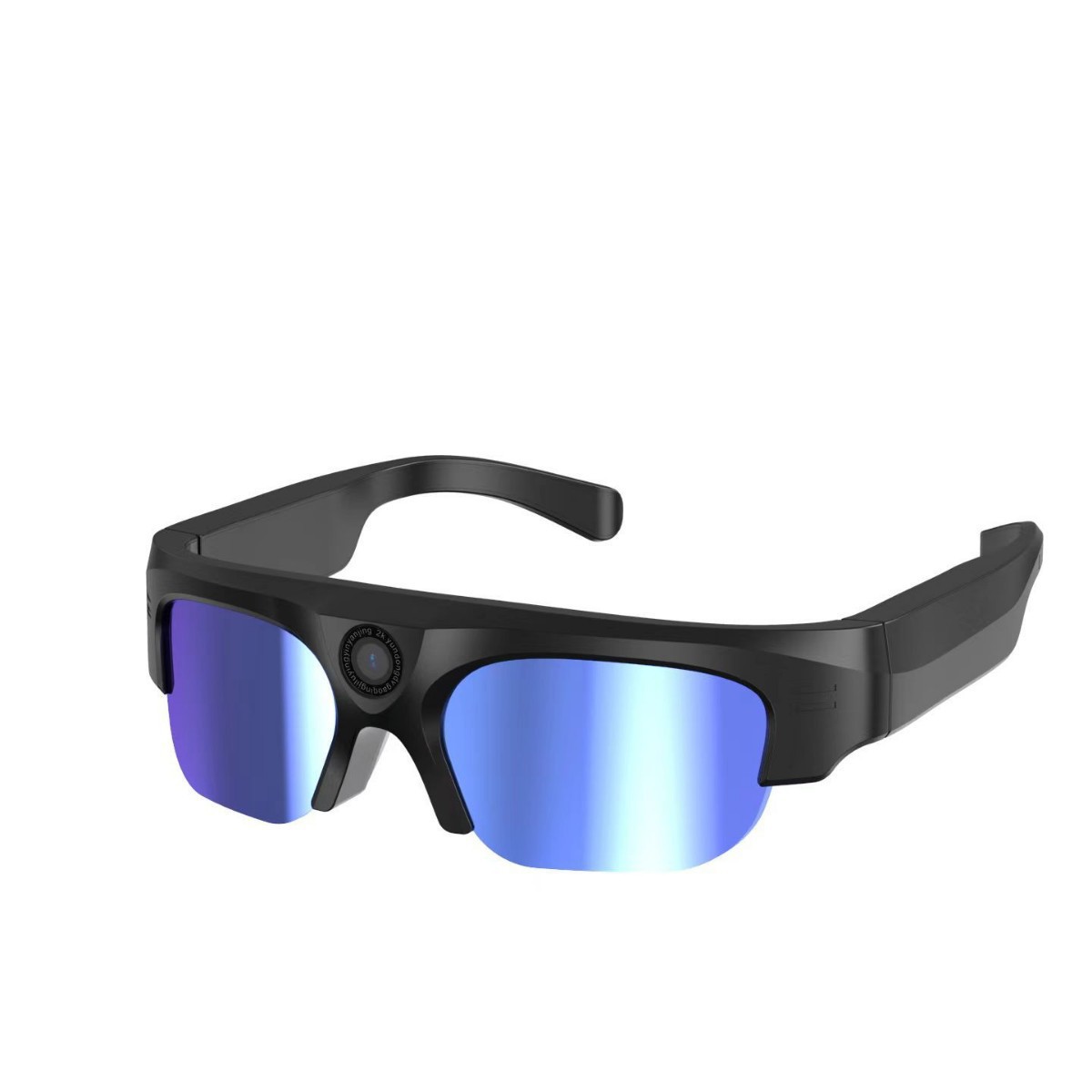
Pupillary distance (PD) defines where the optical axis must intersect the lens surface. In smart glasses, that axis must also align with the exit pupil of the display engine — whether micro-OLED, LCoS or laser beam scanner. Stock frames fix bridge width and temple angle, limiting the range of usable PDs to ±2 mm either side of the nominal value. A 64 mm PD frame cannot reliably serve 58 mm or 70 mm without introducing prism deviation or image cut-off. That mismatch is invisible in CAD but causes real-world blur or double vision. The Vox One AI Glasses use a modular bridge system to cover 56–72 mm PD, but only within that specific hardware revision — no retrofit applies across models. For distributors, this means PD compatibility must be confirmed against the exact BOM version, not the product name.Vertex Distance Defines Focus and Field of View
Vertex distance — the gap between the cornea and the rear surface of the lens — affects effective power, especially above ±3.00 D. In conventional optics, it’s adjustable via frame fit. In smart glasses, it’s locked by the depth of the optical cavity, the thickness of the waveguide substrate and the mounting position of the imaging sensor. A 12 mm vertex distance on a stock frame may shift to 14.5 mm when a prescription lens is added — enough to degrade near-field focus or cause edge distortion in AR overlays. No stock AI glasses frame publishes its tested vertex tolerance band. Importers must request the vertex distance specification sheet for the exact hardware revision — it is not included in the CE RED document checklist, nor in standard RoHS or REACH reports.Pantoscopic Tilt Changes How Light Enters the Eye
Pantoscopic tilt — the downward angle of the lens plane relative to the horizontal — alters the effective optical centre and introduces induced cylinder. Most stock smart frames are built with fixed tilt between 6° and 10°, calibrated for average facial anatomy. But prescription lenses ground for 8° tilt behave differently when mounted in a frame set at 12° — especially with progressive or aspheric designs. This is not a cosmetic issue: it shifts the gaze point for gesture-controlled UI elements and degrades eye-tracking accuracy. The how we build and test process includes tilt verification at IPQC, but only for the reference lens set shipped with the tooling — not for customer-supplied lenses.What This Process Cannot Do
This process does not produce an optical path report. No stock frame revision — including those in the AI Glasses line — ships with a validated, lab-measured optical path report covering entrance pupil location, chief ray angle, or effective back vertex distance. Such a report requires interferometric measurement per unit batch and is only booked per hardware revision with an accredited laboratory when requested in writing at order stage. Without it, optical integration remains theoretical. Importers should refuse any supplier claim of “optical readiness” that does not name the test scope, lab accreditation number and date of the last path verification.Procurement Checklist: Before You Approve a Frame Build
| Parameter | Stock Frame Limitation | Verification Required | Supplier Responsibility |
|---|---|---|---|
| Pupillary Distance (PD) | Fixed bridge; ±2 mm tolerance only | Measured on 3 units per batch, IQC gate | Reported in FQC summary, not CE file |
| Vertex Distance | Defined by waveguide depth and housing | Calibrated against reference lens set | Documented per hardware revision, not per order |
| Pantoscopic Tilt | Set during injection moulding; no field adjustment | Checked with digital inclinometer at IPQC | Not covered under CE RED or FCC scopes |
| Optical Path Report | Not generated for stock builds | Must be booked separately pre-production | Lab test scope, not factory default |
| Lens Mounting Tolerance | ±0.3 mm lateral, ±0.2 mm axial | Validated in OQC with optical alignment jig | Part of FQC summary, not public datasheet |
| Display-to-Lens Registration | Factory-calibrated; no user reset | Verified using collimated target at FQC | Not recalibrated after firmware update |
Next Steps for Compliance and Fit Validation
If your specification includes prescriptions outside ±2 mm PD range, vertex distances below 10 mm or above 15 mm, or pantoscopic tilt requirements outside 6°–10°, treat the stock frame as non-viable. Request the hardware revision number, then ask for the corresponding optical verification summary from how we build and test. Cross-check it against your optical lab’s lens design parameters. For custom builds, review the customisation tiers — optical path reporting, tilt-adjustable temples and PD-variable bridges are available, but only from MOQ 1,000 units and with 12-week lead time. To begin, send us the specificationQuestions buyers ask
Why does a prescription that works in regular glasses sometimes fail in smart glasses?
Because smart glasses require precise alignment of three interdependent optical parameters — PD, vertex distance and pantoscopic tilt — and off-the-shelf frames fix only one or two, leaving the third unadjustable or incompatible with lens curvature and sensor placement.
Why can’t we just adapt our existing optical supplier’s workflow for AI glasses?
Standard optical labs assume full frame adjustability and manual lens edging; smart glasses integrate fixed optics, waveguides or microdisplays whose optical path is defined at factory level — no post-assembly lens repositioning is possible without breaking calibration or sealing.
Our distributor says their sample passed CE RED but failed optical validation with end users. What went wrong?
CE RED covers radio emissions and safety, not optical performance. A device may comply fully with EN 62368-1 and EN 301 489 while delivering unusable vision due to unverified PD/vertex/tilt tolerances — those are optical engineering checks, not regulatory tests.
What optical claim do most suppliers avoid naming?
That they do not supply a verified optical path report — a document mapping the exact entrance pupil location, chief ray angle and effective back vertex distance for each frame model — because it requires lab-grade metrology per hardware revision, and none is published for stock builds.
Related: more on ai glasses & optics · buyer guides · customisation tiers