Prescription Smart Glasses Options: Clip, Bonded or Direct
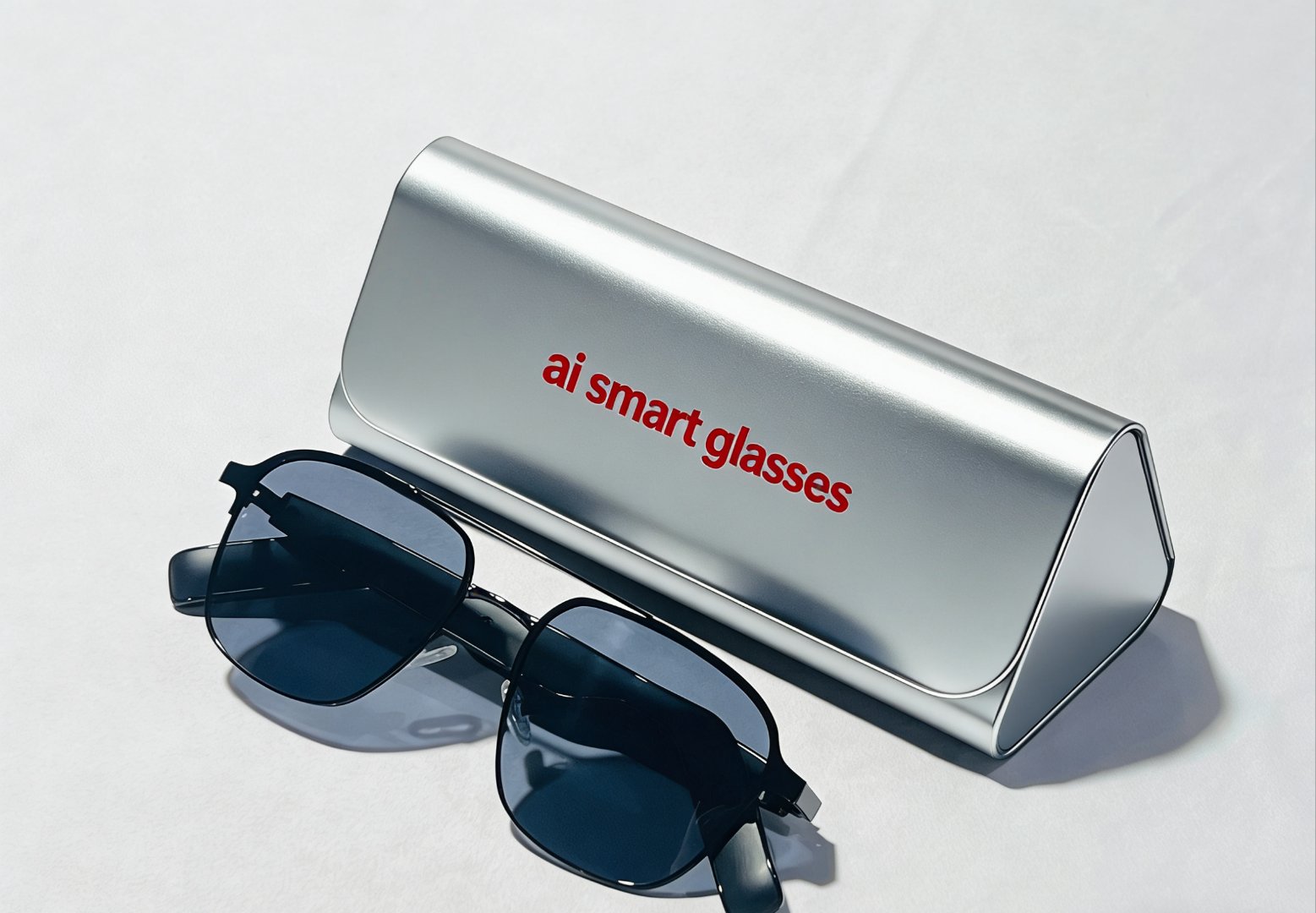
Prescription wearers are a large part of the adult eyewear market, and any smart glass programme that ignores them caps its own addressable shelf. The question is not whether to support prescriptions but which of three routes to take: a removable clip-in insert, a lens bonded to the display module, or a frame designed from the start around a prescription carrier. Each route moves cost, tooling and compliance risk to a different party, and the right answer depends on your channel, your returns tolerance and how much of the optical supply chain you want to own. The table below is written to be taken to your own optical lab for a second opinion.
Route one: the clip-in insert
The insert is a separate optical part that clips behind the display module. The frame stays a stock item, the prescription is ground by a local lab, and the wearer can move the insert between frames of the same model. For a distributor this is the simplest route: you buy electronics on one purchase order and optics on another, and you are not holding prescription inventory. The trade-offs are mechanical. Clip retention force, insert thickness and the gap between insert and display all affect comfort and image alignment, and those tolerances must be specified before tooling, not after. Ask the supplier for the insert drawing and the retention specification in writing.
Route two: bonded digital lenses
Here the corrective lens is bonded to or integrated with the optical element in front of the display. The result is a cleaner silhouette and fewer loose parts, which suits premium retail. The cost is flexibility. A bonded assembly is built to a specific prescription, so it cannot be returned to stock if the wearer's prescription changes, and every variant is a separate build. Bonding also concentrates risk: coating adhesion, thermal cycling and cleaning chemicals all act on the bond line, and a failure there is a warranty event rather than a lens swap. If you take this route, agree a documented cleaning and handling instruction and treat it as part of the product, not an accessory.
Route three: direct-to-frame optical design
The third route designs the frame around a prescription carrier from the first sketch, so the optical path is part of the industrial design. This gives the best optical alignment and the most room for a branded look, but it is an ODM project. Tooling for a new optical frame runs on a longer cycle than a cosmetic variant, and the optical design work sits with your lab or a design partner, not with the electronics supplier. It only makes sense when you have a firm view of volume and a channel that can carry a premium price. For most first programmes, the insert route gets you to market faster and leaves the direct-to-frame decision for a second generation.
| Decision point | Clip-in insert | Bonded digital lens | Direct-to-frame |
|---|---|---|---|
| Who grinds the prescription | Local optical lab | Lab or bonded-lens partner | Your optical design partner |
| Frame tooling | Stock frame, insert tool only | Stock frame, lens tooling | New frame tooling |
| Returns exposure | Insert replaced, frame reused | Whole optical assembly replaced | Whole unit replaced |
| Alignment control | Set by clip tolerance | Set at bonding | Set in design |
| Skin-contact documents | EN 1811 nickel release on frame and insert | EN 1811 on frame | EN 1811 on frame |
| Typical first order | AI glasses tier, 300 units | Quoted per optical build | ODM tooling cycle |
What the buyer must pin down before tooling
Three documents decide whether a prescription programme runs smoothly. First, the insert or lens drawing with thickness and curvature limits, so your lab can confirm it can actually produce the range you plan to sell. Second, the retention or bonding specification, including the test method, so a field failure can be traced to a defined limit rather than argued about. Third, the compliance file for the frame as shipped. The CE RED document checklist sets out the radio and safety documents that travel with each hardware revision, and EN 1811 nickel release applies to any part that touches skin for prolonged periods. Certification is a test scope booked per hardware revision with an accredited laboratory, not a badge that transfers automatically when the optical part changes.
Commercial structure and where to say no
Published factory policy sets the entry points you can plan against: MOQ is 500 units standard, 300 for AI glasses, logo from 500, custom packaging from 1,000 and firmware or app white-label from 2,000. Samples run 3-5 days from stock or 7-15 days configured, and sample cost is credited against mass production. Production is 25-35 days, with ODM tooling at 12-20 weeks. The customisation tiers explain how those bands map to changes, and how we build and test describes the IQC, IPQC, FQC and OQC gates at AQL 2.5 major and 4.0 minor.
- Say no to a supplier who will not publish insert geometry and retention limits before you pay for tooling.
- Say no to bonded lenses offered as a stock SKU; a bonded assembly is prescription-specific by definition.
- Say no to a claim that the frame alone makes the wearer's vision correct; that sits with the optical lab.
- Say no to a quotation that bundles the optical part and the electronics without separate warranty terms.
- Say no to a programme that assumes EU or UK importer duties are the supplier's; WEEE, BattG, DEEE/Triman and EORI/VAT sit with the importer.
Building the range
Most buyers start with one insert-compatible frame, prove the lab handover on a small run, and only then consider a bonded or direct-to-frame variant. The AI Glasses line and the Vox One AI Glasses are the natural starting points, with the wider product catalogue for adjacent categories. Before you brief your lab, read AI glasses market trends for the demand pattern and buyer resources for the document templates. Then send us the specification through our contact page with your target prescription range, channel and first-year volume, and we will return an insert drawing and a quotation you can put in front of your optical lab for a second opinion.
Questions buyers ask
Can a prescription wearer use AI glasses without a custom optical build?
Yes, if the frame accepts a removable insert. The insert is made to the wearer's prescription by an optical lab and clipped into the frame behind the display module, so the frame itself stays a standard SKU. It is the lowest-risk route for a distributor because the electronics and the optics are bought separately.
Who is responsible for the prescription lens itself?
The optical lab that grinds and fits the lens, not the frame supplier. Your supplier should document insert geometry, thickness limits and clip retention force so the lab can work to a known envelope. Keep that handover in writing, because claims about vision correction sit with the lab, not with the hardware brand.
Related: more on ai glasses & optics · buyer guides · customisation tiers