Smart Glasses Lens Standards: Which Document Answers What
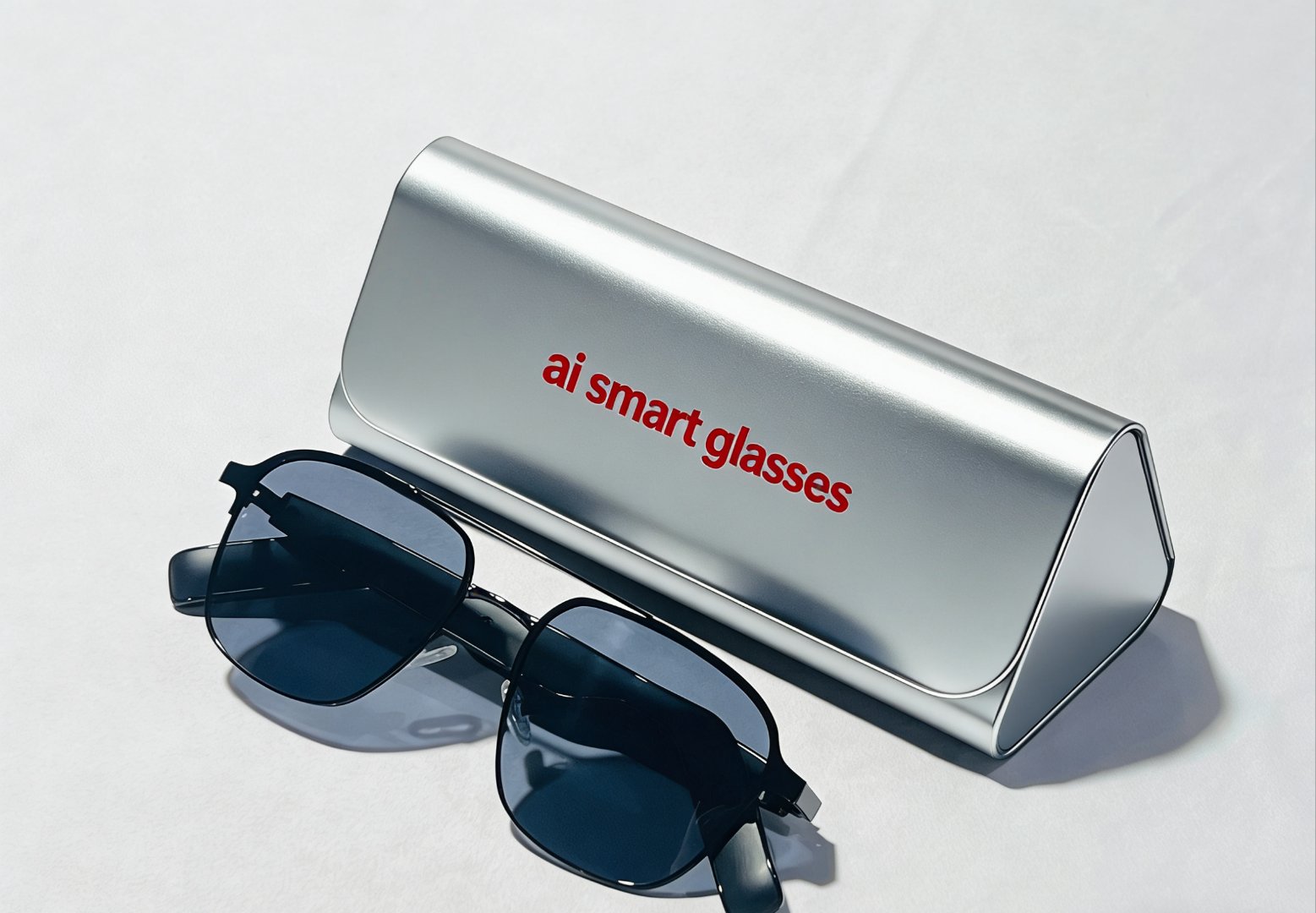
Lens paperwork is where AI glasses projects stall at customs or at the retailer's compliance desk, not because anything is missing but because the wrong document was sent. UV blocking, luminous transmission and impact resistance are three separate questions, answered by three separate test scopes, and a supplier who sends one PDF for all three has usually sent you a summary rather than a report. The practical work is to map each claim on your packaging and marketing copy to the document that supports it, then confirm that document names the lens variant and the hardware revision you are actually buying. This is a paperwork discipline, not a lens technology problem.
Three questions, three test scopes
UV protection is a transmittance measurement across a defined wavelength range. Luminous transmission is a different measurement: how much visible light passes through, which is what puts a lens into a transmission category. Impact resistance is a mechanical test on the lens or the assembled eyewear. A laboratory can run all three, but they are separate line items on a quotation and separate reports at the end. When a supplier offers "lens testing" as one bundled service, ask which standard each part of the bundle is run to, and whether the impact test is performed on the bare lens or on the finished frame assembly. The two are not interchangeable, and the difference matters if your product is worn during sport or in a workplace.
ISO 12312 and EN 1836 are the two families most buyers meet first. They are not identical, and a report citing one does not automatically satisfy a buyer asking for the other. Your importer or notified body will tell you which is expected for your market and product positioning; the factory's job is to book the scope you specify and to keep the report tied to the build it was run on.
What the transmission category actually decides
A light transmission category is a labelling and use restriction, not a quality grade. It tells the wearer and the retailer under what light conditions the lens is intended to be used, and it constrains what you may print on the box and in the manual. A category suited to bright outdoor use is the wrong category for a product marketed for indoor screen work, and vice versa. Because the category follows the measured transmission of the specific lens, any change of tint, coating or supplier moves you into a new measurement. That is why the report must name the lens variant, not just the product family.
| Question | Document that answers it | What it will not say |
|---|---|---|
| UV blocking claim | Spectral transmittance report naming the standard and wavelength range | Nothing about visible-light comfort or impact |
| Light transmission category | Luminous transmission measurement on the named lens variant | Nothing about UV performance |
| Impact resistance | Mechanical test report on lens or assembled eyewear, as specified | Nothing about optical quality or transmission |
| Market access for the electronics | CE RED scope (EN 300 328, EN 301 489, EN 62368-1), FCC Part 15 B/C, UKCA on request | Nothing about lens optics at all |
| Skin contact | EN 1811 nickel release screening where the frame touches skin | Nothing about lens performance |
| Material restrictions | RoHS 3 and REACH SVHC screening | Nothing about optical or mechanical claims |
Note the last three rows. Buyers frequently ask for "the compliance pack" and then treat it as one document. It is not. The electronics scope, the skin-contact screening and the material declarations travel together because they are produced per model and hardware revision, but none of them speaks to the lens. If your retailer's questionnaire mixes the two, split it before you send anything back.
What no lens document will ever say
A lens report will not tell you that the glasses are safe for driving, that they protect against eye damage in a specific occupation, or that they are medical devices. It will not certify a health outcome, and it will not cover the electronics, the battery or the radio. It also will not transfer responsibility: under EU and UK rules, WEEE, BattG, DEEE/Triman and EORI/VAT duties sit with the importer, and a lens test report changes none of that. If a supplier's marketing implies a lens document carries any of these meanings, that is a reason to slow the order down rather than speed it up. The same discipline applies to the electronics side, which is set out in our CE RED document checklist.
Two further boundaries are worth writing into the specification. First, certification is a test scope booked with an accredited laboratory per hardware revision; the certificate is held by the applicant, which is normally you as brand owner or importer, not by the factory. Second, any wellness feature in the product is guidance, never diagnosis, and lens claims should not be used to imply otherwise.
A checklist to run before you place the order
- List every lens claim that appears on packaging, in the manual or in retailer copy, and write the standard you expect behind each one.
- Ask for the scope statement on each report: standard, lens variant, hardware revision, laboratory, date.
- Confirm whether the impact test is on the bare lens or the assembled eyewear, and whether that matches your use case.
- Check that the transmission category matches the intended use and the marketing copy, not just the sample you approved.
- Separate the lens file from the electronics file in your own document register so a revision change to one does not silently invalidate the other.
- Confirm who is the applicant on each certificate, and that the importer duties are assigned in writing.
On the factory side, documents are issued per model and hardware revision, which is why a lens change or a frame change triggers a new test rather than an amendment. Our how we build and test page describes the IQC, IPQC, FQC and OQC gates at AQL 2.5 major and 4.0 minor, and the customisation tiers page explains how a lens or coating change moves the project into a new revision. If you are still shaping the product, the AI Glasses line and the Vox One AI Glasses show the current platform, while AI glasses market trends is useful background for category planning rather than for compliance. Wider reference material sits in buyer resources, and our journal covers adjacent document questions.
One practical step: before you request a quotation, write a single page that lists each lens claim, the standard you expect behind it, and the market it applies to. Send that page with your specification through send us the specification, and ask for the test scope lines to be quoted separately from the unit price. That one page prevents the most common delay in this category, which is a shipment held while three parties argue about which document was supposed to prove which claim.
Questions buyers ask
Does a supplier's lens test report cover UV, transmission and impact at the same time?
Usually not. UV transmittance, luminous transmission category and impact resistance are separate test scopes, often run to different standards, and a single report rarely covers all three. Ask for the scope statement on each report and check it names the standard, the lens variant and the hardware revision.
Can a supplier state that a lens is "certified"?
Certification is held by whoever commissions the test, and for eyewear-type claims that is normally the brand owner or importer. A factory can book a test scope with an accredited laboratory per build, but the certificate sits with the applicant, not with the production line.
Related: more on ai glasses & optics · buyer guides · customisation tiers