Photochromic Camera Glasses Lens Interactions
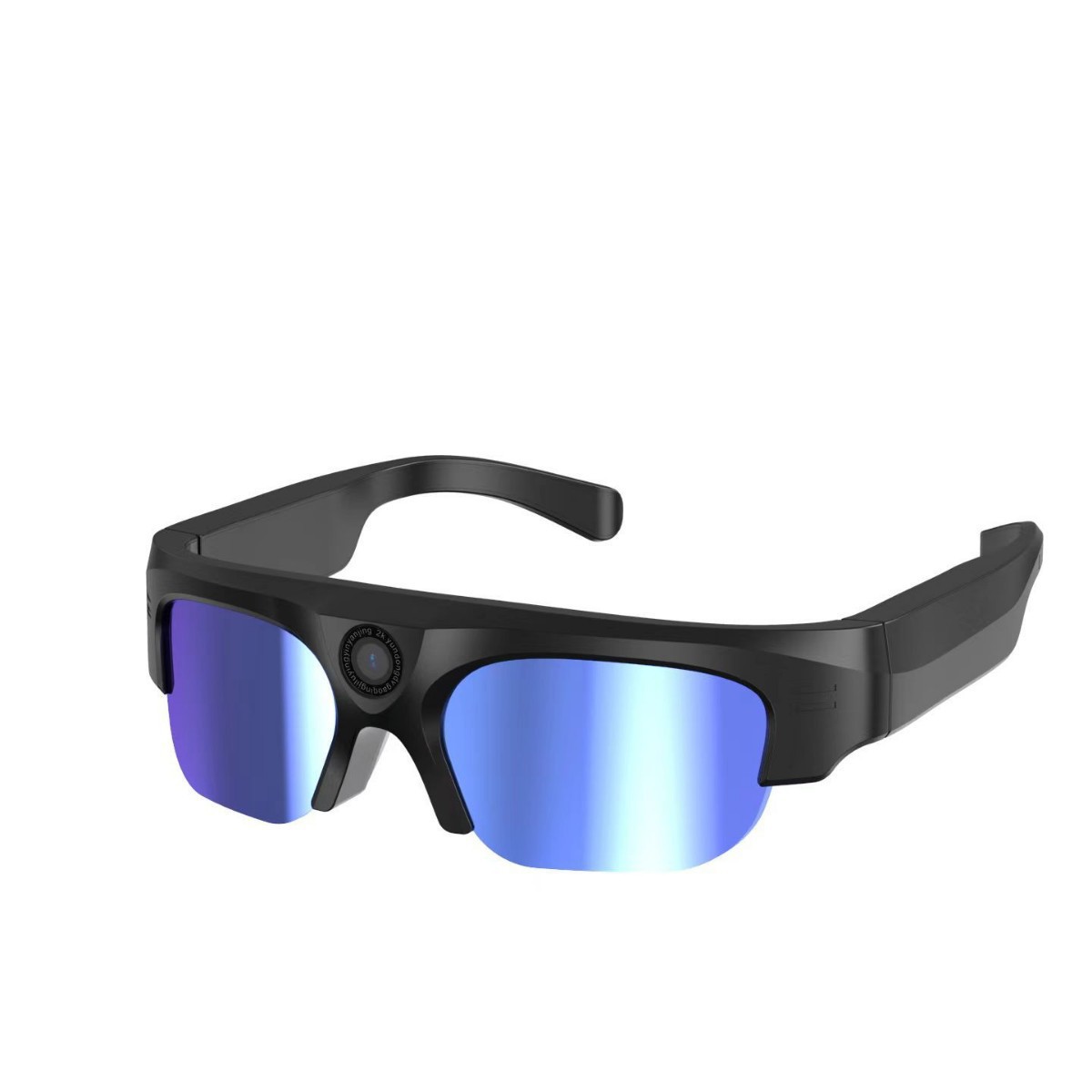
Photochromic and polarised lenses are increasingly requested for AI glasses intended for outdoor use, but their optical behaviour interacts with embedded cameras in ways rarely documented on spec sheets. Unlike passive eyewear, AI glasses require consistent sensor input across lighting transitions — from shaded alleyways to midday sun — without triggering exposure hunting, white balance drift or motion blur from delayed iris compensation. This article outlines how to verify optical compatibility before committing to production, using only test methods and documentation scopes that align with WingPhoenix’s factory policy and published compliance pathways.
Why Standard Lens Data Is Not Enough
Lens suppliers typically publish static transmittance curves (e.g., 85 % visible light transmission in clear state, 15 % at full activation) and polarisation efficiency (e.g., >99 %). These values assume steady-state conditions and ignore three critical variables: spectral shift during photochromic activation, angular dependency of polarisation relative to the camera’s field of view, and time lag between UV exposure and full tint transition. For example, a photochromic layer activated by ambient UV may darken unevenly across the lens surface when the user tilts their head — causing asymmetric exposure across the sensor frame. Polarisation angle mismatch between lens and reflected glare source further reduces contrast predictability. Verification requires dynamic testing, not datasheet cross-referencing.
Camera Exposure Validation Protocol
Before approving a lens variant, run this four-step validation using the factory’s built-in test rig capability. First, record raw sensor output while moving the device through controlled lighting gradients (indoor → doorway → open pavement). Second, compare histogram distribution across five-second intervals: consistent median shift indicates stable exposure adaptation; spikes or plateaus suggest metering conflict. Third, capture identical scenes with and without lens rotation (±15°), checking for luminance variance exceeding ±8 % in central ROI. Fourth, confirm firmware logs show no repeated exposure recalibration cycles (>3 per second) during transition phases. This protocol is referenced in the CE RED document checklist, as exposure instability may constitute unintended RF emission modulation under EN 301 489-3.
Compliance Implications of Optical Treatments
Adding photochromic or polarised elements does not change the fundamental CE RED or FCC scope — but it alters the test boundary conditions. For example, EN 62368-1 thermal assessment must account for absorbed UV energy in photochromic layers, especially near the camera housing. Similarly, polarisation-induced signal attenuation affects SAR measurement repeatability if the lens sits within 20 mm of the antenna feed point. All hardware revisions with optical treatments require rebooking EMC and safety tests at an accredited lab, per how we build and test. This applies equally to the Vox One AI Glasses and custom ODM builds under the customisation tiers.
Procurement Decision Checklist
| Decision Point | What to Verify | Where It Appears |
|---|---|---|
| Lens activation latency | Measured in seconds from UV onset to 90 % tint; must be ≤6 s at 35 °C | Lab report booked per revision |
| Polarisation axis tolerance | ±3° alignment relative to camera sensor long edge | Optical QA sheet, not lens supplier COA |
| UV cut-off wavelength | ≥385 nm to avoid interference with IR proximity sensor | Optical spectral report |
| Thermal derating margin | ≤1.2 W/m² absorbed UV power density at 55 °C ambient | EN 62368-1 thermal test plan |
| Exposure stability log | Firmware output showing ≤1 recalibration event per 2 s during transition | IPQC test record |
Next Steps for Your Project
Do not approve lens variants based on optical supplier data alone. Request raw exposure logs and spectral reports from WingPhoenix’s IQC gate for your specific hardware revision. Confirm that the AI Glasses line you are evaluating has its lens integration path validated against the AI glasses market trends for outdoor use cases. Review the full product catalogue for models with pre-validated optics, or send us the specification to initiate lens co-validation. All test bookings — including photochromic thermal stress and polarisation alignment — are scheduled per hardware revision, not per order quantity.
Questions buyers ask
Do photochromic or polarised lenses interfere with the camera’s auto-exposure system?
Yes — both treatments alter light transmission dynamically or directionally, which can mislead the sensor’s metering algorithm. Testing must use real-world lighting gradients, not static lab charts.
Can I rely on the lens manufacturer’s transmittance data alone?
No — transmittance is measured at fixed wavelengths and angles. Camera sensors respond to spectral sensitivity, dynamic range, and temporal response, all of which shift under variable activation of photochromic layers or polarisation alignment.
Related: more on ai glasses & optics · buyer guides · customisation tiers