Buy Prescription Smart Glasses Online: What a Listing Must Contain
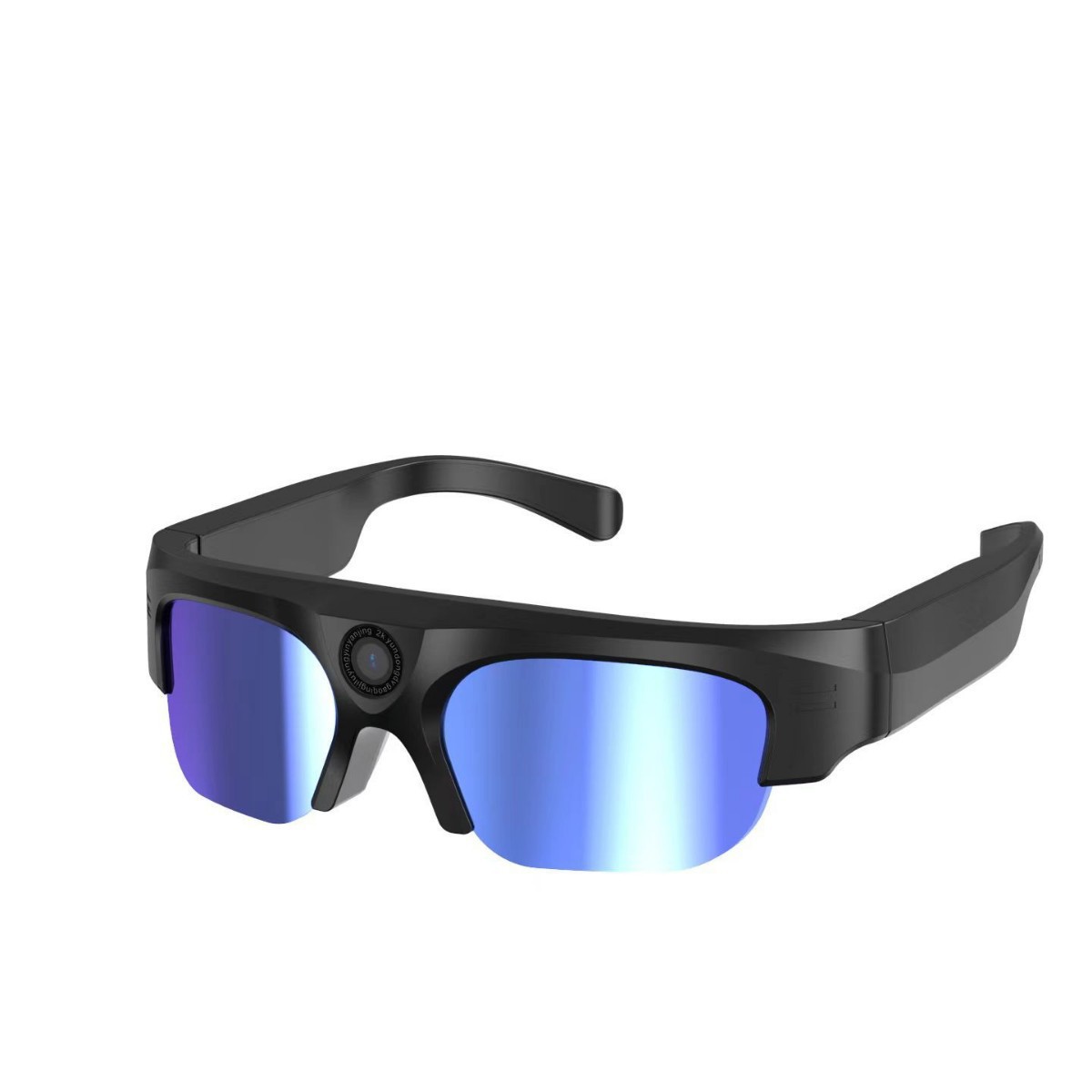
Fit Data Is Non-Negotiable
Prescription smart glasses must be listed with precise, measurable dimensions — not descriptive language like “slim” or “lightweight”. Customers need temple length, frame width, bridge width and lens height in millimetres, all verified per production batch against the same headform used in EN ISO 16069 testing. These values appear on every factory test report, not just datasheets. If your listing omits them, returns will rise — especially where customers wear progressive lenses or require side-shield compatibility. The Vox One AI Glasses listing includes these figures because they are measured at IQC and confirmed again at FQC.
Optical Compatibility Must Be Explicit
A listing for prescription smart glasses must state which lens types it supports — single vision, bifocal, progressive, photochromic — and whether it accepts drilled, rimless or semi-rimless mounts. It must also clarify if lens thickness limits apply, and whether the frame accommodates high-index or aspheric prescriptions. This information is tied directly to the mechanical tolerances validated in our QC gates. Do not assume compatibility; publish it. Buyers who skip this step often discover post-shipment that their chosen frame cannot accept the customer’s existing prescription order — triggering avoidable returns.
Compliance Documentation Is Part of the Product Page
The CE RED declaration for each hardware revision is not optional paperwork — it is part of the product’s functional specification. Your listing must link directly to the CE RED document checklist, because distributors in Germany, France and the Netherlands require proof of EN 300 328 (radio), EN 301 489 (EMC) and EN 62368-1 (safety) before accepting stock. UKCA is available on request but not pre-certified; stating otherwise risks customs rejection. All documentation is generated per hardware revision — not per model name — and shipped with the order.
What Virtual Try-On Cannot Do
Virtual try-on tools are reference visuals only. They do not replicate optical centration, vertex distance, pantoscopic tilt or wrap angle — all of which affect visual performance with prescription lenses. No lab has issued a report validating any virtual try-on system against ISO 13666 or clinical optometric standards. WingPhoenix does not integrate, endorse or certify such tools. If your supplier claims clinical validation, ask for the test report number and accredited lab name. If it does not exist, treat the claim as marketing — not engineering fact. This is why we advise buyers to include explicit disclaimers in listings: “Virtual try-on shows approximate appearance only. Fit and optical performance require professional fitting.”
Size Guide and Returns Policy Must Align
A size guide is useless unless it maps directly to your returns process. State clearly: “Unopened frames in incorrect sizes may be exchanged within the same production run, provided the size kit was used prior to order.” Size kits ship before mass production begins — a step outlined in our customisation tiers. Do not promise exchanges beyond that scope. Also note: temple length variance across sizes must be documented — a 12 mm difference between size S and L matters more for smart glasses than for standard frames due to battery and sensor placement.
| Checklist Item | Required in Listing? | Where Verified |
|---|---|---|
| Temple length, frame width, bridge width (mm) | Yes | IQC and FQC reports per batch |
| Lens type compatibility (e.g., progressive, drilled) | Yes | Mechanical tolerance validation at IPQC |
| Link to CE RED document checklist | Yes | Supplied per hardware revision, not model |
| UN38.3 + SDS for battery module | Yes | Shipped with order, watt-hour printed on unit |
| EN 1811 nickel release statement (if skin contact) | Yes | Tested per build, not per SKU |
| Age grading on packaging (for toy scope) | Yes, if applicable | Booked per build with accredited lab |
| Firmware white-label MOQ (if offered) | Yes, if stated | 2,000 units minimum, per OEM/ODM tiers |
- Always cross-check temple length against your distributor’s average customer PD range
- Require full CE RED documentation before approving final artwork — not after
- Use the product catalogue to confirm which models have passed EN 62368-1 with integrated battery
- Refer distributors to the AI glasses market trends report for regional fit preference data
- For samples, allow 7–15 days for configured units — stock units ship in 3–5 days
- If your importer handles WEEE, BattG or DEEE/Triman, confirm duties sit with them — not us
No Guesswork in the Final Step
Return reduction starts before the first pixel is uploaded. Verify every dimension against the factory test report, map every lens compatibility claim to the mechanical gate it passed, and link every compliance statement to the exact document issued for that hardware revision. Do not rely on legacy specs from prior builds. To begin: send us the specification for your next listing — we’ll confirm which test reports, size kits and documentation packages apply, and advise where your current draft falls short of the QC gates or buyer resources
Questions buyers ask
Why do online listings for prescription smart glasses generate higher return rates than standard eyewear?
Because customers cannot verify fit, optical alignment or frame weight without physical interaction — and most listings omit the dimensional, optical and regulatory data needed to pre-qualify suitability.
Why does finance reject our supplier’s “virtual try-on” claim?
Because it lacks traceable validation against ISO 13666 (optical centration) or EN ISO 16069 (headform measurement), and no third-party lab has issued a report confirming its accuracy across nose bridge width, pupillary distance or temple length variance.
Our distributor returned 42% of a recent AI glasses shipment — what went wrong in the listing?
The product page showed only front-facing renders, omitted temple length and frame width in millimetres, listed no lens compatibility chart, and failed to link to the CE RED document checklist required for EU market placement.
What is the one claim most suppliers make about prescription smart glasses that WingPhoenix does not support?
That any virtual try-on system can substitute for an optician’s fitting. We do not validate or certify such systems. No report exists yet verifying their clinical or optical reliability for prescription use.
Related: more on ai glasses & optics · buyer guides · customisation tiers