Firmware Update Responsibility After Sale
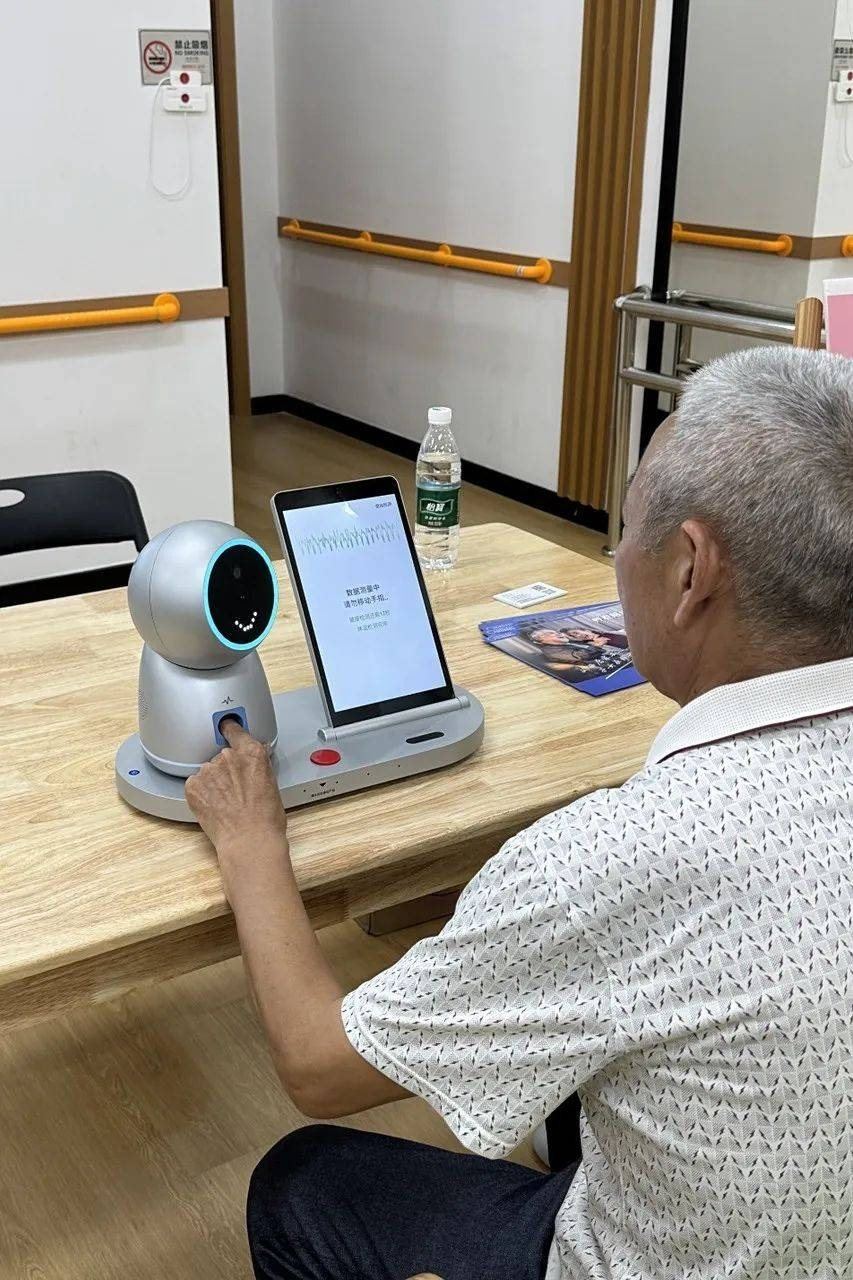
Firmware update responsibility after sale is not a technical footnote — it is a contractual, regulatory and logistical boundary. When undefined, it exposes importers to bricking, warranty claims, regional non-compliance and unenforceable service obligations. WingPhoenix assigns update authority strictly by agreement, hardware revision and certified test scope — never by assumption, convenience or platform capability alone. This applies equally to AI Robots, AI Learning & Robotics and AI Wearables, including the K1 AI Companion Robot and E1 AI Learning Robot.
Authority flows from contract, not connectivity
Firmware update rights are assigned at signing — not at first boot. The OEM/ODM agreement defines which party holds signing authority for each hardware revision, and whether that authority extends to field updates. No device shipped under EXW, FOB or DDP terms carries embedded OTA permission by default. Even when a device supports over-the-air delivery, activation of that channel requires explicit, written delegation. This prevents unauthorised changes to radio behaviour, power profiles or safety-critical logic — all of which affect CE RED, FCC Part 15 and EN 62368-1 validity.
Certification scope binds update capability
A firmware update is not software maintenance — it is a hardware modification if it alters RF output, clock frequency, thermal management or user-accessible memory maps. WingPhoenix books every hardware revision’s test scope with an accredited laboratory, including the OTA mechanism itself. If the scope does not list “firmware update via Wi-Fi” or “signed bootloader update”, then no such update may be issued — even if the device accepts it. This is why how we build and test includes pre-deployment lab coordination, not just in-house validation.
Bricking is a compliance failure, not a bug
“Bricking” occurs when an update invalidates the certified configuration — for example, changing antenna tuning parameters beyond the EN 300 328 test envelope, or disabling the watchdog timer referenced in the EN 62368-1 risk assessment. It is not recoverable through consumer tools. Recovery requires physical access, JTAG, or factory reset keys held only by WingPhoenix or the named signatory. This is why how to vet a supplier includes checking whether OTA rollback, signature verification and recovery paths are documented per revision — not per product line.
Regional boundaries apply to firmware, not just packaging
A firmware image approved for CE RED in Germany is not automatically valid for UKCA — nor for FCC Part 15 in the US. Each region requires its own test report, and each report ties to a specific binary hash. WingPhoenix does not ship “global firmware”. Instead, firmware variants are built, signed and certified per region and per hardware revision. Distributors in the Netherlands cannot repurpose a German-certified update for Belgian retail, nor can a Canadian importer load a US FCC image onto units destined for Ontario. This is enforced at the bootloader level and verified during OQC.
What this process cannot do
This process does not grant automatic, real-time, or cloud-mediated firmware authority across regions or revisions. WingPhoenix does not operate a managed OTA service, does not host update servers for third parties, and does not provide remote signing infrastructure. No firmware update may be pushed without a closed test scope, a signed release manifest and a documented handover to the authorised signatory. Claims of “one-click global deployment”, “cloud-based compliance sync” or “automatic regional fallback” are unsupported — and should be rejected by importers as non-verifiable and non-enforceable. Such claims contradict the factory’s documented QC gates and the OEM/ODM policy.
| Decision Point | Required Verification | Risk if Unverified |
|---|---|---|
| OTA signing key ownership | Named in OEM/ODM agreement; key material stored offline per ISO 27001-aligned practice | Unauthorised firmware injection, loss of traceability |
| Test report coverage | Lab report explicitly lists OTA method, update vector and binary hash | CE RED or FCC non-compliance, market withdrawal |
| Regional firmware variant | Separate binaries, hashes and reports for CE, UKCA, FCC | Customs rejection, distributor liability |
| Rollback capability | Documented recovery path tested and included in FQC | Bricked units, warranty replacement cost |
| Update trigger mechanism | Bootloader validates signature before execution; no unsigned path enabled | Security vulnerability, uncontrolled version drift |
| Warranty alignment | Update log and version history included in warranty claim documentation | Disputed claims, untraceable root cause |
- Review your OEM/ODM agreement for firmware signatory clauses
- Confirm with WingPhoenix which hardware revision is covered by your current CE RED and FCC test reports
- Request the OTA test scope booking confirmation for your next firmware revision
- Verify that your distributor’s warehouse has secure key-handling procedures for signed firmware
- Check that your H3 Health Smartwatch or AI Robots shipment includes version-matched bootloader and recovery documentation
Undefined firmware update responsibility creates enforceable gaps — not flexibility. To close them, request the OTA test scope confirmation for your next hardware revision directly from WingPhoenix’s compliance team. Begin with your current agreement and the hardware revision number; do not rely on platform dashboards or verbal assurances. All firmware-related queries must reference the exact model, revision and certification report ID.
Questions buyers ask
Who is legally and technically permitted to issue a firmware update after the device leaves your factory?
Only parties named in the signed OEM/ODM agreement and aligned with the hardware revision’s certification scope — not the end user, distributor or brand owner by default.
What does finance or compliance need to verify before accepting firmware update authority?
That the update path is documented per hardware revision, that test reports cover the intended OTA mechanism, and that no change triggers retesting under CE RED, FCC Part 15 or UKCA.
A distributor’s sample failed an EMC retest after an OTA — what went wrong?
The firmware update altered radio parameters or timing without prior validation against the original test report; no new report was booked with the lab.
What do most suppliers avoid naming outright?
That WingPhoenix does not hold blanket OTA approval for all models — each firmware revision requires a separate test scope booked with an accredited laboratory, and no update may be deployed until that scope is closed.
Related: more on ai memory platform · buyer guides · customisation tiers