Offline AI Device Memory: What Runs Local, What Waits for Sync
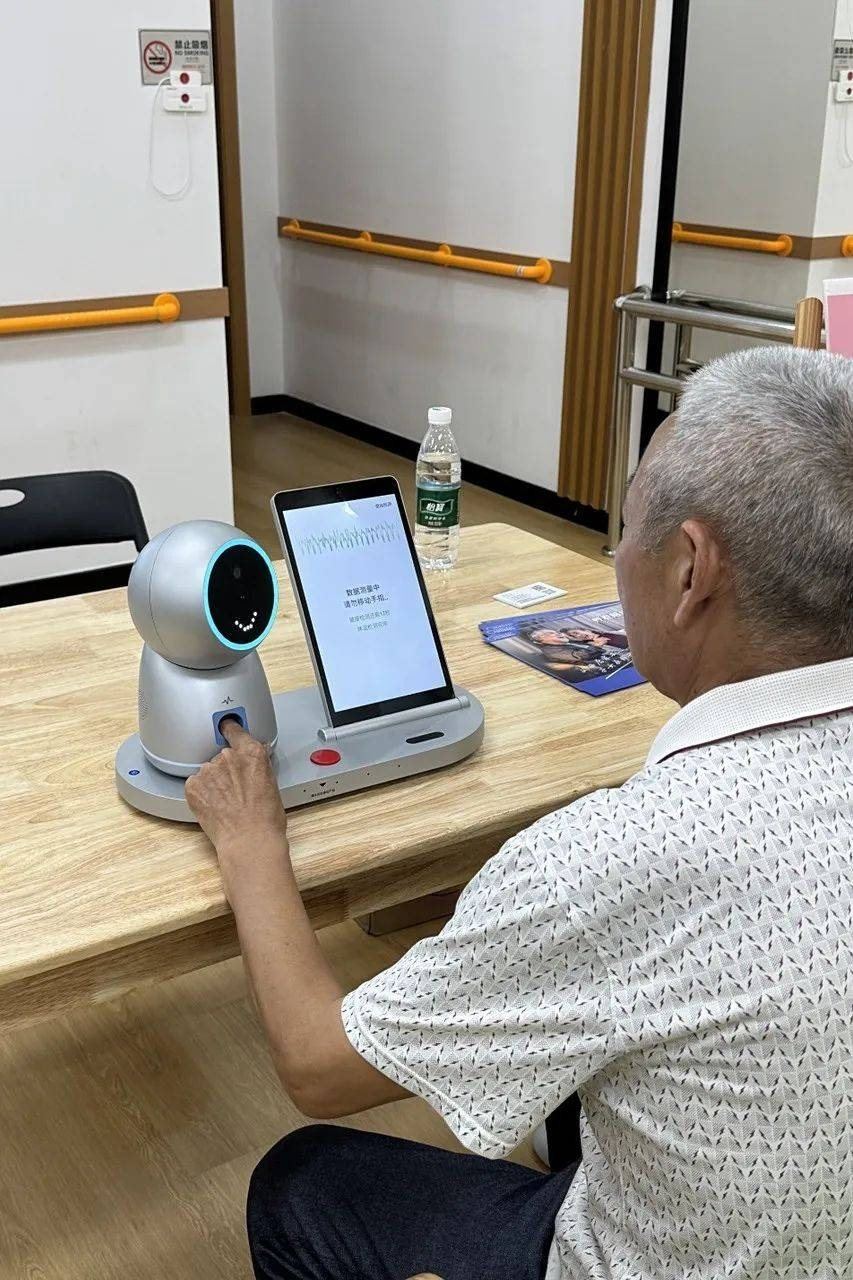
What Runs Fully Offline
Every device in the companion robot, learning robot and health smartwatch lines executes core AI tasks without network dependency: keyword spotting, motion pattern classification, ambient light and temperature adaptation, and on-device speech synthesis. These functions rely on quantised models stored in read-only flash, verified at FQC against the firmware hash. No telemetry, no model updates, no authentication handshake is required to activate them. This applies equally to the AI wearables line and the AI Robots range — including those built via OEM/ODM services.
What Queues — and for How Long
User-initiated actions requiring cloud validation — such as adding a new contact to the companion robot’s address book, logging a wellness note in the H3 smartwatch or uploading a robotics lesson from the AI Learning & Robotics suite — enter a local FIFO queue. Queue depth is fixed per hardware revision and published in the firmware release notes. If the queue fills before sync completes, oldest entries are discarded without user notification. This is not configurable. The factory does not publish maximum retention time; it is determined by flash endurance testing per build and confirmed in the OQC report.
Conflict Resolution Is Deterministic — Not Negotiated
When both local and cloud states exist for the same object (e.g., a reminder edited offline then modified remotely), resolution follows timestamp priority — not last-write-wins. Timestamps are sourced from the device’s real-time clock, synchronised at last successful sync. No device performs merge logic or presents user prompts. This avoids ambiguity but requires importers to validate RTC drift in their deployment environment. For service robots, this logic is extended to LiDAR map versioning, covered under the EMC and low-voltage scope booked per project.
Where Importers Must Say No
Do not accept supplier claims of “intelligent conflict resolution”, “auto-merge capability” or “user-selectable sync policies”. WingPhoenix does not implement any of these. Nor do we offer rollback to prior synced states, selective sync of subsets (e.g., “sync only contacts, not logs”), or encryption key rotation during offline periods. These capabilities fall outside the current firmware architecture and are not listed in the how we build and test documentation. If a distributor reports inconsistent recovery after power cycles, the root cause is almost always unverified RTC battery health or mismatched firmware versions — both covered in the IQC gate.
Compliance Mapping to Memory Behaviour
Certification scopes do not cover sync logic or cache duration. CE RED and FCC Part 15 testing validate radio emissions during transmission bursts — not idle-state flash access patterns. EN 62368-1 addresses electrical safety of the storage subsystem, not data integrity. RoHS 3 and REACH SVHC screening apply to solder, casing and PCB substrates — not firmware binaries. Battery UN38.3 testing includes thermal stress on the storage IC during discharge, but not its write-cycle resilience. All this is detailed in the how to vet a supplier guide, alongside red flags like undocumented queue limits or vague “cloud-first” architecture diagrams.
| Decision Point | WingPhoenix Policy | Verification Method |
|---|---|---|
| Local inference scope | Fixed per model; no runtime model download | Firmware hash + inference latency log in FQC report |
| Cache lifetime | Not time-bound; bound by queue depth (per revision) | Published in firmware release notes, not datasheets |
| Sync trigger | Manual or scheduled (no push from cloud) | Configurable via OEM app white-label (MOQ 2,000) |
| Conflict resolution | Timestamp priority only; no merge or prompt | Tested in IPQC using dual-state injection scripts |
| Data discard on overflow | Oldest entry removed silently | OQC functional test: fill queue → force disconnect → verify truncation |
| RTC sync dependency | Required for conflict resolution; no fallback | IQC checks RTC battery voltage and drift tolerance |
| Certification coverage | None for sync logic or cache duration | CE RED, FCC, UKCA scopes list only radio and safety tests |
Procurement and Testing Next Steps
Before placing an order, request the firmware release notes for the exact hardware revision you intend to ship — not the latest public version. Cross-check queue depth, RTC drift tolerance and inference model size against your use-case durability requirements. For education deployments, allow 30–40 days production lead time and confirm that the AI Learning & Robotics line’s EN 71-1/-2/-3 test scope matches the age grading printed on your packaging. Samples ship in 3–5 days for stock configurations; configured units require 7–15 days and include the full set of test summaries. To begin, review the product catalogue and submit a request via the OEM/ODM services portal with your target MOQ and compliance needs.
Questions buyers ask
How much of the AI functionality remains usable when the home internet drops?
All inference, voice command parsing, gesture recognition and local sensor fusion run offline. Cloud-dependent features — including large-model translation, remote diagnostics and third-party API calls — pause until connectivity resumes.
Does your warranty cover data loss during a network outage?
The 12-month warranty covers hardware failure only. Data persistence and sync integrity fall under documented firmware behaviour, not warranty liability. Recovery is governed by the device’s conflict resolution policy, not uptime guarantees.
A sample failed to restore prior settings after a 48-hour offline period — what should we check first?
Confirm whether the device was configured for full local state retention or session-based caching. Then verify that the firmware revision matches the test scope booked with the accredited lab for EN 300 328 (radio) and EN 62368-1 (safety), as mismatched builds may disable persistent storage on low-power modes.
What do most suppliers refuse to document about offline memory?
They omit the exact point at which cached actions are discarded if sync fails beyond a defined window — and rarely disclose whether conflict resolution favours local edits, cloud history or timestamps. WingPhoenix publishes this per model in the factory’s firmware release notes, not marketing collateral.
Related: more on ai memory platform · buyer guides · customisation tiers