Elderly Alert Device Comparison: Watch, Pendant or Robot
Wear Compliance Is Not Optional—It’s the First Gate
Compliance begins before the first sensor fires: if the device is not worn, no alert triggers. Watches require consistent wrist contact, which declines sharply after age 75 due to skin elasticity, tremor or cognitive habit. Pendants solve part of that—but introduce new friction: necklace breakaway mechanisms, clasp dexterity, and visual self-checking. Rings avoid both issues but demand correct sizing and skin contact verification. Every smart ring with charging case ships with a size kit and EN 1811 nickel release certification for the skin-contact build—because non-compliance here means non-use, not non-certification.
Fall Response Depends on Position, Not Just Acceleration
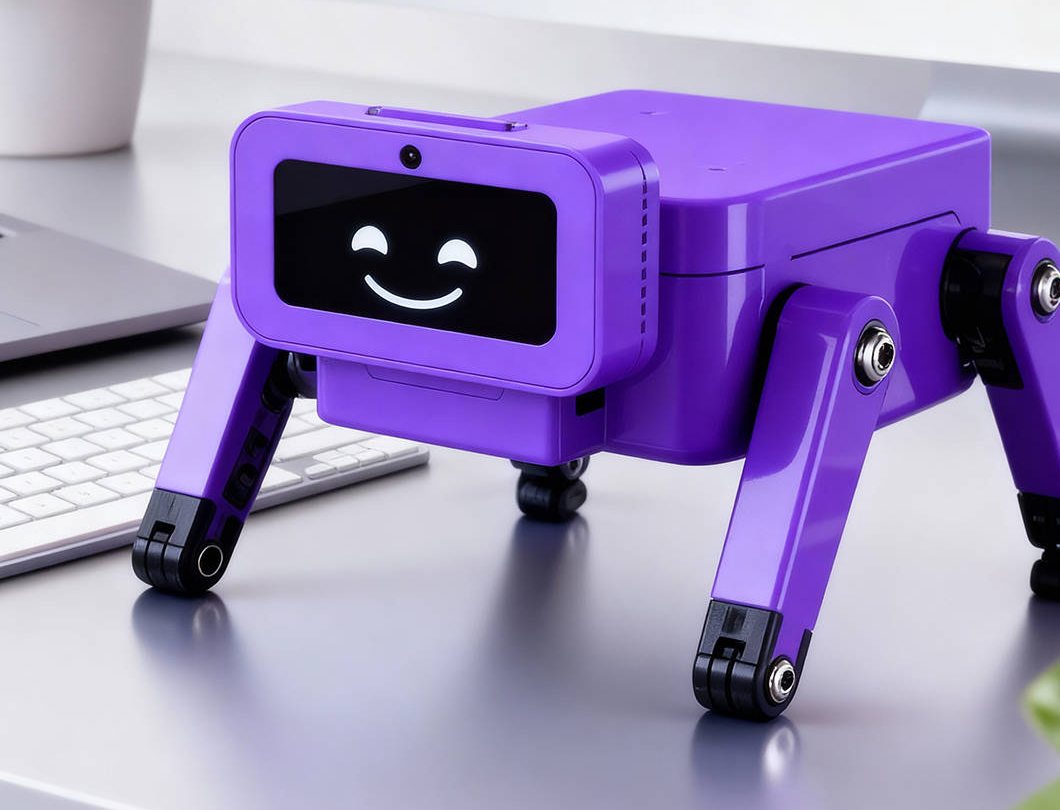
A true fall event includes impact, orientation change and immobility—but only if the device remains on the body and within radio range of its hub or network. A watch may detect impact but lose connection if the wrist bends away from the chest during collapse. A pendant stays centred but may be muffled by a coat or pillow. Robots lack personal wear but cannot detect falls at all—they observe motion patterns only. That limitation is explicit in our factory policy: how we build and test includes posture-specific drop testing, but never claims detection outside the wearable’s direct sensor field.
Charging Routines Must Fit Human Memory—Not Battery Sheets
A 7-day battery means nothing if the user forgets to charge it—and most do. Watches require nightly docking; pendants often use replaceable coin cells (with disposal obligations); rings need a case-based charging ritual. The r2 smart ring includes a case with status LEDs and haptic feedback on insertion—designed for tactile confirmation, not visual recall. Power banks and portable chargers are quoted per model list only; no capacity figure is published until the datasheet exists for that revision, and every order carries UN38.3 + SDS with watt-hour rating printed on each unit.
Coverage Is Measured in Walls, Not Metres
RF propagation through plaster, brick or metal lath varies more than any spec sheet admits. A pendant rated for 30 m outdoors may reach 8 m inside a reinforced concrete flat. Coverage testing for all AI wearables includes multi-layer attenuation: cotton, wool, denim and polyester over torso and neck positions, plus signal loss through drywall, plasterboard and insulated cavity walls. This is why we quote coverage as “indoor residential baseline”—not open-field maximum.
What This Comparison Does Not Cover—And Why It Matters
This comparison does not cover medical certification, clinical validation reports, or interoperability with national emergency response systems. No WingPhoenix device carries a CE Class IIa or UK MDR designation. No model integrates with EMT dispatch protocols or hospital telemetry networks. No firmware update adds diagnostic capability—because health metrics remain wellness guidance only, per factory policy. Importers should refuse any supplier who offers “certified fall alerts” without disclosing the exact test standard, pass/fail criteria and environmental variables used. That gap is where liability begins.
Procurement Checklist: Standards, Not Spec Sheets
| Decision Point | Watch | Pendant | Ring | Companion Robot |
|---|---|---|---|---|
| Skin-contact compliance | EN 62368-1 + EN 1811 | EN 62368-1 only | EN 1811 mandatory | Not applicable |
| Fall detection scope | Wrist-mounted impact + orientation | Torso-mounted impact + immobility | Not supported | Not supported |
| Charging interface | Proprietary magnetic dock | Replaceable CR2032 | Case-based induction | Auto-dock station |
| Coverage validation | With textile & posture layers | With textile & wall attenuation | Not applicable | Wi-Fi mesh mapping only |
| Regulatory scope | CE RED, FCC, UKCA, RoHS, REACH | Same as watch | Same + EN 1811 | EMC, LVD, laser class 1 statement |
| MOQ for custom branding | 500 units | 500 units | 1,000 units | 50 units (project quoted) |
| Sample lead time | 3–5 days (stock) | 3–5 days (stock) | 7–15 days (configured) | 15–25 days (project quoted) |
- Review the MOQ, sampling and lead times page before finalising order volumes
- Confirm CE RED scope covers EN 300 328 and EN 301 489 for your target market—see the CE RED document checklist
- Request the UN38.3 test summary and SDS for any battery order—watt-hour rating must appear on each unit
- For service robots, ask for the documented risk assessment and LiDAR class 1 statement—not just an EMC report
- Use the OEM/ODM services page to align firmware white-label minimums (2,000 units) with your go-to-market timeline
- Check age grading on packaging before lab booking—product catalogue lists toy scope only where EN 71 applies
- Send us the specification to receive hardware-revision–specific compliance documentation and test summaries
Start with your strongest behavioural constraint: is it wear consistency, charging discipline, wall penetration or caregiver proximity? Then map that to the form factor whose operational rhythm best absorbs human variation—not technical peak performance. Request the hardware-revision–specific test summary and CE RED documentation pack for your shortlisted model, and cross-check coverage validation against your target housing stock. Send us the specification to begin.
Questions buyers ask
Which form factor—watch, pendant or robot—most reliably supports independent living for older adults?
Reliability depends less on the device type and more on how well its operational rhythm matches the user’s daily routine, skin contact tolerance, charging habits and physical environment. The <a href="https://wingphoenixai.com/products/health-wellness/">Health & Wellness line</a> is built around those rhythms, not just sensor counts.
How do I verify that a supplier’s claim about “automatic fall detection” meets regulatory expectations in the EU or UK?
Fall detection is a functional claim requiring documented test methodology—not just algorithm labelling. For watches, this falls under CE RED scope with EN 62368-1 and EMC validation; pendants require the same but must also demonstrate mechanical retention and signal integrity across building materials. Review the <a href="https://wingphoenixai.com/resources/ce-red-compliance-smart-watches/">CE RED document checklist</a> to confirm what evidence accompanies each hardware revision.
Why did our sample pendant fail the in-home trial when it passed lab testing?
Lab tests validate signal transmission under ideal conditions; real-world coverage depends on antenna placement relative to body mass, clothing layers, wall composition and local RF congestion. A pendant worn under thick winter layers may lose 40% of its effective range—not because the unit is faulty, but because the test scope did not include layered attenuation. All <a href="https://wingphoenixai.com/products/health-wellness/h3-health-smartwatch/">health smartwatch</a> and <a href="https://wingphoenixai.com/products/health-wellness/r1-ai-health-ring/">health ring</a> models are validated with textile and posture variables included in the test plan.
What does your factory *not* claim about fall detection or health monitoring?
We do not claim medical-grade accuracy, clinical diagnosis, emergency dispatch or continuous physiological monitoring. Health metrics are wellness guidance only. Translation output is reference output only. A companion robot is not a monitoring or emergency-response device—see the <a href="https://wingphoenixai.com/products/ai-devices/k1-ai-companion-robot/">companion robot</a> documentation for its defined scope.
Related: more on ai health monitoring · buyer guides · customisation tiers