Care Home Robot Deployment Infrastructure Realities
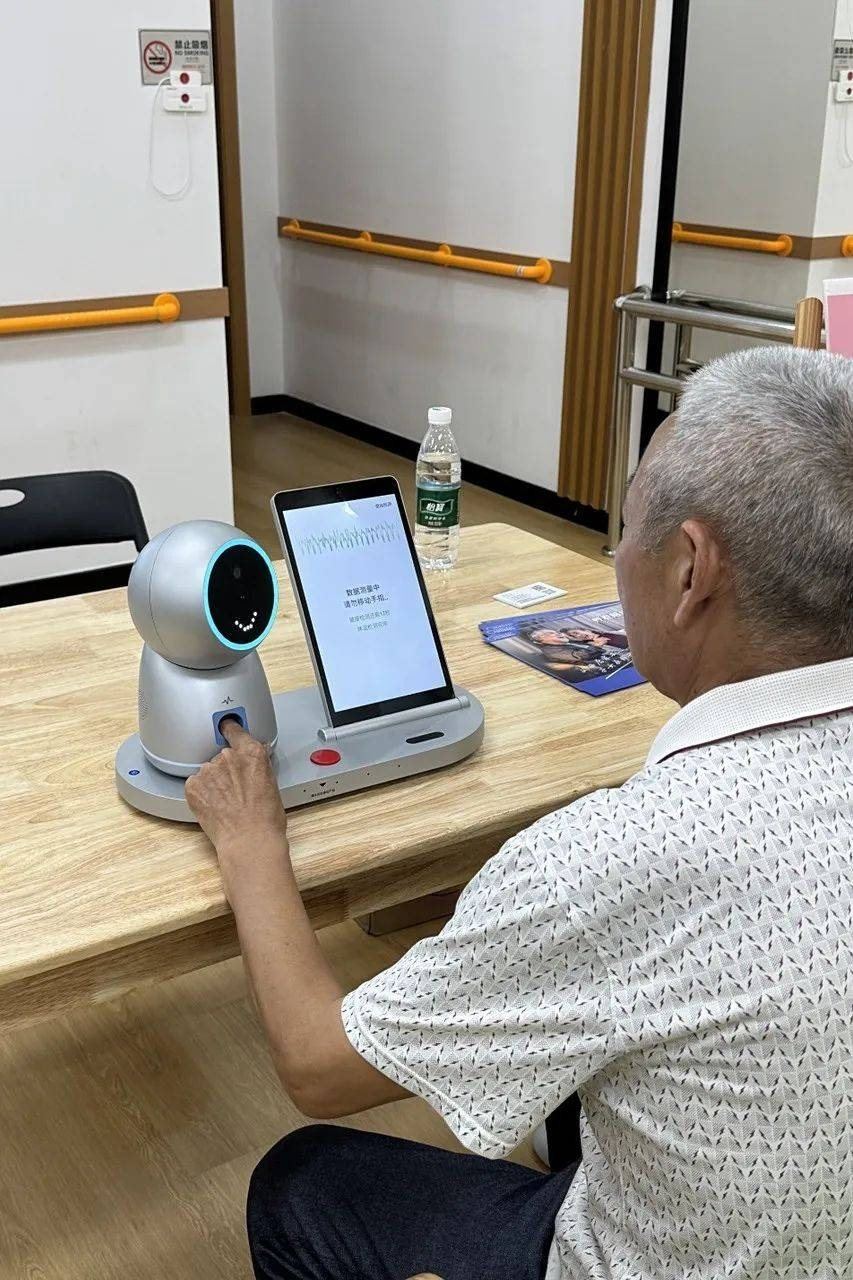
AI companion robots enter care homes with strong intent but fragile assumptions. The device may meet all functional requirements on paper, yet fail silently where infrastructure is uneven: spotty 2.4 GHz coverage across multi-floor buildings, inconsistent socket placement near resident rooms, or lack of shared operational rhythm between day and night teams. These are not engineering flaws—they are procurement boundary conditions. Understanding them early prevents wasted samples, misaligned expectations and stalled deployments.
Wi-Fi Coverage Is Not Just Signal Strength
Care homes often rely on legacy Wi-Fi infrastructure designed for email and web browsing, not continuous low-latency voice or sensor streaming. The companion robot operates on 2.4 GHz only, as required by CE RED (EN 300 328) and FCC Part 15 B/C. That means it cannot fall back to 5 GHz when interference rises—so coverage must be validated floor-by-floor, especially near steel-framed walls, medical gas lines or elevator shafts. Signal mapping should include dwell time: does RSSI remain above –70 dBm for ≥90 seconds while the robot moves at 0.3 m/s? If not, access points need repositioning—not firmware tuning. Our CE RED document checklist includes test reports scoped per hardware revision, but never substitutes for on-site validation.
Charging Location Must Survive Shift Handover
A fixed charging point fails if it sits outside the night team’s patrol path or requires an app login they don’t use. Wall-mounted docks must be within 1.5 m of a grounded socket, installed at ≥1.2 m height to avoid tripping, and placed where cleaning trolleys won’t dislodge them. For overnight autonomy, the robot must complete its charge cycle unattended—and resume operation without manual wake-up. This isn’t about battery capacity (which remains unpublished until datasheet release) but about physical integration. Every battery order carries UN38.3 test summary and SDS, with watt-hour rating printed on each unit—a requirement that anchors safety to traceable hardware, not marketing claims.
Night Shifts Reveal What Daytime Pilots Hide
Day staff may initiate voice prompts, check status via tablet and reset errors manually. Night staff rarely do. A robot that requires daily firmware sync or cloud-authenticated wake-up will sit idle after midnight. The smart health ring, by contrast, operates offline for up to 72 hours—its design reflects that reality. Companion robots are not emergency-response devices; they offer wellness guidance only. That distinction matters when defining success metrics: uptime during unsupervised hours, not just feature count. Importers bear WEEE, BattG and DEEE/Triman obligations—so every deployed unit must be recoverable, repairable and documented per how we build and test.
Compliance Is Revision-Linked, Not Model-Linked
Certification applies to a specific hardware revision—not a product name. A new PCB layout, antenna placement or battery cell triggers retesting. We book CE RED, UKCA (on request), RoHS 3 and REACH SVHC screening per revision with an accredited lab. For service robots, this includes EMC and low-voltage scope, class 1 laser statement for LiDAR, and a documented risk assessment. None of this appears on packaging—but all appears in the technical file shipped with production orders. Buyers should verify that their distributor holds EORI/VAT registration and understands importer duties before placing the first order.
| Decision Point | What to Verify Pre-Pilot | Where It Lives in Our Process |
|---|---|---|
| Wi-Fi band support | 2.4 GHz only; confirm APs are not configured for 5 GHz-only mode | CE RED (EN 300 328) test scope per revision |
| Charging autonomy | Socket proximity, height, grounding and night-shift accessibility | Battery UN38.3 + SDS shipped with order |
| Night operation | No cloud auth, no app dependency, offline fallback logic | Firmware white-label MOQ 2,000 units |
| Skin-contact safety | EN 1811 nickel release testing for rings; no cameras or diagnostics | Applies to skin-contact builds only |
| Toy scope applicability | Age grading on packaging determines EN 71 / 62115 testing scope | Booked per build, not per model |
| Importer obligations | WEEE, BattG, DEEE/Triman, EORI/VAT registration confirmed | Stated in factory policy; not our responsibility |
Procurement Starts Where the Pilot Ends
A successful pilot proves capability. A scalable deployment proves repeatability. That means documenting where the robot charged, which AP it associated with, and how many times night staff intervened manually—then feeding those observations into the next hardware revision or configuration. WingPhoenix offers OEM/ODM services for custom firmware, branding and packaging—but only after infrastructure constraints are mapped. MOQs start at 50 units for service robots, 1,000 for companion models, and 2,000 for white-label app integration. Samples ship in 3–15 days, with cost credited against mass production. Production lead time is 25–35 days EXW Shenzhen. To begin, send us the specification, including floor plans, Wi-Fi survey data and shift handover notes—then review our how to vet a supplier guide alongside the full product catalogue and OEM/ODM services page.
Questions buyers ask
Why do most care home robot pilots stall after week three?
Because the robot arrives with full battery and firmware, but no mapped charging point, no verified 2.4 GHz signal at the dementia wing’s far corridor, and no handover protocol for night staff who don’t use the app.
Can WingPhoenix pre-validate Wi-Fi or power layout compatibility?
No—we supply hardware and documentation, not site audits. But we align every build to standards that make integration visible: CE RED, EN 62368-1, UN38.3, and documented EMC scope per revision.
Related: more on ai companions · buyer guides · customisation tiers