Choosing an AI Glasses Supplier: Five Filtering Questions
1. Ask for the Revision Control Log Before the First Sample
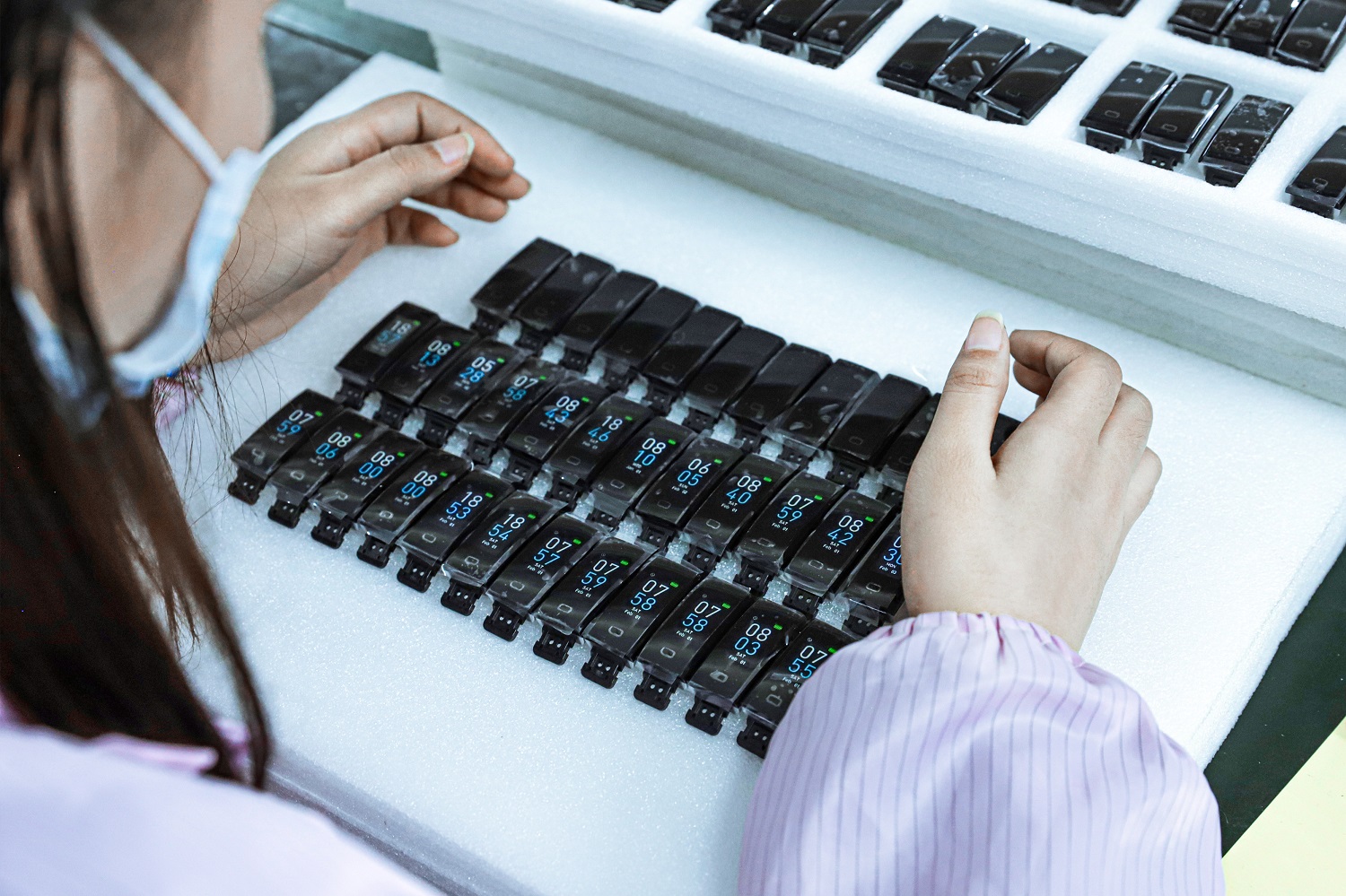
A factory maintains a hardware revision log tied to test reports, BOMs and firmware binaries. A trading desk cannot produce one. Request the log for any AI glasses model you’re evaluating—e.g., the Vox One AI glasses or Vox Ride cycling camera glasses. It must show date-stamped entries for each PCB change, sensor substitution or enclosure update, with cross-references to the corresponding CE RED and FCC test summaries. If the log is missing, incomplete or shows only software version numbers without hardware linkage, treat it as a red flag. Revision control is enforced across all WingPhoenix AI hardware, including the B1 translation earbuds and H3 health smartwatch, and forms the basis for our factory testing process.
2. Demand the Full Compliance Package Per Hardware Revision
Compliance is not a one-time certificate—it is a test scope booked per hardware revision with an accredited laboratory. For AI glasses, this means EN 300 328 (RF), EN 301 489 (EMC), EN 62368-1 (safety), RoHS 3, REACH SVHC screening, battery UN38.3 + SDS, and EN 1811 nickel release if skin contact occurs. These documents must be dated, signed and explicitly reference the exact hardware revision number in use—not a generic “model family” label. UKCA is available on request; Google Play / GMS is not licensed by default. All documentation is supplied per build, not per order, and archived for the importer’s due diligence. You’ll find this same discipline applied across our AI Glasses line and broader product catalogue.
3. Require Proof of In-House QC Gates, Not Just AQL Claims
AQL 2.5 major / 4.0 minor is meaningless without evidence of execution. Ask for signed IQC (incoming), IPQC (in-process), FQC (final) and OQC (outgoing) check sheets for a recent production run—redacted where necessary, but showing timestamps, inspector IDs and defect disposition. Trading desks rarely hold these; factories do. WingPhoenix AI enforces these gates across all categories: AI glasses, smart rings, service robots and education devices. Each gate is auditable, and records are retained for 24 months. This is part of how we meet the expectations set out in our OEM/ODM services policy.
4. Verify That Firmware and App White-Labeling Are Tied to MOQ and Revision
Firmware white-labeling starts at 2,000 units and is locked to the hardware revision under test. If a supplier offers custom firmware at 500 units—or worse, promises “any revision support”—they are either reselling stock or misrepresenting their capability. WingPhoenix AI’s minimums are explicit: 500 for logo, 1,000 for custom packaging, 2,000 for firmware or app white-label. These thresholds reflect real engineering cost, not marketing flexibility. Review our full OEM/ODM services page for scope alignment before quoting.
5. Confirm That the Supplier Owns the Design, Not Just the Label
Ask for the CE RED Declaration of Conformity. The manufacturer’s name and address must appear—not a distributor’s. The document must list the exact harmonised standards tested (EN 300 328, EN 301 489, EN 62368-1) and reference the test lab’s report number and issue date. If the declaration cites “EN 62368-1:2014” without revision year, or omits EN 301 489 entirely, the scope is incomplete. This is non-negotiable for market access in the EU, UK and Canada. Our buyer resources include templates for verifying such declarations.
What This Process Cannot Do
This filtering process does not validate health claims, medical accuracy, or diagnostic capability. WingPhoenix AI does not make diagnostic claims for any device—including AI glasses, smartwatches or companion robots. Health metrics are wellness guidance only. Translation output is a reference translation, never certified or legally binding. No AI glasses model carries a class 1 laser statement because none contain lasers; that requirement applies only to LiDAR-equipped service robots. If a supplier presents a “medical-grade AI glasses” claim, or cites ISO 13485 without a notified body certificate tied to the specific model, refuse the quotation. Such claims fall outside our published policy and regulatory scope. Refer to our the journal for further context on responsible positioning.
| Document or Record | Required for AI Glasses? | Must Reference Hardware Revision? | Issued Per Build? | Available Pre-Production? |
|---|---|---|---|---|
| CE RED Declaration of Conformity | Yes | Yes | Yes | Yes, on request |
| FCC Part 15 B/C Test Summary | Yes | Yes | Yes | Yes, on request |
| EN 62368-1 Safety Report | Yes | Yes | Yes | Yes, on request |
| RoHS 3 & REACH SVHC Screening | Yes | No (material-level) | Yes | Yes, on request |
| Battery UN38.3 + SDS | Yes | Yes | Yes | Yes, on request |
| EN 1811 Nickel Release Report | Yes, if skin contact | Yes | Yes | Yes, on request |
| IQC / IPQC / FQC / OQC Check Sheets | Yes | Yes | Yes | No—issued during production |
| Firmware Binary Hash & Build Log | Yes | Yes | Yes | Yes, on request |
- Request the hardware revision log and CE RED Declaration for your target model
- Verify that test reports reference the same revision number and lab report ID
- Ask for signed QC check sheets from the most recent production run
- Confirm firmware white-labeling MOQ matches your volume and revision plan
- Review our how we build and test page to align expectations on traceability and retention
- Use our AI glasses market trends resource to contextualise technical decisions
- Send us the specification to begin formal quoting with revision-aligned documentation
Selecting an AI glasses supplier is not about feature lists or lead times—it is about verifiable control over design, revision, testing and documentation. WingPhoenix AI publishes its factory policy transparently so importers can audit against facts, not promises. If your current supplier cannot provide the revision log, test summaries or QC records described here, initiate a second-source evaluation now. Send us the specification to receive a quote with full documentation scope confirmed before sample approval.
Questions buyers ask
Why do some AI glasses suppliers fail at scale despite strong early samples?
Because they lack revision-controlled firmware builds, traceable test reports per hardware revision, or documented QC gates—elements that only a vertically integrated factory can reliably deliver and archive.
What document proves a supplier owns the design, not just the label?
A CE RED Declaration of Conformity listing the manufacturer’s name and address—not a distributor’s—and referencing EN 300 328, EN 301 489 and EN 62368-1 test summaries issued per hardware revision.
Related: more on ai glasses · buyer guides · customisation tiers