AI Glasses Sample Checklist: Twelve Things to Verify Before Approval
Fit: Skin Contact and Mechanical Stability
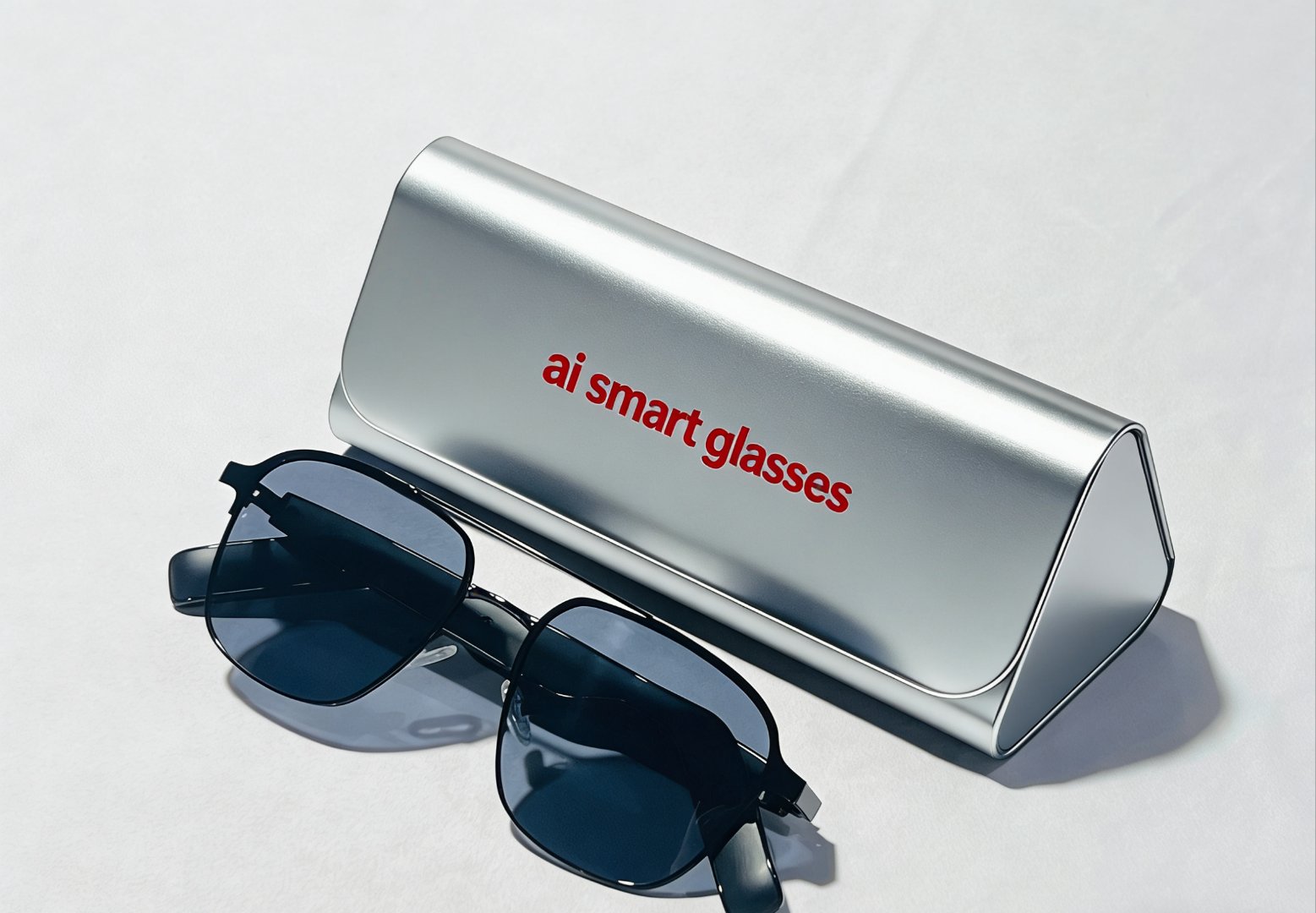
Verify that temple length, nose pad geometry and hinge tension match the declared size range (S/M/L or unisex adult). Confirm no sharp edges at pressure points. For skin-contact components, request the EN 1811 nickel release report — it must be booked per hardware revision with an accredited laboratory, not assumed from prior builds. Do not accept supplier statements of “nickel-free” without the test summary. Fit affects CE RED and UKCA conformity paths, especially for prolonged wear claims. The Vox One AI glasses use adjustable silicone nose pads; verify their retention under simulated head movement, not just static fit. Refer to how we build and test for mechanical stress validation timing.Camera: Field of View, Focus and Data Flow
Check that the field of view matches the datasheet for the hardware revision — no extrapolation from prior models. Confirm autofocus behaviour across lighting conditions and that video preview in the app shows zero latency above 300 ms. Verify the camera module has no embedded facial recognition logic — WingPhoenix AI does not ship biometric processing firmware by default. Camera functionality must align with the CE RED scope booked: if the model includes Wi-Fi or Bluetooth LE, EN 300 328 and EN 301 489 must be confirmed for that exact revision. The Vox Ride AI cycling glasses use a fixed-focus wide-angle lens; confirm focus distance matches the declared use case (e.g., 1.5–5 m), not general-purpose capture.Audio: Output Clarity and Regulatory Boundary
Test audio playback at 70 % volume level using calibrated reference headphones. Check for distortion, channel imbalance or clipping. Verify the device does not exceed 85 dB(A) at 2 cm from the transducer — this is required for CE RED and FCC Part 15 B/C compliance. Do not rely on supplier-provided SPL figures; use a Class 2 sound level meter. Audio output is wellness guidance only; no model delivers medical-grade hearing assessment or real-time noise cancellation certification. Review the B1 AI translation earbuds documentation for how audio boundary testing is structured across product lines.Charging: Protocol, Lab Report and Label Accuracy
Confirm USB-C port accepts standard 5 V / 2 A input and reports correct battery status in the app. Request UN38.3 test summary and SDS for the battery cell used in the sample — both must be issued for the exact revision, not a previous generation. Verify watt-hour rating is printed legibly on the unit and matches the SDS. Charging time must fall within ±15 % of the declared value, measured from 5 % to 100 % state of charge. No power bank or portable charger specification is final until the datasheet exists for that revision — see product catalogue for current battery-compliant models.App: Build Match, Language Set and Update Path
Confirm the app version installed matches the firmware build number on the device. Check that language options reflect the target market (e.g., German + English for DACH, French + English for France). Verify over-the-air update capability is enabled and that rollback to prior versions is blocked — critical for maintaining certified firmware states. App white-label requires MOQ 2,000 units; do not approve samples intended for branding unless that volume is confirmed. Google Play / GMS is not licensed by default and cannot be added post-shipment.Packaging: Age Grading, Lab Scope and Importer Duty Triggers
The age grading printed on the box determines toy scope: if “Not suitable for children under 14 years”, EN 71-1/-2/-3 and EN 62115 are excluded, but CE RED and RoHS 3 still apply. If “For ages 8+”, full toy compliance is mandatory and must be booked per hardware revision. Packaging must list the EU/UK importer name and address — WEEE, BattG and DEEE/Triman obligations sit solely with the importer. Do not approve packaging that omits the importer’s EORI or VAT number where required. See OEM/ODM services for custom packaging MOQs and lead times.| Verification Point | Factory Policy Anchor | Regulatory Document Required | Importer Duty Trigger |
|---|---|---|---|
| Skin-contact materials | EN 1811 nickel release booked per revision | CE RED, UKCA, REACH SVHC screening | None |
| Camera module | No facial recognition firmware shipped | EN 300 328, EN 301 489 (if RF active) | None |
| Battery label & SDS | UN38.3 + SDS per revision, Wh printed on unit | UN38.3 summary, SDS, RoHS 3 | BattG (DE), WEEE (EU/UK) |
| Packaging age grade | Decides toy scope booking | EN 71-1/-2/-3, EN 62115 if under 14 | DEEE/Triman (FR), EPR registration |
| Audio output limit | 85 dB(A) max at 2 cm | FCC Part 15 B/C, CE RED | None |
| App firmware match | White-label MOQ 2,000 units | Declaration of Conformity per build | None |
| Charging protocol | USB-C 5 V / 2 A standard input | EN 62368-1, RoHS 3 | None |
- Confirm the sample carries the exact firmware build referenced in the test scope booking.
- Check that all regulatory labels (CE, FCC, RoHS) are physically present and correctly positioned on the unit and packaging.
- Validate that the app displays no health diagnosis, emergency response or monitoring claims — these are outside the defined wellness scope.
- Reject any sample where battery watt-hour rating is missing from the unit label or mismatches the SDS.
- Do not proceed if packaging lacks the importer’s legal name and address — this invalidates WEEE and BattG compliance.
- Verify that no camera-enabled model carries a glucose, blood-pressure or sleep-apnoea claim — WingPhoenix AI does not support such functionality.
What This Checklist Cannot Do
This checklist does not replace type testing or validate clinical, diagnostic or safety-critical performance. It does not assess long-term durability beyond the stated QC gates (IQC/IPQC/FQC/OQC), nor does it confirm interoperability with third-party enterprise platforms. There is no published report on thermal management under sustained AI inference load, and no thermal derating curve is supplied for ambient temperatures above 35 °C. If a supplier presents data claiming medical-grade accuracy, fall detection, or autonomous navigation, reject the sample immediately — those functions are not part of the WingPhoenix AI hardware scope. See buyer resources for the full list of excluded claims and the journal for engineering rationale behind each boundary. Download the printable version of this checklist from buyer resources, then send us the specificationQuestions buyers ask
Why does a single sample rejection stop an entire category launch?
Because the sample is the only point where hardware revision, firmware build, lab test scope and packaging age grading are locked together before mass production. One misaligned element invalidates all downstream certification and importer duty planning.
What makes this checklist different from generic QC forms?
It maps each verification step directly to published factory policy, regulatory document scope per hardware revision, and importer-held obligations — not internal tolerances or marketing claims.
Related: more on ai glasses · buyer guides · customisation tiers