Translator Data Privacy GDPR: Where Voice Data Actually Goes
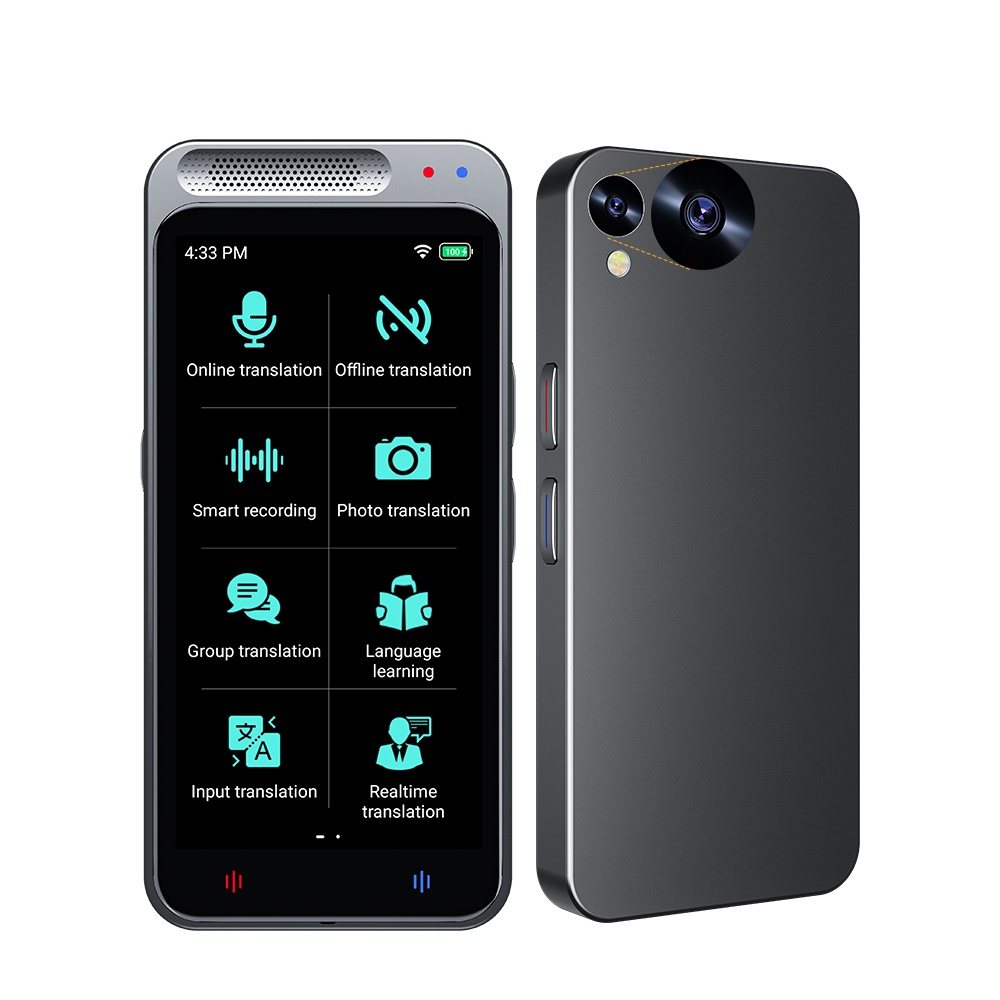
Handheld AI translators are increasingly deployed in regulated environments — corporate meetings, legal consultations, medical triage support and public-sector services. For procurement teams, the question is not whether the device works, but where the voice goes, who touches it, and how long it persists. This article maps the exact data flow for WingPhoenix translation hardware, using only published factory policy and verified architecture. It reflects what you can state to end customers, auditors or importers — no extrapolation, no marketing claims.
Data Flow: From Mic to Output
When a user speaks into the A1 AI Pocket Translator, audio is captured, encoded and transmitted via TLS 1.2+ to a cloud translation API endpoint. The audio payload is ephemeral: it is not logged, cached, replayed or associated with device identifiers. Once the text translation is returned, the audio buffer is purged from memory. No firmware or app variant — including those customised under OEM/ODM firmware and app white-label — alters this behaviour. This applies identically to the B1 AI Translation Earbuds and the VOX ONE AI Glasses when used in translation mode.
Cloud Hosting and Jurisdiction
Translation APIs are hosted by third-party providers whose infrastructure resides in the EU or US, depending on the regional configuration selected at order. Hosting location is fixed per hardware revision and documented in the technical specification sheet shipped with each order. Importers may request proof of data residency — such as cloud provider region declarations — before shipment. No audio or translation text is routed through servers outside the configured jurisdiction. This scope is verified per build and included in the factory testing documentation.
No On-Device Storage or Sync
None of the translation devices — including the G1 AI Guide Player — retain voice clips, transcripts or translation history. There is no local database, no Bluetooth sync to paired phones, and no background upload mechanism. Firmware updates are delivered over HTTPS and validated cryptographically; they contain no telemetry or data-collection modules. This aligns with the buyer resources on secure firmware deployment and is confirmed at every FQC gate.
Procurement Controls and Documentation
GDPR-relevant controls are embedded at the procurement level, not added post-delivery. MOQs and lead times for compliant builds are published in full: MOQ, sampling and lead times include dedicated test cycles for data-handling validation. Every order receives CE RED, RoHS 3 and REACH SVHC documentation — all tied to the specific hardware revision. If an importer requires UKCA or battery SDS with UN38.3, these are supplied as part of the standard document pack. No certificate is claimed unless explicitly tested and issued per revision.
| Decision Point | WingPhoenix Position | Verification Method |
|---|---|---|
| Audio retention | No storage at any layer — device, transit or cloud | Firmware audit + network traffic capture report per revision |
| Translation location | Cloud-only, region-locked per order | API endpoint configuration log + cloud provider region statement |
| Firmware telemetry | None enabled by default; no opt-out required | Binary analysis report included with FQC documentation |
| Data residency proof | Supplied on request for each hardware revision | Cloud region declaration signed by factory QA |
| EU/UK importer duties | WEEE, BattG, DEEE/Triman and EORI/VAT responsibilities remain with importer | Stated in EXW/FOB/DDP terms per AI device line |
- Confirm translation API region during quotation — changes require new hardware revision testing
- Request firmware binary analysis report and network capture summary with first sample
- Verify cloud provider region statement matches declared data residency requirement
- Include EN 301 489 (EMC) and EN 62368-1 (safety) documentation in your technical file
- Ensure your importer holds active WEEE and BattG registrations before DDP air shipment
This map is not aspirational — it is what ships. To initiate a build with verified data flow, share your full specification, including target region, required certifications and distribution channel. We will confirm the applicable hardware revision, test scope and documentation set within two working days. Send us the specification — and we’ll return a traceable, auditable compliance package before tooling begins.
Questions buyers ask
Does WingPhoenix store or process voice recordings from its translators?
No. Voice is processed in real time and discarded immediately after translation output. No audio is saved on-device, in transit or in the cloud.
Where does translation happen — on-device or in the cloud?
Translation occurs in the cloud using third-party APIs; the device acts as a secure audio capture and display terminal. No on-device model inference is performed.
Related: more on ai translation · buyer guides · customisation tiers