Smart Ring Material: Sapphire, Resin or Ceramic Housing
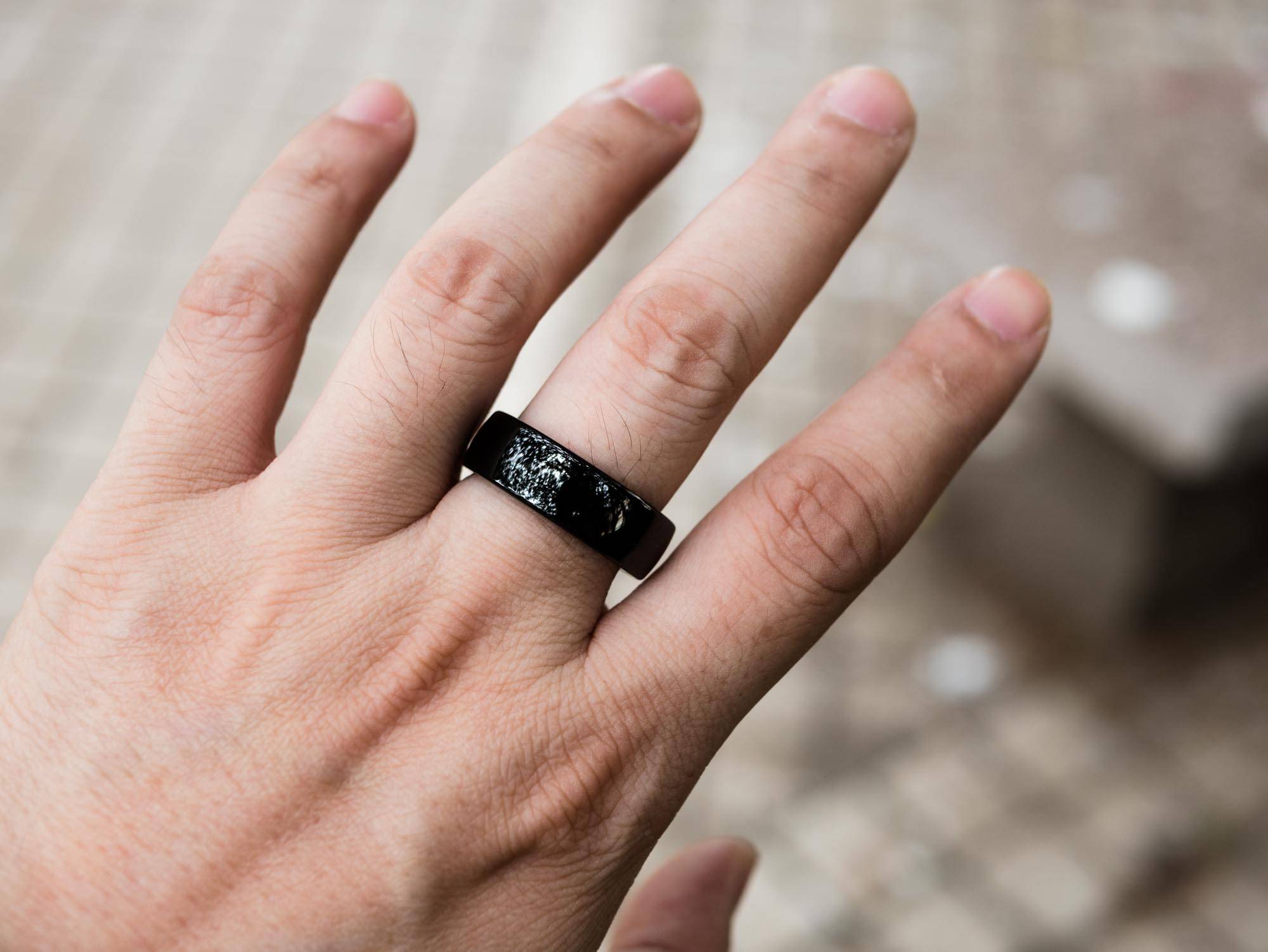
A purchasing manager choosing a smart ring material is really choosing a returns profile. Sapphire, resin and ceramic each fail differently in the field, and each failure mode lands on your after-sales budget rather than the supplier's. The spec sheet tells you hardness and gloss; it does not tell you how many units come back scratched, chipped or cracked after six months on a commuter's hand. This article treats housing choice as a service decision, and it applies equally whether you are briefing an ODM or comparing finished models in the Health & Wellness line.
What each housing material actually does in service
Sapphire is a scratch-resistant crystal, and that is its whole commercial argument. It keeps a reading window and an outer surface clear over years of pocket and desk contact, which matters if your brand promise is "looks new". Its weakness is brittleness: a sharp edge impact can chip or craze the surface, and a chipped ring is a warranty conversation, not a polish job. Resin, usually a polycarbonate or PC-ABS blend, absorbs impact and keeps unit cost and tooling simple, but it scuffs and dulls, so cosmetic returns arrive earlier. Ceramic, typically zirconia, sits between them: hard, scratch-resistant, warm to the touch, and prone to cracking when dropped onto tile or stone. None of these is "best". They are three different bets on which complaint you would rather handle.
The coating question buyers forget to ask
Most "ceramic-looking" rings on the market are a coated substrate, not a solid ceramic body. Ask your supplier to state, in writing, whether the housing is solid material or a coating over resin or metal, and how the coating is bonded. A coated ring can pass a scratch test on day one and show wear at the coating boundary after a season of use. This is also where the R2 smart ring with charging case and the R1 smart health ring are specified differently, because the charging case adds a second contact surface that wears independently of the ring body.
Water ratings, scratch resistance and the evidence behind them
A water rating is a test result tied to a specific build, not a property of the material name. If you change the housing, the seal geometry or the adhesive, the previous ingress result no longer describes the product you are shipping. The same logic applies to scratch resistance: a supplier's internal abrasion test is useful engineering data, but it is not the same as an accredited laboratory report. Book the scope you intend to claim, per hardware revision, and keep the report with the revision number on it.
| Decision point | What to confirm in writing |
|---|---|
| Housing construction | Solid sapphire, solid zirconia, resin, or coated substrate, stated per model |
| Skin-contact materials | EN 1811 nickel release test booked with an accredited laboratory for the revision |
| Ingress claim | Which build the water rating evidence describes, and what voids it |
| Scratch claim | Whether the abrasion result is internal engineering data or a third-party report |
| Battery documentation | UN38.3 test summary and SDS supplied with the watt-hour rating printed on each unit |
| Radio and safety | CE RED scope (EN 300 328, EN 301 489, EN 62368-1) and FCC Part 15 B/C per revision |
| Change control | Written notice before any material, coating or seal change ships |
Commercial terms that protect the material decision
Ring models carry a 1,000-unit minimum order, with logo at 500 and custom packaging at 1,000; firmware or app white-label sits at 2,000 units. Samples run 3-5 days from stock and 7-15 days configured, with sample cost credited against mass production, and production is 25-35 days, or 12-20 weeks where ODM tooling is involved. The full schedule is set out in MOQ, sampling and lead times. Warranty is 12 months with 2 % free replacement parts shipped with the order, and QC runs IQC, IPQC, FQC and OQC at AQL 2.5 major and 4.0 minor. Those terms matter here because a housing change late in a project is a re-test, a re-quote and often a re-tool.
Where an importer should say no
- No supplier should quote a water rating without naming the build it applies to.
- No supplier should describe a coating as ceramic without saying so explicitly.
- No supplier should claim a certificate it does not hold; certification is a test scope booked per hardware revision.
- No supplier should treat a material substitution as a minor change.
- No supplier should leave the importer's WEEE, BattG, DEEE/Triman and EORI/VAT duties undefined — those sit with the importer.
Health metrics on any ring are wellness guidance, never diagnosis, and that framing belongs in your marketing copy as well as your manual. Before you commit to a housing, request the material declaration, the EN 1811 scope and the current radio documentation for the exact revision you intend to buy, then review the CE RED document checklist and the supplier vetting guide against what you receive. If you want the material trade-offs costed against your target return rate, send your specification to OEM/ODM services and ask for a revision-level quotation rather than a catalogue price.
Questions buyers ask
Which smart ring material survives daily wear best?
Sapphire resists scratches but chips under sharp impact, ceramic resists scratches and feels premium but cracks if dropped on tile, and resin absorbs impact but scuffs. The right answer depends on which failure mode your return rate can absorb.
Does the housing material change my compliance paperwork?
Yes. Skin-contact materials drive EN 1811 nickel release testing, and the housing affects the water rating evidence you can claim. Both are booked per hardware revision with an accredited laboratory, so a material change mid-project restarts part of the test scope.
Related: more on ai smart rings · buyer guides · customisation tiers