Small Batch AI Hardware Provisioning
Firmware Is Not Flashable — It Is Bound
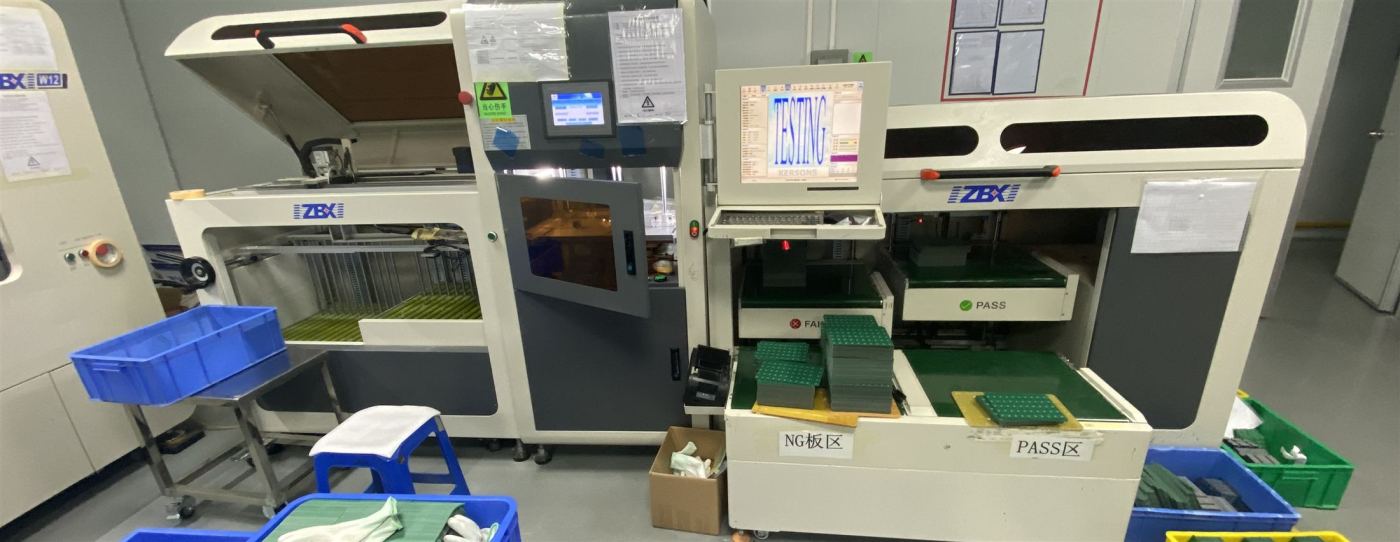
In small batches, firmware is not loaded as a binary file. It is fused with device-specific keys, serial numbers and regulatory metadata during final test. This binding ensures that each unit’s BLE MAC, Wi-Fi MAC and Bluetooth SIG identifier align with its CE RED and FCC test reports — documents tied to the exact hardware revision shipped. A mismatch invalidates the declaration of conformity. For example, the E1 AI learning robot ships with firmware built from your signed manifest, compiled against your app’s bundle ID and embedded with your private key for OTA signature verification. That manifest is validated against your AI Robots platform credentials before build starts.Serial Numbers Are Not Sequential — They Are Traceable
Each unit receives a globally unique serial number generated from a cryptographically secure RNG and logged to a per-batch audit trail. These numbers are not assigned at PCB print or component staging — they are stamped during final functional test, after all RF and safety checks pass. The log includes timestamp, test operator ID (if manual), test fixture ID and firmware hash. This meets ISO/IEC 17025 traceability requirements referenced in our factory testing process, and supports recall readiness under EU Market Surveillance Regulation (EU) 2019/1020. No serial appears in any system before physical test completion.App Binding Is Not Configuration — It Is Certificate Exchange
White-label app binding means exchanging X.509 certificates between your cloud and our device firmware — not changing UI strings or splash screens. Your backend must present a valid domain-validated TLS certificate matching the app’s domain, and our firmware validates that certificate chain at first boot. This prevents man-in-the-middle attacks and satisfies GDPR Article 32 security-by-design expectations. For the H3 health smartwatch, this binding also enforces data routing through your endpoint, not ours — a requirement confirmed during AI Learning & Robotics compliance scoping.Keys Are Not Stored — They Are Injected and Erased
Cryptographic keys are never held in plaintext on factory servers. They are injected via hardware security module (HSM)-backed tooling during final test, then immediately purged from the tooling memory. Key material never touches USB drives, laptops or shared network folders. This process is audited per batch and documented in the OEM/ODM services scope — and is why MOQ for firmware or app white-label starts at 2,000 units. Below that, manual HSM access and test fixture reconfiguration introduce non-recurring engineering cost and schedule risk.What This Process Cannot Do
This process does not support runtime key rotation, remote attestation or TPM-based secure boot. No WingPhoenix device implements a Trusted Platform Module, and no firmware revision offers a certified attestation report such as those required by Android Things or Microsoft Azure Device Provisioning Service. If your architecture depends on hardware-rooted trust chains or continuous identity validation beyond first boot, you must engage us early for custom ODM tooling — which begins at 12–20 weeks lead time and requires separate lab certification for each new security layer. Refer to our factory page for current test scope boundaries.Provisioning Checklist: Small Batch vs Mass Production
| Step | 1,000-unit run | 100,000-unit run |
|---|---|---|
| Firmware build | Manual manifest sign-off, per-batch compilation | CI/CD pipeline with automatic signing |
| Key injection | HSM tooling per batch, operator-logged | Integrated into automated test fixture |
| Serial assignment | Post-test, logged to CSV + SHA-256 hash | Embedded in test jig firmware, real-time DB sync |
| RF calibration | Per-unit antenna tuning, logged | Statistical sampling per 500 units |
| App binding cert exchange | Manual upload to build server, validated pre-flash | Automated API call to your PKI endpoint |
| Compliance documentation | One CE RED/FCC report per hardware revision, reused | Revision-specific reports + annual surveillance test |
| Traceability log delivery | ZIP archive: CSV + PDF summary + SHA-256 | API endpoint with webhook support |
Small batch provisioning is not scaled-down mass production — it is a distinct engineering discipline requiring deliberate trade-offs in tooling, documentation and test depth. To begin, share your app’s domain, target platform (iOS/Android/web), and intended use case with our OEM/ODM team. They will confirm firmware scope, review your certificate chain, and issue a provisioning plan aligned with your product catalogue model and hardware revision.
Questions buyers ask
Why does a 1,000-unit order need manual provisioning when 100,000 units are fully automated?
Because automation requires per-revision tooling, certificate pre-registration and test fixture amortisation — none of which scale below 2,000 units for firmware or app white-label, as stated in our <a href="https://wingphoenixai.com/oem-odm/">OEM/ODM services</a> policy.
How do I verify that each unit’s cryptographic identity is unique and bound to my app before shipment?
We inject keys and serials during final assembly using lab-certified HSM-backed tooling; full trace logs are provided per batch, aligned with the <a href="https://wingphoenixai.com/factory/">factory testing process</a>.
My sample passed CE RED, but the first 1,000 units failed OQC on RF retest — what went wrong?
RF tuning is hardware-revision-specific and requires antenna calibration per build; this step is included in every <a href="https://wingphoenixai.com/products/ai-wearables/">AI wearables</a> run but omitted if firmware is flashed post-calibration.
What claim about “zero-touch provisioning” should I reject outright?
Any supplier stating that over-the-air (OTA) key injection replaces factory-bound identity. OTA cannot satisfy EN 301 489-17 or FCC Part 15 subpart C requirements for intentional radiator authentication — it must be done at final test, as verified in our <a href="https://wingphoenixai.com/resources/how-to-choose-ai-wearable-supplier/">how to vet a supplier</a> guide.
Related: more on ai memory platform · buyer guides · customisation tiers