Sleep Tracking Wearable Claims: What Buyers Can Legally Say
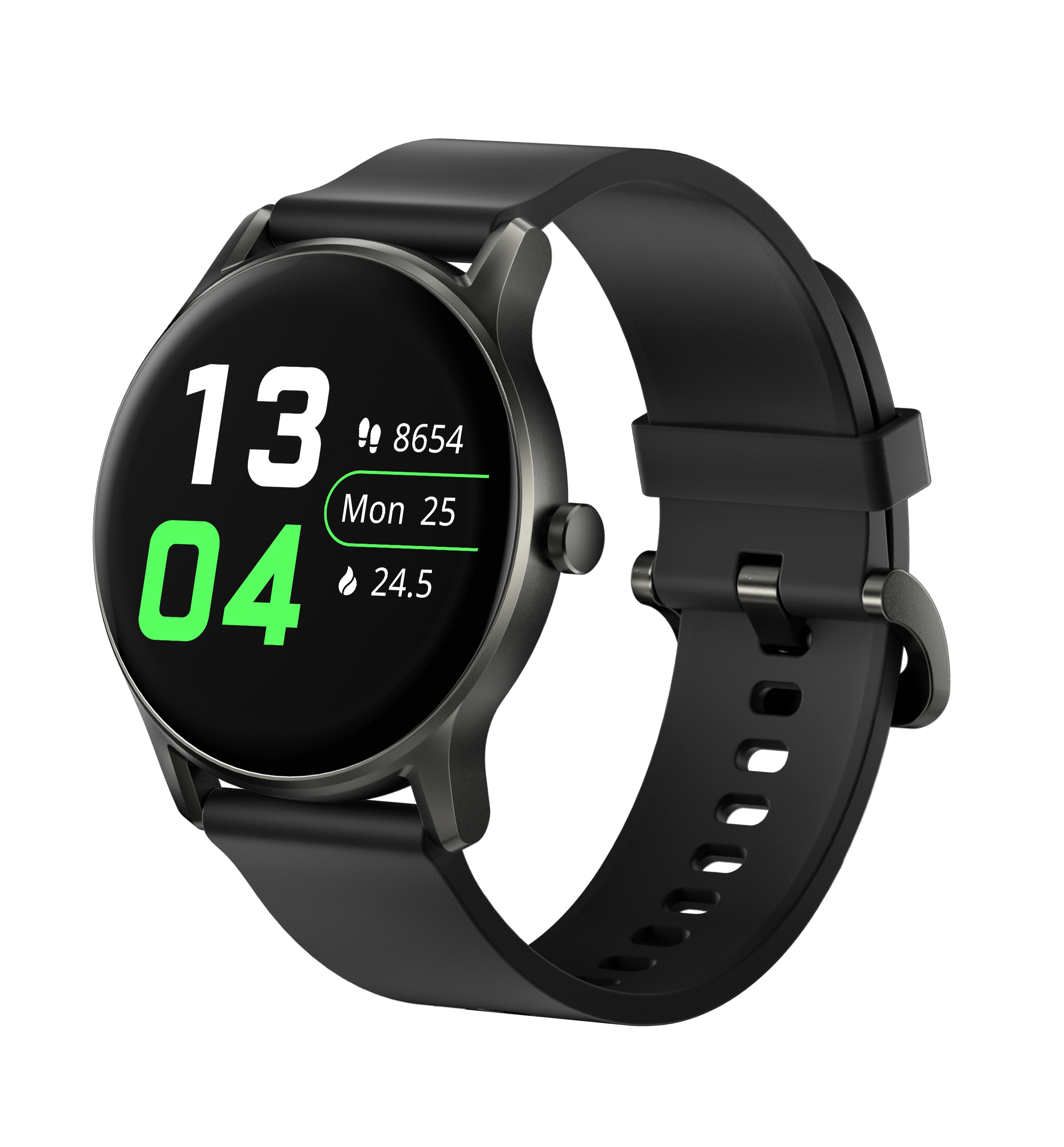
Every buyer in this category eventually receives a marketing deck claiming that a wrist device "detects sleep apnoea" or that a ring "scores your recovery". Both sentences sell well and both create legal exposure that lands on the importer, not the factory. The dividing line is not the sensor or the algorithm; it is the claim printed on the box, the listing and the app screen. This article sets out where that boundary sits under EU and UK consumer protection and Medical Device Regulation (MDR) logic, and what a purchasing manager should demand before signing a purchase order.
Why the claim, not the hardware, defines the category
A wearable that measures movement, heart rate variability and skin temperature is a consumer electronic device. The same device becomes a medical device the moment the intended purpose stated by the manufacturer is to diagnose, prevent, monitor, predict, treat or alleviate a disease. Regulators read intended purpose from the labelling, instructions, advertising and app copy — not from the bill of materials. That means a sleep tracking wearable claims strategy is a documentation exercise before it is an engineering one. If your listing says "helps you understand your sleep patterns", you remain in wellness. If it says "identifies sleep apnoea", you have declared a medical purpose and the conformity route changes entirely. For the underlying electronics file, the CE RED document checklist is the starting point, because radio equipment approval and medical classification are separate questions that buyers often conflate.
Sleep stages, recovery scores and the words that stay safe
Sleep staging is an estimate derived from movement and cardiac signals, and every credible supplier will describe it that way. A recovery score is a composite index built from the same inputs. Neither is a measurement in the clinical sense, and neither should be presented as one. The safe vocabulary is directional and personal: trends, patterns, estimates, guidance, awareness. The unsafe vocabulary is diagnostic and absolute: detects, diagnoses, screens for, prevents, treats, clinically proven, medically accurate. Keep the app's in-product language aligned with the packaging, because a mismatch between the two is the easiest thing for a market surveillance authority to evidence. Our Health & Wellness line and the smart health ring are documented on this basis: wellness guidance, never diagnosis.
| Claim area | Acceptable as wellness | Triggers medical device scope |
|---|---|---|
| Sleep | Estimated sleep stages, sleep duration trends, sleep regularity | Screening for, detecting or diagnosing a sleep disorder |
| Recovery | Derived readiness or recovery index with documented method | Presenting the index as a clinical assessment or treatment guide |
| Heart rate | Resting rate and variability trends for personal awareness | Arrhythmia detection, AFib alerts framed as diagnosis |
| Stress | Relative stress or calm indicator from physiological signals | Diagnosing anxiety, burnout or a psychiatric condition |
| Breathing | Respiratory rate trend during rest | Apnoea detection, oxygen desaturation alarms |
| Children | Activity and rest summaries within the printed age grading | Any health claim, or use outside the packaging age grading |
What to put in the specification before tooling
Ask for the intended purpose statement in writing, in the languages of every market you sell into, and make it a controlled document under the quality system. Ask which claims appear on the packaging, in the quick start guide, in the app onboarding and in the retail listing, and require that all four match. Ask for the algorithm description at a level that lets your own reviewer explain how a recovery score is produced, without exposing the supplier's source code. Where a product is skin-contact, confirm the EN 1811 nickel release position, and where it is a children's item, confirm that the test scope follows the age grading on the packaging and is booked with an accredited laboratory per build. The health smartwatch and GPS sport watch pages show how the split between wellness features and sports features is normally documented.
Commercial terms that protect the claim boundary
Claim discipline has a cost, and it should be priced into the order rather than discovered after launch. Expect revised app copy, revised packaging artwork and a re-run of the label approval to sit outside standard tooling. Confirm the quantity thresholds early: MOQ is 500 units, logo 500, custom packaging 1,000, firmware or app white-label 2,000, AI glasses 300, and ring, education and companion models 1,000, with service robots quoted per project at 50 units. Samples run 3-5 days for stock and 7-15 days for configured units, with sample cost credited against mass production, and production is 25-35 days, 30-40 for education and 12-20 weeks for ODM tooling. The MOQ, sampling and lead times page sets out the full schedule. Warranty is 12 months with 2 % free replacement parts shipped with the order, and QC runs IQC, IPQC, FQC and OQC at AQL 2.5 major and 4.0 minor. Documents are supplied per model and hardware revision: CE RED, FCC Part 15 B/C, UKCA on request, RoHS 3, REACH SVHC screening, battery UN38.3 with SDS, and EN 1811 for skin-contact items. Where a supplier cannot produce these per revision, that is the point at which an importer should say no.
- Get the intended purpose statement in writing and control it as a document.
- Align packaging, quick start guide, app onboarding and retail listing wording.
- Ban diagnostic verbs from all customer-facing copy in every language.
- Confirm the certificate scope names the exact hardware revision you are buying.
- Check that importer duties — WEEE, BattG, DEEE/Triman, EORI and VAT — are allocated in the contract, because they sit with the importer.
- Verify that Google Play and GMS are not assumed; they are not licensed by default.
Where an importer should walk away
Walk away if the supplier offers to "add the medical wording later" without a change-control process, if the app copy is edited after label approval without notice, or if the same certificate number is offered for two different hardware revisions. Walk away if a companion robot is described as a monitoring or emergency-response device, because it is not one. Walk away if a translation feature is presented as certified, legal or medical output, when it is a reference translation. These are not negotiating positions; they are the failures that turn a shipment into a recall. Our OEM/ODM services and factory pages describe how claim text, artwork and test scope are versioned together, and the buyer resources section collects the document templates. The next step is simple: send your current retail listing and app onboarding copy to your supplier and ask them to mark, line by line, which sentences they will support in writing.
Questions buyers ask
Can we market a sleep tracking wearable as detecting sleep disorders?
No. Under EU consumer protection and medical device rules, a product that detects, monitors or treats a disease is a medical device, and a wellness wearable is not. Keep the wording to wellbeing guidance and let the user consult a clinician.
Does a recovery score need clinical evidence?
A recovery score is a derived wellness index, not a diagnosis, so it needs a documented, reproducible algorithm rather than clinical trial data. If you describe it as a medical assessment, you cross into MDR scope and the whole file changes.
Related: more on ai wearables · buyer guides · customisation tiers