Prescription Smart Glasses: What the Frame Can Support
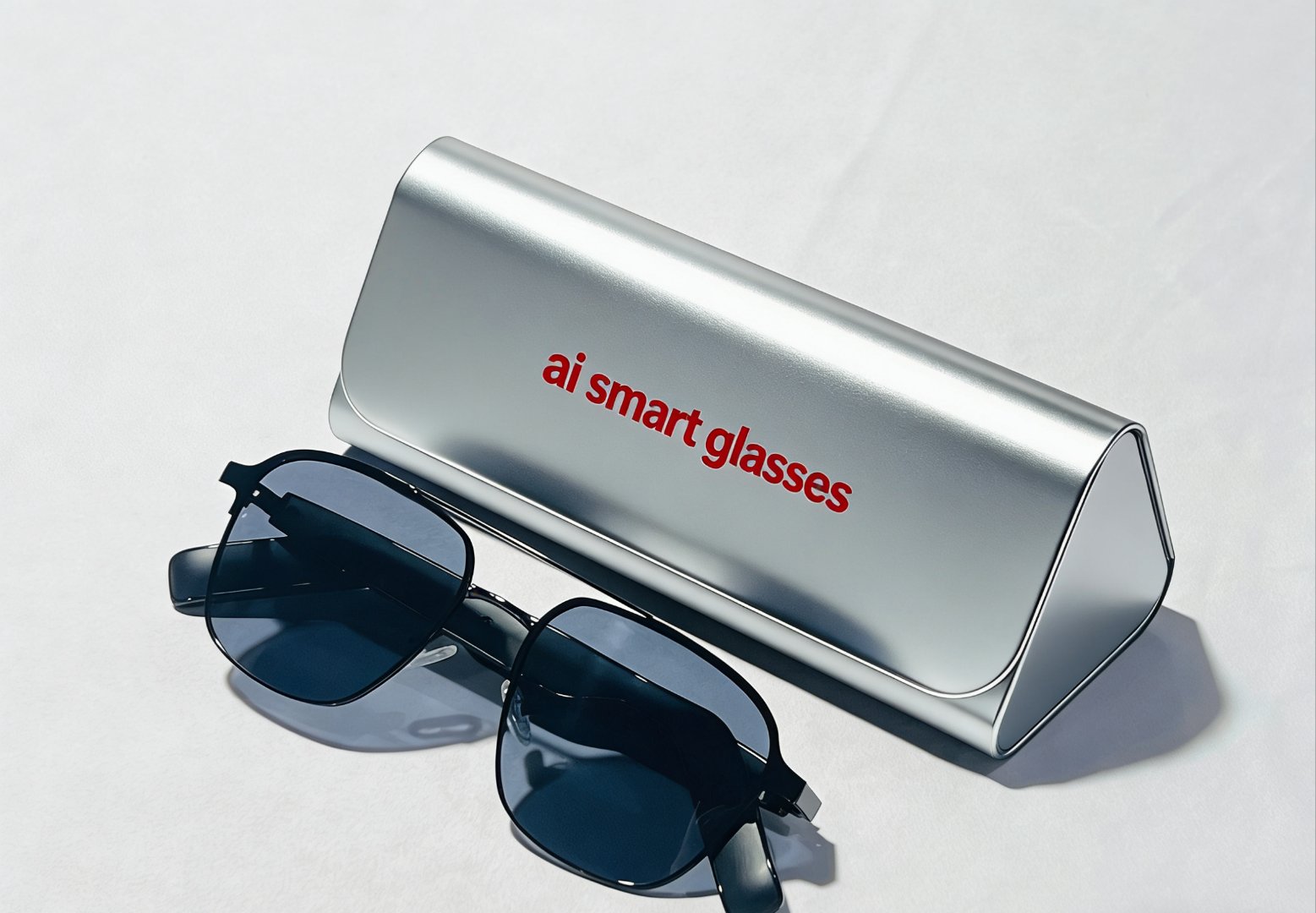
Prescription smart glasses are rarely a product decision. They are a channel decision. A buyer who wants to sell into opticians is asking for a frame that a third-party lab can glaze, and for a written boundary between what your brand controls and what the optical lab controls. Get that boundary wrong and you inherit complaints about vision quality on hardware you never touched. This article sets out how to brief the optical channel, what to put in the specification, and where an importer should refuse a supplier's shortcut.
Decide which prescription model you are actually selling
There are three workable models, and they carry different obligations. In the insert model, the smart glasses carry a carrier or clip that holds a separate prescription insert, so the main frame stays untouched. In the glazed-front model, the optician fits lenses directly into the frame front, which means the frame must accept standard lens thicknesses and edge shapes. In the referral model, you sell the device and hand the customer to a partner lab with no mechanical interface at all. The first two require engineering documentation. The third requires almost none, but it also gives the optical channel no reason to stock you. Most brands that sell well through opticians start with an insert and treat glazed fronts as a later revision.
What the frame specification must state
An optician will not commit to a frame on marketing copy. The specification has to answer mechanical and optical questions in writing, and it has to be revision-controlled, because a silent change to a nose bridge or a hinge will invalidate the glazing instructions the lab has already learned. Treat the optical interface as a separate document from the electronics datasheet, and issue it with the same discipline. If you are briefing a supplier, the same document becomes your purchase specification; the OEM/ODM services page describes how tooling and documentation are sequenced for a custom frame.
| Specification item | What the buyer must confirm in writing | Why it matters |
|---|---|---|
| Insert interface | Carrier geometry, retention method, removal tool if any | Determines whether an optician can work without damaging the frame |
| Glazing envelope | Maximum lens thickness, edge profile, decentration limits | Prevents labs rejecting the frame after the first attempt |
| Optical centre | Stated reference point relative to the display module | Affects whether the wearer sees the image comfortably |
| Frame material | Nickel release test scope for skin-contact parts (EN 1811) | Skin-contact compliance is a document, not an assumption |
| Labelling | Wording that keeps prescription work outside the device warranty | Separates your liability from the lab's |
| Revision control | Version number on the interface drawing | Stops a running change from invalidating lab instructions |
Certification, labelling and the optical channel
Certification is a test scope booked per hardware revision with an accredited laboratory, not a badge you inherit from a platform. For an AI glasses frame, the usual scope covers CE RED (EN 300 328, EN 301 489, EN 62368-1), FCC Part 15 B/C, UKCA on request, RoHS 3, REACH SVHC screening, and battery UN38.3 with SDS. Add EN 1811 nickel release for the parts that touch skin, which for a wearable frame is most of it. If the packaging carries an age grading that brings the product into toy scope, EN 71-1/-2/-3 and EN 62115 apply and must be booked for that build. None of this is optional because the product has a lens in it; the lens does not change the electronics scope, but it does change the label. The how we build and test page sets out the IQC, IPQC, FQC and OQC gates at AQL 2.5 major and 4.0 minor that a frame revision should pass before it reaches a lab.
Briefing the optical channel without over-promising
The fastest way to lose an optician is to imply that your brand will handle the prescription. Say plainly that the device is supplied as a frame with a defined insert interface, that the prescription work is performed by the optical channel, and that the resulting lens is not covered by the device warranty. Then give the channel what it actually needs to say yes:
- A one-page interface drawing with the revision number and the glazing envelope.
- Sample frames for the lab to trial, ordered as configured samples rather than stock, so the interface matches the production revision.
- Dealer terms that state who owns the glazing step and who handles a vision complaint.
- A spare-parts line for the insert carrier, since it is the part most likely to be lost.
- Clear wording that any wellness or translation feature is guidance or reference output, never a diagnosis and never a certified translation.
Sample lead time is worth planning around: stock samples ship in three to five days, configured samples in seven to fifteen, and the sample cost is credited against mass production. Standard MOQ is 500 units, with AI glasses at 300, logo at 500, custom packaging at 1,000 and firmware or app white-label at 2,000. Production runs 25 to 35 days, and ODM tooling for a custom frame front takes 12 to 20 weeks, which is the number that usually decides whether a glazed-front model ships this season or next. Terms are EXW, FOB Shenzhen, or DDP by air or sea, with a 12-month warranty and 2 % free replacement parts shipped with the order.
Where an importer should say no
Refuse any supplier who offers to "handle the prescription" without naming the optical lab and the terms. Refuse a frame revision that arrives without an updated interface drawing, because the lab will glaze to the old one. Refuse a claim that the device is certified when the supplier means the module was tested. And remember that EU and UK importer duties — WEEE, BattG, DEEE/Triman, EORI and VAT — sit with you, not the factory, so the optical channel conversation has to happen alongside your own registration planning. If you are still sizing the category, the AI glasses market trends briefing and the wider buyer resources library cover the channel questions that come before a frame drawing, while the product catalogue shows which frames already carry an insert interface and the the journal archive tracks how those interfaces have changed between revisions. A translation feature on the same device is reference output only, and a companion or wellness feature is not a monitoring or emergency-response function, so keep those claims out of the optician's leaflet.
Start by writing the one-page interface drawing yourself, even before you approach a supplier, and send it with your target revision and volume to send us the specification. A frame that cannot be documented cannot be glazed, and a channel that cannot glaze will not stock you.
Questions buyers ask
Can a smart glasses frame be sold as prescription-ready?
Only if the mechanical interface is defined and documented — a lens insert or a frame front that an optician can glaze to normal optical tolerances. The device maker supplies the frame and the interface; the prescription work is done by the optical channel under its own responsibility.
Who is liable if a glazed lens is fitted badly?
The party that performed the glazing. Your brand owns the frame specification, the optical lab owns the lens. Keep that boundary explicit in the packaging, the manual and the dealer terms, or a single complaint will pull your brand into a dispute it cannot win.
Related: more on ai glasses · buyer guides · customisation tiers