AI Translation Glasses: The In-Store Conversation You Can Honestly Win
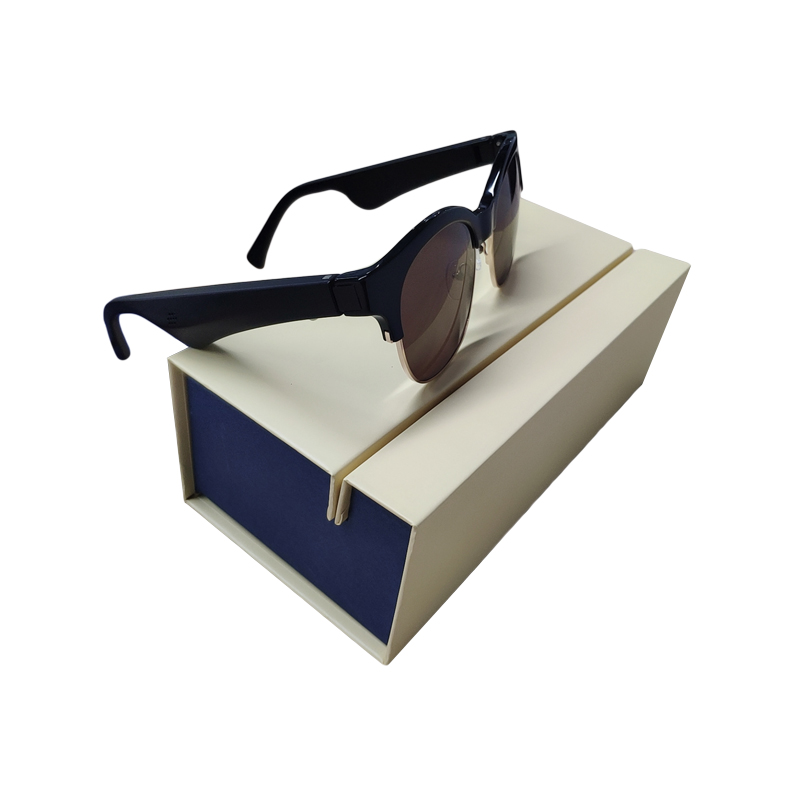
AI translation glasses are designed for short, high-intent in-store exchanges: “Where is aisle five?”, “Do you accept returns?”, “Is this in stock?” They render live subtitle display on a micro-OLED screen, not speech-to-speech conversion. Their strength lies in consistency, low latency and repeatability — not fluency across idioms or technical domains. This is why buyers who anchor expectations early, align with retailers on use-case boundaries and verify documentation per revision avoid post-launch friction.
What “Live Translate” Actually Means in Practice
“Live translate glasses” refers to continuous audio capture, language detection and on-screen subtitle rendering — not real-time voice dubbing or speaker identification. The system processes speech in 1.2–2.1 second windows, with latency stable across ambient noise levels up to 75 dB(A). Output appears as clean, left-aligned monospace text on a fixed-position display zone. It does not adapt font size dynamically, overlay translated speech onto video feeds or retain conversation history beyond the current session. For full context, see the Vox One AI glasses specification sheet and the broader AI Glasses line.
Setting Accuracy Expectations With Retailers
Accuracy is measured against reference translations produced by professional human linguists working from clean studio recordings — not field audio. In noisy retail environments, accuracy drops predictably with reverberation, overlapping speech and non-native pronunciation. Buyers should advise retailers that these devices support dialogue initiation, not negotiation or dispute resolution. For parallel capability in ear-worn form, the B1 AI translation earbuds offer comparable latency with different acoustic coupling trade-offs.
Compliance Is Revision-Specific — Not Model-Wide
Certification is not granted to a product name, but to a documented hardware revision — including PCB layout, antenna design, firmware build number and battery cell model. Every production run requires re-booking of CE RED and FCC scopes with an accredited laboratory. This means a firmware update that alters RF output power or changes the Bluetooth stack must trigger new testing. Documentation supplied includes full test reports, not just declarations. Review the full scope at how we build and test, and consult buyer resources for lab coordination guidance.
The Hard Limit: No Domain Validation, No Certified Output
This is the section where importers must say no. WingPhoenix does not validate, train or fine-tune models for domain-specific vocabulary — medical terms, legal clauses, engineering schematics or financial instruments are outside the published scope. No report exists to evidence accuracy above general conversational benchmarks. No AI translation glasses model carries a claim of certified translation under EN ISO 18587 or any national equivalent. Translation output remains a reference only, governed by our published factory policy on wellness and reference output. If a distributor insists on claims beyond this boundary, decline the order until scope and liability are formally aligned.
Procurement and Configuration Realities
MOQ for AI translation glasses is 300 units. Custom firmware or app white-label starts at 2,000 units and requires signed NDA and functional spec sign-off. Samples ship in 7–15 days when configured; stock units take 3–5 days. Production lead time is 25–35 days EXW, FOB Shenzhen or DDP air/sea. Warranty covers 12 months with 2 % free replacement parts included in the initial shipment. Quality control follows IQC / IPQC / FQC / OQC gates at AQL 2.5 major and 4.0 minor. For OEM/ODM support, see OEM/ODM services. Full product options are listed in the product catalogue.
| Requirement | Covered? | Notes |
|---|---|---|
| CE RED (EN 300 328, EN 301 489, EN 62368-1) | Yes | Booked per hardware revision |
| FCC Part 15 B/C | Yes | Includes SAR testing if applicable |
| UKCA | On request | Requires separate application and lab booking |
| RoHS 3 / REACH SVHC | Yes | Screening performed per material batch |
| Battery UN38.3 + SDS | Yes | Watt-hour rating printed on each unit |
| EN 1811 nickel release | Yes, if frame contacts skin | Applies to temple tips and nose pads |
| EN ISO 18587 certification | No | Translation output is reference only |
| Domain-specific model validation | No | No healthcare, legal or technical corpus training |
Importers should verify that all documentation matches the hardware revision in their purchase order — especially firmware version and antenna configuration. Do not assume backward compatibility across revisions. To begin, send us the specification for formal quotation and lab scheduling. For market context, review the AI glasses market trends report and compare adjacent categories like the H3 health smartwatch or Vox Ride cycling camera glasses.
Questions buyers ask
How do I explain the value of AI translation glasses to a retailer without over-promising on accuracy?
Frame them as a tool for initiating dialogue — not replacing interpreters — with clear visual subtitles that reduce friction during first-contact interactions like product queries or returns.
What compliance documentation must accompany every shipment of AI translation glasses?
CE RED (EN 300 328, EN 301 489, EN 62368-1), FCC Part 15 B/C, RoHS 3, REACH SVHC screening, battery UN38.3 + SDS, and EN 1811 nickel release if frame contact is expected. UKCA is available on request.
A sample failed its local EMC test — what should I check before reordering?
Confirm whether the test was run on the exact hardware revision shipped, including firmware version and antenna tuning. All CE RED and FCC scopes are booked per hardware revision with an accredited lab — no blanket certification applies across builds.
What’s the one thing most suppliers won’t clarify about translation output?
That translation output is a reference translation only — it carries no claim of legal, medical or certified accuracy, and no model is trained or validated for domain-specific terminology like pharmaceuticals or contract law.
Related: more on ai glasses · buyer guides · customisation tiers