Prescription Cycling Glasses Insert: Sport Optics Beyond Fashion
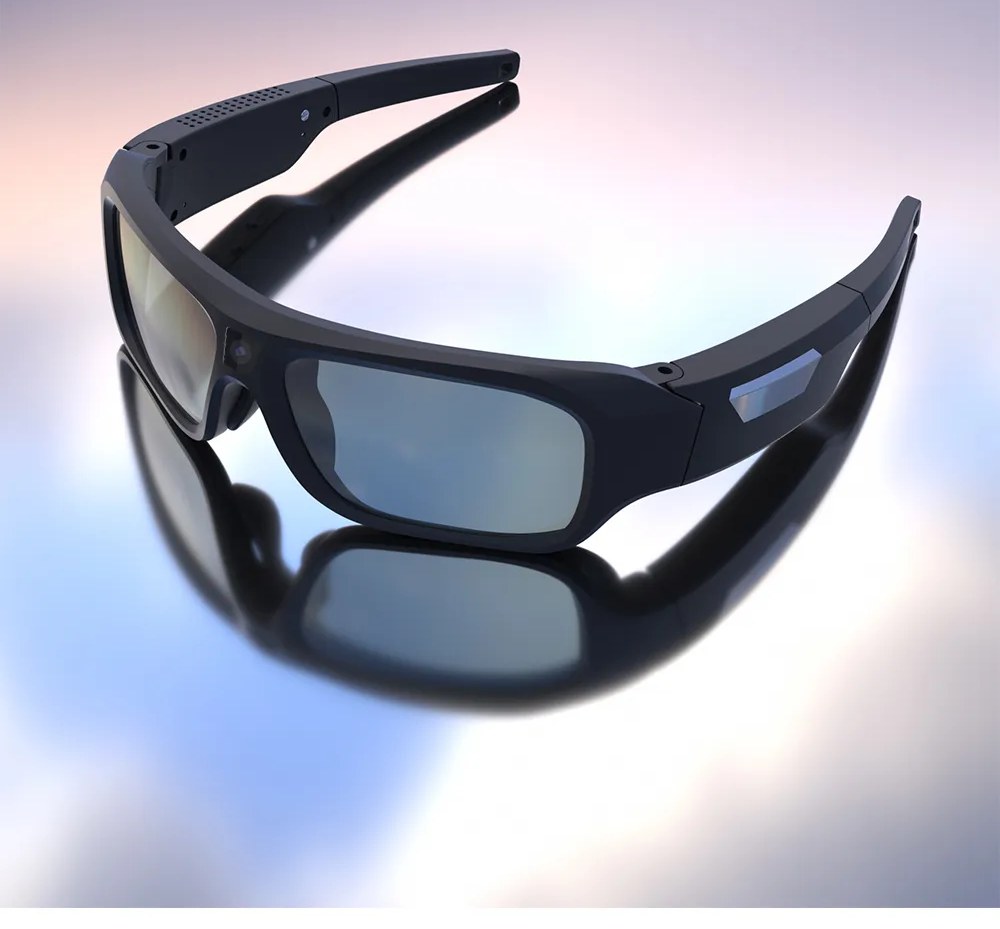
Cycling places unique constraints on prescription optics that go beyond refractive accuracy. Unlike fashion frames, sport models operate across temperature swings, high-humidity gradients and repeated mechanical shock — all while maintaining precise optical centre placement relative to the pupil. A shift of even 1.2 mm degrades peripheral awareness and depth perception at speed. This is why prescription inserts for cycling must be engineered as integrated subsystems, not add-ons. WingPhoenix treats them as part of the optical stack, not an afterthought.
Optical Centre Stability Is Non-Negotiable
In motion, head tilt, frame flex and strap tension combine to displace conventional inserts. For cycling, the optical centre must remain fixed within ±0.5 mm of the designed pupil position across all riding postures. WingPhoenix uses CNC-machined polymer carriers with dual-point retention clips that lock into frame grooves — not adhesive alone. Each carrier is laser-etched with alignment marks visible during assembly, and every batch undergoes optical bench verification using a collimated light source and digital centroid analysis. This differs fundamentally from fashion-grade inserts, where optical drift up to 2 mm is tolerated.
Sweat Resistance Means More Than Hydrophobic Coating
Hydrophobic surface treatment alone fails under sustained perspiration. Sweat contains sodium chloride and lactic acid, both of which degrade silicone gaskets and corrode metal retention points over time. WingPhoenix inserts use medical-grade thermoplastic elastomer (TPE) carriers rated to EN 1811 for nickel release, with sealed retention interfaces and no exposed fasteners. Sweat resistance is validated by 72-hour continuous saline immersion followed by optical clarity and retention force measurement — not just visual inspection. You can review our how we build and test process for full traceability on material batches and environmental stress testing.
Dynamic Focus Requires Frame-Insert Synchronisation
AI cycling glasses like the Vox Ride cycling glasses rely on real-time head pose estimation. If the insert shifts during a sprint or descent, the system misreads eye position relative to the display field. That breaks spatial audio cueing and HUD registration. WingPhoenix designs inserts with frame-specific curvature matching — not generic spherical correction — and validates synchronisation across 12 head-motion vectors (pitch, yaw, roll, acceleration) using a motorised gimbal rig. This level of integration is absent in off-the-shelf RX solutions.
Compliance Must Cover the Full Stack — Not Just Lenses
Prescription inserts sit in direct skin contact and influence the EM behaviour of adjacent electronics. CE RED certification for the Vox One AI Glasses includes the insert’s effect on antenna pattern distortion and SAR distribution. RoHS 3 and REACH SVHC screening apply to carrier polymers and retention clips, not just lens substrates. Battery safety documentation (UN38.3 + SDS) covers inserts used with powered frames — because thermal mass changes affect cell discharge profiles. Our CE RED document checklist outlines how each hardware revision triggers retesting scope.
| Decision Point | Fashion Insert Standard | WingPhoenix Sport Insert Requirement |
|---|---|---|
| Optical centre tolerance | ±2.0 mm | ±0.5 mm, verified per batch |
| Sweat exposure test | Surface wipe only | 72 h saline immersion + retention force check |
| Frame interface | Adhesive-only or friction fit | Mechanical clip + thermal-set polymer carrier |
| EMC impact assessment | Not performed | Antenna pattern & SAR retest per revision |
| Skin-contact compliance | None required | EN 1811 nickel release for all carrier materials |
| Thermal cycling range | Not specified | −10°C to +50°C, 5 cycles, optical pass/fail |
Procurement and Integration Realities
Minimum order quantity for prescription inserts is 500 units, aligned with the MOQ, sampling and lead times policy for AI glasses components. Custom lens curvature requires a frame master sample and 3D scan approval before tooling. Firmware-level HUD calibration for prescription wearers is available via firmware and app customisation, but only when paired with certified inserts — unvalidated combinations void optical warranty. All inserts ship with batch-specific test reports, including optical bench data and EN 1811 certificates. You’ll find full model context in the AI Glasses line and broader category references in the AI glasses market trends report.
- Confirm frame curvature and retention interface geometry with a physical master sample
- Specify lens base curve and optical centre height relative to frame datum line
- Book EN 1811 and thermal cycling validation for your carrier material grade
- Align insert production with your AI glasses firmware release schedule
- Request batch test reports with optical centroid coordinates and retention force values
Sport optics demand precision that fashion categories do not — and procurement decisions must reflect that difference in engineering rigour, not just cost or lead time. If your brand serves serious cyclists, request the send us the specification form with your frame CAD, lens prescription matrix and intended use cases. We will return a technical feasibility summary, including optical validation scope and timeline alignment with your product catalogue rollout.
Questions buyers ask
Why can’t standard prescription inserts work in cycling glasses?
Cycling demands optical centre retention during rapid head movement, sweat-resistant adhesion to curved frames, and zero micro-shift under vibration — conditions fashion inserts are not tested for.
How does WingPhoenix validate optical performance for sport use?
Optical centre alignment is verified per batch using calibrated jig fixtures; sweat resistance is tested per EN 1811 with saline solution exposure; all inserts undergo thermal cycling from −10°C to +50°C before release.
Related: more on ai glasses for cycling · buyer guides · customisation tiers