Camera Glasses Weather Rating Explained
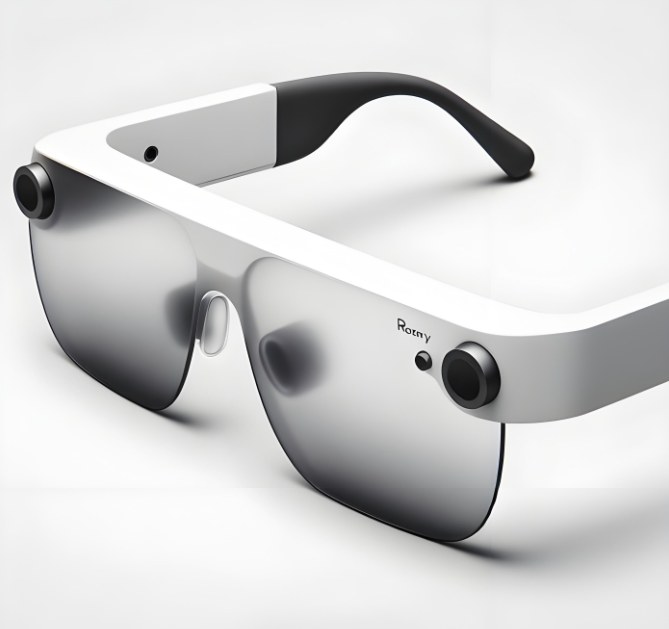
Camera glasses for cycling operate across a dynamic outdoor envelope: ambient temperatures from −5°C to 40°C, rapid thermal transitions, saline sweat contact, direct UV exposure and intermittent water impact. An IP rating alone does not guarantee function in that environment. It is one verified parameter—not a holistic weather assurance. Procurement teams must distinguish between what standards measure and what field use demands, especially when specifying for distributors in Germany, the UK or Canada where seasonal variation is pronounced.
What IP Ratings Actually Cover
IP codes (per IEC 60529) define protection against solid objects and liquids under controlled lab conditions. The first digit (e.g., 6 in IP67) refers to dust resistance; the second (7) to immersion depth and duration. Neither digit addresses UV degradation of polycarbonate frames, thermal expansion mismatch between lens and housing, or electrolytic corrosion from prolonged sweat contact. For example, the Vox Ride cycling glasses are built with dual-sealed battery compartments and hydrophobic lens coatings—but those features fall outside IP scope and require separate validation.
What IP Ratings Never Cover
IP tests do not simulate real-world stressors: repeated flexing of temple arms during helmet removal, micro-scratches from wiping lenses with damp fabric, or voltage sag in lithium-polymer cells below 0°C. Battery performance in cold is governed by cell chemistry and thermal management—not enclosure sealing. Likewise, UV resistance depends on material stabilisers and coating adhesion, not ingress protection. A product may pass IP67 while failing EN 1811 nickel release if sweat accelerates metal ion leaching from frame trim—hence why how we build and test includes skin-contact compliance as a distinct gate.
How to State It Correctly on Packaging
Declare only the IP rating verified for the final production configuration—not prototypes or reference designs. Include the standard reference: “IP67 per IEC 60529”. Avoid phrases like “weatherproof”, “all-weather” or “rain-ready”, which imply broader performance than the standard covers. For EU distribution, pair the IP claim with the CE RED marking and its underlying harmonised standards: EN 300 328, EN 301 489, EN 62368-1. All AI Glasses line models ship with full documentation per hardware revision, including test summaries for each declared rating.
Procurement Checklist: Beyond the IP Number
| Requirement | Verified By | Document Supplied | Notes |
|---|---|---|---|
| IP rating (e.g., IP67) | Accredited lab per IEC 60529 | Test summary report | Booked per hardware revision; not carried over between lens or battery module changes |
| Skin-contact safety | EN 1811 nickel release test | Lab report + declaration | Applies to all frame, temple and nosepad surfaces contacting skin |
| Battery safety & transport | UN38.3 + SDS | Certified test summary + SDS | Watt-hour rating printed on each unit; required for air freight |
| EMC & radio compliance | CE RED / FCC Part 15 | DoC + test reports | CE RED document checklist applies |
| Cold operation range | Internal thermal validation | Functional test log | Not certified; stated as “operational down to −5°C” only if verified across 10 units |
Where to Start Your Specification
Begin with your intended distribution markets and seasonal usage profile. If you plan retail in the Netherlands or Quebec, cold battery behaviour and lens anti-fog performance become non-negotiable—even if IP67 is met. Review the MOQ, sampling and lead times for AI glasses (300 units standard), then request firmware white-label support via OEM/ODM services if custom UI or voice prompts are needed. All documentation—including CE RED, RoHS 3 and REACH SVHC screening—is supplied per model and revision. For full context, see the AI glasses market trends analysis and browse the full product catalogue.
Contact WingPhoenix directly with your technical specification and target launch window: send us the specification so we can confirm test scope availability, align on lab booking timelines, and issue a formal quotation with EXW or DDP terms.
Questions buyers ask
Does an IP67 rating mean the glasses will survive heavy rain, sweat and winter rides?
No. IP67 confirms protection against immersion up to 1 m for 30 minutes and dust ingress—but says nothing about thermal shock, condensation inside optics, salt-laden sweat corrosion or battery voltage drop below 5°C. Those require separate design choices and test scopes.
Can I declare “IP67-rated” on the box if the final assembly hasn’t passed third-party testing yet?
No. You may only state an IP rating on packaging or marketing materials after accredited lab verification per IEC 60529 for that exact hardware revision—including lens gasket compression, hinge seal integrity and battery compartment closure torque. WingPhoenix books this test per revision at an accredited laboratory; it is not implied by design intent.
Related: more on ai glasses for cycling · buyer guides · customisation tiers