Prescription AI Glasses: What an Optician Channel Will Stock
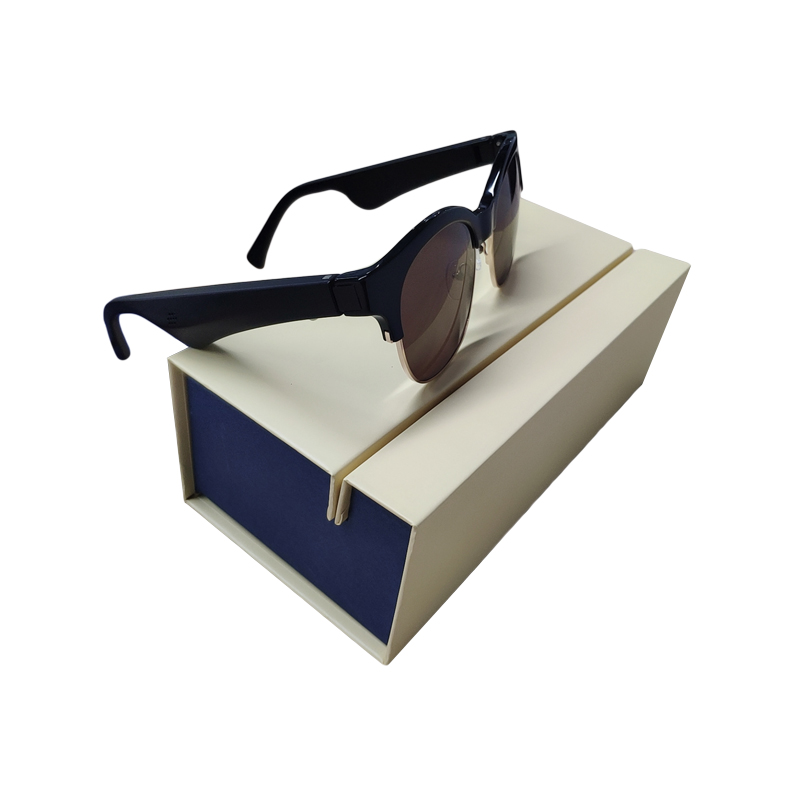
Opticians stock prescription AI glasses only when the hardware meets three non-negotiable conditions: it accepts standard ophthalmic lens blanks without modification; its frame geometry allows consistent, repeatable fit across 95% of adult head shapes; and every production revision carries a CE RED declaration tied to a specific hardware build, not a generic platform. Unlike consumer electronics buyers who assess feature sets or app ecosystems, optical channel partners begin procurement with mechanical and regulatory traceability — not software roadmaps. Their risk model includes post-fitting liability, so they require documentation that proves repeatability, not just compliance.
Lens Blank Integration Is the Entry Gate
An optician cannot stock a device unless it accepts industry-standard lens blanks — CR-39, polycarbonate or high-index — using conventional edging and mounting methods. WingPhoenix’s Vox One AI glasses are designed with a modular front assembly that retains standard screw-in hinge points and a 16mm minimum lens thickness requirement at the mounting edge. This allows labs to use existing CNC edgers without custom tooling. No frame may be approved for optical channel distribution if its temple or bridge design forces lens de-centration beyond ±2mm — a limit verified in the factory’s fit validation report, not stated in marketing copy. The how we build and test page details how each hardware revision undergoes physical blank-mounting trials before QC gates open.
Frame Spec Must Include Measured Tolerances — Not Just Dimensions
A published frame spec sheet must list not only nominal dimensions (e.g., “140mm temple length”) but also measured tolerances per ISO 13666:2012 — ±0.8mm for temple length, ±0.5mm for bridge width, ±1.0° for pantoscopic tilt. WingPhoenix supplies these figures per hardware revision, not per model family. These numbers appear in the technical annex accompanying CE RED documentation, not in the public datasheet. If a supplier provides only nominal values or uses “typical” or “approx.” language, the optical channel will decline the quote — even if MOQ and lead time are favourable. This is why OEM/ODM services for optical partners always begin with a signed frame spec agreement before tooling starts.
Fit Validation Is Not a Marketing Claim — It’s a Test Report
“Comfortable fit” means nothing to an optician. What matters is a fit validation report based on a minimum 120-subject panel across five anthropometric quartiles (head circumference, interpupillary distance, nasal bridge depth), conducted under EN ISO 13666 Annex B. WingPhoenix books this test per hardware revision with an accredited lab — not once per model line. The report includes photographic evidence of temple pressure mapping and temporal clearance measurements. Without this, no optical distributor will place an order, regardless of firmware capabilities. This requirement applies equally to the Vox Ride AI cycling glasses, which must pass both sport-fit and prescription-fit protocols.
What This Process Cannot Do
This process does not validate medical-grade optical performance — nor does it claim to. WingPhoenix does not calibrate or certify dioptre accuracy, prism balance or vertex distance compensation. Those remain the responsibility of the fitting optician and the lens lab. No WingPhoenix device carries a Class I or II medical device designation, and no regulatory submission covers refractive correction efficacy. If a supplier claims “FDA-cleared for vision correction” or “CE-certified for prescription use”, the importer must refuse the claim — it exceeds the scope of the declared conformity assessment. The buyer resources section contains the exact wording permitted in technical documentation for optical channel partners.
Regulatory Traceability Starts at the Hardware Revision
Each hardware revision receives its own CE RED test scope — covering EN 300 328 (RF), EN 301 489 (EMC) and EN 62368-1 (safety) — booked separately with an accredited laboratory. This is not a blanket approval across generations. For example, a change in antenna placement or battery chemistry triggers retesting. Documentation is supplied per revision, not per SKU family. That traceability is required before any unit ships to an EU or UK importer — and it is the first document reviewed by optical channel QA teams. You can review the full scope in the how we build and test section, including sample reports and lab accreditation details.
| Requirement | Optician Channel Expectation | WingPhoenix Practice |
|---|---|---|
| Lens blank compatibility | Standard edging, no adapter required; ≥16mm lens thickness at mount | Verified per revision; reported in fit validation annex |
| Frame dimensional tolerance | Per ISO 13666:2012 (e.g., ±0.8mm temple length) | Measured and documented per hardware revision |
| Fit validation | 120+ subjects, five anthropometric quartiles, pressure mapping | Booked per revision with accredited lab |
| CE RED scope | Tied to exact PCB layout, antenna position, battery model | Test scope booked per hardware revision |
| Nickel release (EN 1811) | Required for all skin-contact parts (temple tips, nose pads) | Screened per revision; report supplied with order |
| MOQ for optical channel | Minimum 300 units per frame variant (not per colour) | Matches published AI Glasses line MOQ |
| Sample lead time | Configured samples (with lens-mounting demo) within 15 days | 7–15 days; cost credited against mass order |
Opticians do not buy AI features — they buy repeatability, traceability and integration readiness. Their procurement checklist begins with lens blanks, frame tolerances and fit validation reports — not SDKs or cloud APIs. If your specification includes those three elements, you are ready to move forward. Send us the specification so we can confirm hardware revision alignment, schedule fit validation and issue the correct CE RED test scope. We will respond within two working days with a revision-specific compliance summary and production timeline.
Questions buyers ask
Why do opticians treat AI glasses differently from consumer electronics distributors?
Because their liability extends to the final fitted product — not just the device — and their supply chain must support lens integration, frame adjustments and repeatable fit across patient populations.
What is the first technical document an optician’s procurement team requests?
A frame spec sheet with certified dimensional tolerances, mounting geometry for lens blanks, and a documented fit validation protocol — not firmware release notes or SDK access.
Related: more on ai glasses · buyer guides · customisation tiers