Smart Glasses Retail Demo: Battery, Camera, Brightness
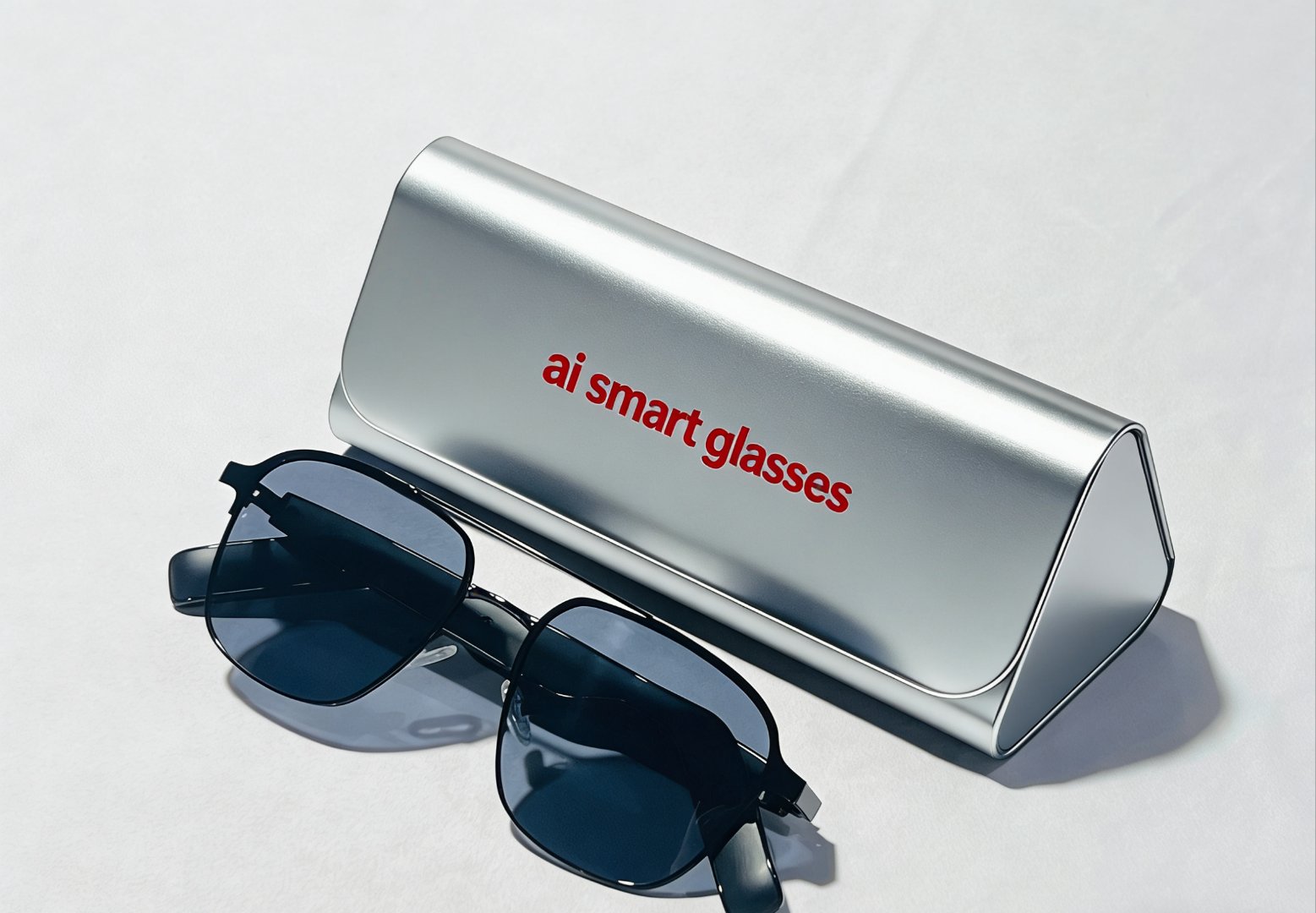
Smart glasses are one of the few categories where the customer cannot judge the product in the first thirty seconds. The display competes with shop lighting, the camera raises a question the buyer has to answer out loud, and the battery is the part nobody can see. A retail demo therefore has to be designed as a script, not as a table with a device on it. That script is also where an importer discovers whether a supplier understands the category or only the bill of materials.
Design the demo around the three questions buyers ask
Customers in a store ask three things in sequence: can I see it, is it recording me, and how long does it last. Your demo layout should answer them in that order, because each answer changes what the customer does next. Put the display test near a window or under the brightest fixture in the store, not in the shade of a display cabinet. Keep a mirror or a second unit facing the customer so they can see the camera indicator themselves rather than taking your word for it. Then place the charger and a simple run-time card at the end of the counter, so the conversation ends on a practical note. If your range also includes AI Glasses with different frame weights, run the same script on each, since fit changes how long a customer will keep a unit on.
The camera indicator is a store policy problem, not a spec sheet line
Every market you sell into treats recording in a public space differently, and the store is a public space. The practical approach is to write the indicator behaviour into the demo script and into staff training: when the light comes on, when it stays on, and what the customer is told before the unit goes on their face. Staff should say the sentence out loud every time, even to the fifth customer of the day. Agree the demo zone with neighbouring units in the same centre, and keep a short written note of that agreement. For camera-equipped frames such as cycling camera glasses, the same rule applies with an extra step: the customer should be told what happens to any test footage, and the default should be that it is deleted in front of them.
Battery life demo: what to show and what not to claim
Do not put a run-time number on a shelf card unless it comes from the datasheet for the exact hardware revision you are selling. Instead, demonstrate behaviour: how the unit behaves when the display is at full brightness, how it behaves with the camera running, and how it behaves when both are idle. A short loop covering those three states teaches the customer more than a single figure, and it protects you when a buyer compares your card with a review online. Keep two units per demo position so one is always charged, and log the charge state at the start and end of each day. Battery documentation travels with the goods, so your supplier should be able to hand over the UN38.3 test summary and SDS for the revision in the box, with the watt-hour rating printed on each unit.
| Demo decision | What to check | Where the risk sits |
|---|---|---|
| Display legibility | Test under the store's brightest fixture and near a window at midday | Customer returns citing "cannot see it outdoors" |
| Camera indicator | Visible to the wearer and to a person standing opposite | Complaint from another customer or a neighbouring unit |
| Run-time script | Three states: display only, camera only, idle | Shelf card figure that does not match the shipped revision |
| Fit and weight | Two frame sizes on the counter, cleaned between wearers | Poor conversion and hygiene complaints |
| Documents on hand | CE RED, FCC Part 15 B/C, RoHS 3, REACH SVHC screening, UN38.3 and SDS | Market surveillance query you cannot answer in a week |
| Importer duties | WEEE, BattG, DEEE/Triman registration, EORI and VAT | These sit with the importer, not the factory |
What to specify before you order demo stock
A demo programme fails at the ordering stage more often than at the counter. Work through this before you commit:
- Decide the demo SKU and the retail SKU separately, and confirm both sit inside the same hardware revision.
- Ask for the certification test scope booked per revision with an accredited laboratory, and read it as a scope, not as a held certificate.
- Confirm the MOQ position: AI glasses start at 300 units, logo at 500, custom packaging at 1,000, firmware or app white-label at 2,000.
- Book samples early. Stock samples ship in 3-5 days, configured samples in 7-15 days, and the sample cost is credited against mass production.
- Plan production at 25-35 days, longer for education builds and 12-20 weeks where ODM tooling is involved.
- Agree Incoterms: EXW, FOB Shenzhen, or DDP by air or sea, and check who clears the battery paperwork.
- Write the warranty expectation into the order: 12 months, with 2 % free replacement parts shipped alongside.
If your range also covers audio wearables, the demo counter can share space with translation earbuds, but keep the scripts separate. Translation output is a reference translation, never a certified, legal or medical one, and staff should not imply otherwise. The same discipline applies to any wellness feature you show alongside: metrics are guidance, not diagnosis, and a companion device is not a monitoring or emergency-response product. Where you need a second wearable line on the same counter, a health smartwatch is a simpler demo because it needs no recording explanation.
Where an importer should say no
Say no to a supplier who quotes a run-time figure without a datasheet for the revision, who offers a certificate as a PDF with no test scope attached, or who treats the camera indicator as a firmware detail rather than a store policy question. Say no to a demo unit that arrives without the same documentation as the retail carton, because the demo unit is the one a market surveillance officer is most likely to pick up. Say no to a launch date that assumes certification can be arranged after the stock lands. The factory page sets out how builds and QC gates are run, with IQC, IPQC, FQC and OQC at AQL 2.5 major and 4.0 minor, and it is a reasonable basis for asking the same questions of any supplier you are comparing. Background on how the category is developing sits in the AI glasses market trends briefing, and the wider buyer resources section covers importer duties in more detail. If you are weighing a white-label route, the OEM/ODM services page explains where tooling and firmware work sit in the timeline.
The next step is a one-page demo brief: the three customer questions, the indicator sentence staff must say, the two frame sizes on the counter, and the document list you expect in the carton. Send that brief to your shortlisted suppliers and compare the answers, not the brochures. You can send us the specification and we will respond against it line by line, including where we would tell you to buy elsewhere.
Questions buyers ask
How long should a shop demo of AI glasses run?
Long enough to show the display in daylight and the camera indicator clearly, but short enough that the unit returns to the charger above the level where a buyer would worry. Book the demo script around your own opening hours rather than a claim from the supplier.
Can a store demo camera glasses without triggering complaints?
Yes, if the indicator behaviour is explained before the device goes on the customer's face and the demo area is agreed with neighbouring units. The rule is disclosure first, recording second.
Related: more on ai glasses · buyer guides · customisation tiers