Fall Sensing Limits Wearable: What Accelerometers Infer and Why Uncertainty Is Required
What an Accelerometer Measures, Not What It Knows
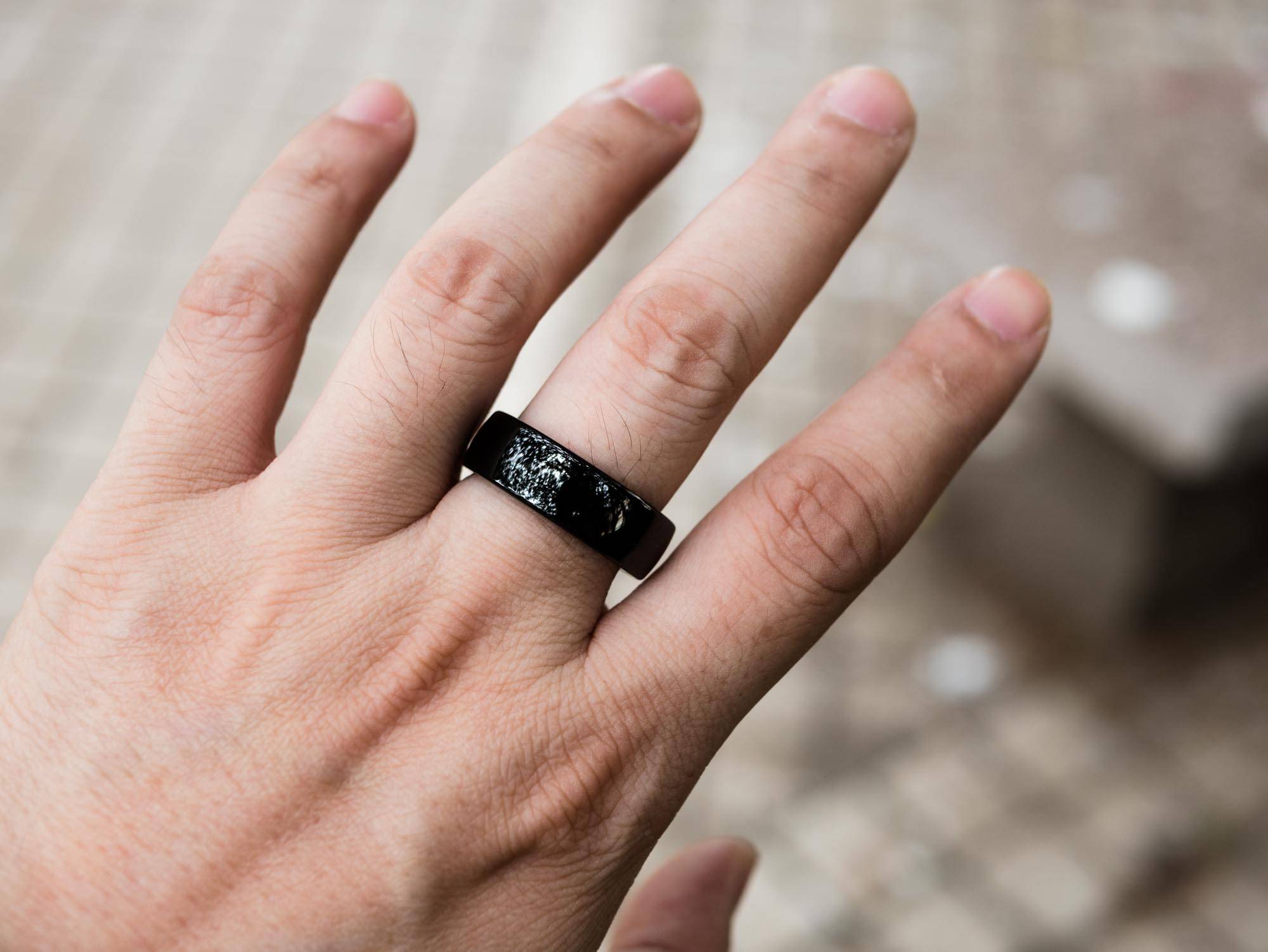
A triaxial accelerometer captures magnitude and direction of linear acceleration across three orthogonal axes. From this, firmware can infer rapid deceleration, orientation change, and impact energy — all consistent with a fall. But it cannot determine whether the user landed on carpet or concrete, whether they are conscious, or whether the motion was intentional (e.g., diving into a pool). The health smartwatch and health ring both log these parameters at 50 Hz, but output remains raw motion context — not clinical interpretation. This distinction anchors every compliance decision we make.Why “Uncertain” Is a Feature, Not a Gap
WingPhoenix firmware includes explicit uncertainty states for motion events that meet impact thresholds but lack supporting temporal signatures — such as prolonged stillness post-impact or characteristic free-fall duration. This prevents over-escalation. Devices in the Health & Wellness line do not auto-call emergency services or trigger alerts without user confirmation. Instead, they prompt: “Did you fall?” — aligning with CE RED requirements for human-in-the-loop escalation and avoiding classification as a Class IIa medical device.Where False Positives Originate — and Why Tuning Is Non-Negotiable
Stair climbing, jumping jacks, dropping the device, and even aggressive typing generate transient accelerations overlapping with fall profiles. A fixed threshold triggers false positives; adaptive algorithms reduce them but require real-world validation per demographic and environment. Our MOQ, sampling and lead times policy reflects this: configured samples take 7–15 days to allow firmware iteration against customer-specific motion libraries — not just generic lab data.The Certification Boundary: What Is Tested, What Is Not
CE RED testing for wearables covers radio emissions, EMC immunity and safety (EN 62368-1), but not clinical validity of fall inference. EN 1811 nickel release applies to skin-contact items like the smart ring with charging case, but no standard governs “fall confidence scoring”. We book test scopes per hardware revision with accredited labs — but those scopes do not include algorithmic validation of motion interpretation. That remains a customer responsibility under their own risk assessment.What This Product Cannot Do — And Where You Must Say No
No WingPhoenix wearable confirms a fall has occurred. None monitors posture, detects loss of consciousness, initiates emergency contact, or integrates with telehealth platforms without white-label app development. Claims of “99% fall detection accuracy” or “medical-grade fall response” are unsupported and violate our published factory policy. Importers must reject any supplier documentation asserting diagnostic capability — especially where CE RED document checklist items reference only radio and safety compliance, not clinical performance.Procurement Checklist: Decision Points Before Committing
| Decision Point | Why It Matters | WingPhoenix Position |
|---|---|---|
| Claim wording in marketing materials | Determines regulatory pathway (wellness vs. medical device) | “Inferred motion event” only — never “fall detection” or “fall confirmation” |
| Firmware adaptability | Fixed thresholds cause false positives in real use | Configurable impact window and post-event stillness timer included |
| Escalation protocol | Auto-alerts without user consent breach GDPR and RED human-in-the-loop rules | Prompt-based confirmation required before any alert transmission |
| Certification scope alignment | Misaligned claims invalidate CE RED validity | Documents cover EN 300 328, EN 301 489, EN 62368-1 — nothing beyond |
| Skin-contact compliance | Nickel release limits apply to rings and watches worn daily | EN 1811 screening applied to all skin-contact builds |
| Battery documentation | UN38.3 + SDS mandatory for air freight; watt-hour must be printed | Supplied with every order, per revision |
| OEM/ODM scope | Custom firmware or app logic changes MOQ and lead time | Firmware white-label MOQ is 2,000 units — see OEM/ODM services |
- Review your intended claim language against the product catalogue — all descriptions reflect our enforceable factory policy
- Book a configured sample early: motion tuning requires iterative validation, not one-off lab pass/fail
- Confirm escalation logic matches your regional duty-of-care expectations — companion robot and AI wearables line follow identical human-in-the-loop principles
- Validate that your importer holds EORI/VAT and WEEE registration — duties sit with the importer per our EXW/FCA terms
- Request the full how we build and test dossier: IQC/IPQC/FQC/OQC gates at AQL 2.5 major, 4.0 minor
Questions buyers ask
How does a wearable distinguish a fall from other high-impact motions?
It uses triaxial accelerometer thresholds and temporal pattern analysis — but cannot confirm intent, surface, injury or posture without additional context or sensors. WingPhoenix devices report inferred motion events, not clinical outcomes.
What liability exposure arises if a device claims to “detect falls” without qualification?
Regulatory bodies treat unqualified claims as medical device assertions under EU MDR or FDA 510(k) pathways — which WingPhoenix avoids by design. All health metrics are wellness guidance, never diagnosis.
Why did our sample fail the UKCA lab test on false positive rate?
Because the firmware applied a fixed acceleration threshold without adaptive windowing or contextual filtering — a known source of false positives during stair descent or vigorous exercise. Revision-level tuning is required per use case.
What do most suppliers omit when quoting fall-sensing wearables?
That no current revision carries a validated fall confirmation report — only motion event logging with configurable impact windows. Confirmation requires external validation, not embedded logic.
Related: more on ai health monitoring · buyer guides · customisation tiers