Elder Care False Alert Handling in AI Hardware
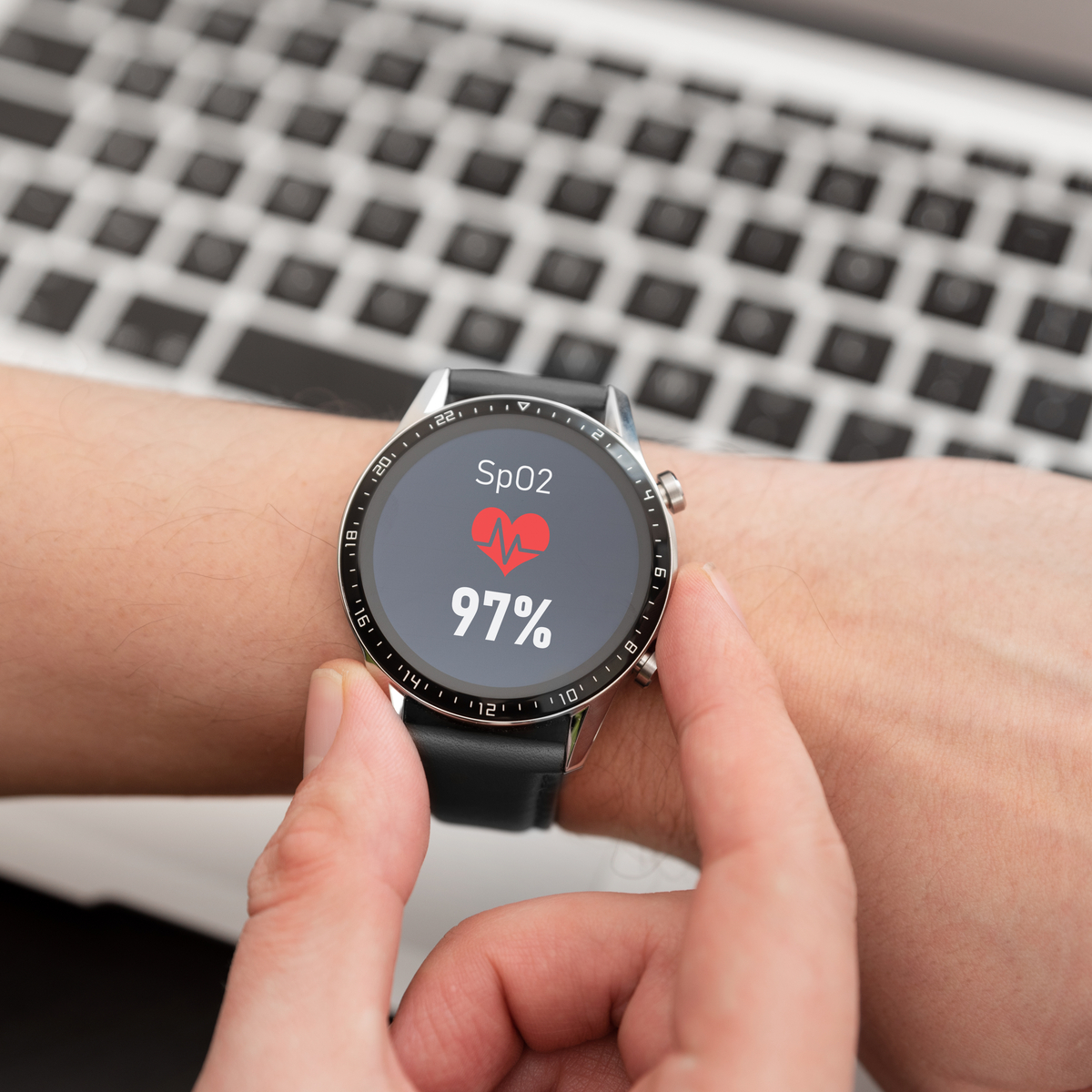
False alerts in elder care hardware are not edge cases; they are inevitable inputs. What separates a trusted device from a discarded one is not how often it misfires, but what it does immediately after it is wrong. WingPhoenix builds fallback logic into the firmware architecture — not as an afterthought, but as a defined state machine with auditable transitions. This includes local acknowledgement windows, configurable suppression rules per sensor modality, and escalation paths that require human confirmation before external notification. These decisions are documented per hardware revision and tested against the CE RED document checklist, not hidden behind marketing claims.
Suppression Is Not Silence — It Is Contextual Delay
Suppression means the device holds an alert locally while verifying context: ambient light, concurrent audio cues, recent movement history and battery stability. It does not mean the alert vanishes. On the H3 Health Smartwatch, suppression lasts up to 90 seconds and triggers a subtle haptic pulse if confirmed — giving the user time to self-correct or confirm intent. This differs from the R1 AI Health Ring, where suppression is limited to physiological baselines only (e.g., heart-rate variability trends), because ring form factors lack ambient sensors. Suppression scope is fixed per model and cannot be extended via firmware update without retesting the full CE RED and EN 62368-1 scope.
Acknowledgement Must Be Physical, Not Just Digital
An alert acknowledged only on a smartphone app fails the first-use test for older adults. WingPhoenix requires tactile feedback for all primary alerts: vibration patterns calibrated to EN 62368-1 accessibility guidelines, with duration and intensity tied to severity level. The R2 Smart Ring uses dual-stage haptics — a short pulse for routine checks, a sustained double-pulse for high-priority flags. No model relies solely on visual or audio cues for acknowledgment, because vision and hearing decline are part of the use case, not exceptions to be worked around.
Escalation Paths Are Hard-Coded, Not Configurable
Escalation is never left to cloud logic alone. Each device ships with a static escalation tree defined at factory: local haptic → paired mobile app → SMS to designated contacts → optional API webhook (for integrators). The K1 AI Companion Robot adds a voice prompt layer before SMS, but only if microphone confidence exceeds a fixed threshold — no dynamic AI inference during escalation. This ensures reproducibility across units and avoids runtime drift that could invalidate EMC or low-voltage test results.
What This Design Cannot Do — And Why That Matters
This architecture does not adapt suppression rules in real time based on user behaviour. There is no self-learning loop that modifies escalation thresholds after repeated dismissals. WingPhoenix does not ship devices with unsupervised ML models that adjust sensitivity without revalidation. That decision is deliberate: adaptive logic would require retesting the entire CE RED and EN 62368-1 scope for every firmware revision — a process incompatible with stable regulatory compliance. Importers should reject any supplier claiming “self-optimising false-alert reduction” unless they provide full test reports for each logic change, including updated risk assessments for skin-contact items like the R1 AI Health Ring and its EN 1811 nickel release certification.
Compliance Documentation Maps Directly to Fallback Logic
The documents supplied per hardware revision — CE RED, FCC Part 15, RoHS 3, REACH SVHC screening — all reference the same firmware build ID used to validate fallback states. For example, the CE RED document checklist includes verification of haptic timing tolerances, suppression window durations and SMS payload structure. Battery UN38.3 reports list watt-hour ratings printed on each unit, because power stability directly affects haptic consistency — a failure point in false-alert recovery. All of this is verified at IQC, IPQC and OQC gates using AQL 2.5 major and 4.0 minor sampling.
| Decision Point | WingPhoenix Standard | Supplier Red Flag |
|---|---|---|
| Suppression window | Fixed duration per model (e.g., 90 s on H3, 45 s on R1), documented in firmware release notes | “Adaptive suppression” without retest documentation |
| Acknowledgement method | Tactile-only for primary alerts; no reliance on screen or speaker | App-only dismissal required before escalation |
| Escalation trigger | Hard-coded sequence; no cloud-based logic changes between revisions | “Real-time AI routing” without versioned test reports |
| Battery impact | UN38.3 + SDS supplied; watt-hour rating printed on unit | No battery test summary or printed rating |
| Skin-contact compliance | EN 1811 nickel release tested per build for rings | No EN 1811 report, or report dated before final assembly |
| Firmware update scope | Updates validated for fallback logic only; no unsupervised learning enabled | “Autonomous improvement” claims without test evidence |
Trust in elder care hardware is rebuilt in the seconds after a mistake — not in the lab, not in the datasheet, but when the device pauses, pulses, and waits. WingPhoenix defines those seconds in firmware, validates them in accredited labs, and documents them per hardware revision — not per marketing cycle. If your current supplier cannot map their false-alert fallback logic to a specific clause in their CE RED report or show suppression timing in their OQC test log, request a configured sample and compare the haptic cadence, suppression delay and escalation handoff against your care platform’s integration requirements. Start by reviewing the Health & Wellness line, then send us the specification for a firmware build that matches your escalation policy.
Questions buyers ask
Why do families stop using elder care devices after three months?
Because repeated false alerts erode confidence in the system’s judgment, and the device’s response to being wrong determines whether it stays on the wrist or goes in a drawer.
Why does finance reject a supplier’s “99% accuracy” claim?
Accuracy metrics ignore consequence weight: one false negative in fall detection carries different liability than ten false positives in activity logging, and no published test covers real-world escalation paths.
Why did our distributor’s sample fail the UK care home trial?
The device escalated every motion anomaly to SMS without local acknowledgement or suppression options, overwhelming staff and triggering automatic opt-outs in the care management platform.
What do most suppliers refuse to document about their AI?
The exact conditions under which the device suppresses, defers or discards an alert — and the absence of any third-party validation for that suppression logic.
Related: more on ai health monitoring · buyer guides · customisation tiers