Do AI Toys Need an App
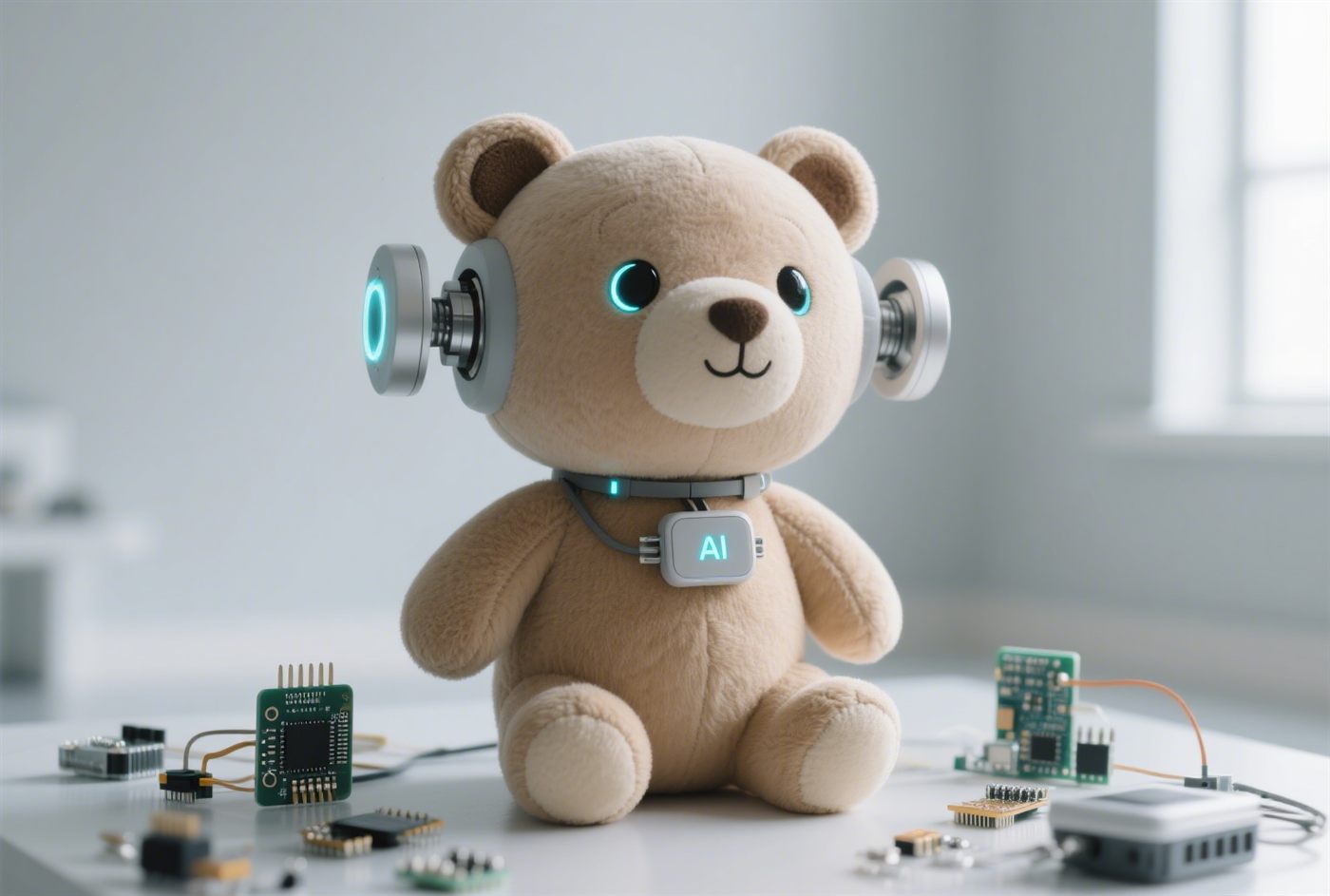
An AI toy does not need an app by definition. What it needs is alignment between its intended use case, the importer’s compliance obligations, and the end-user’s expectations in Germany, the UK or Canada. WingPhoenix builds three distinct architectures: fully offline speaker-based toys, app-setup-only devices with local voice processing, and cloud-linked models where the app manages accounts, content libraries and over-the-air updates. The decision is not about convenience—it is about liability scope, return rate drivers and whether the importer can meet their duty as the EU or UK responsible person under the Toy Safety Directive 2009/48/EC or UKCA framework.
Offline Speaker Models: No App, No Account, No Cloud
These units process speech locally using embedded neural accelerators. Audio never leaves the device. There is no pairing step, no account creation screen, and no persistent identifier. Firmware updates are delivered via microSD card or physical USB-C connection—no OTA infrastructure required. This architecture eliminates GDPR Article 6(1)(a) consent obligations for personal data processing, avoids UK ICO guidance on connected toys, and removes the need for age-gated account flows under the UK Age Appropriate Design Code. It also bypasses Google Play Store policy restrictions on children’s apps. Models like the E1 AI Learning Robot can ship in this mode when configured without Wi-Fi or Bluetooth stack activation. Importers selecting this path must confirm the packaging age grade matches EN 71-1/-2/-3 and EN 62115 test scope booked per revision.
App-Setup-Only Devices: One-Time Link, Then Standalone
Here, the app performs initial configuration—language selection, volume calibration, voice model personalisation—and then exits. All subsequent interaction happens offline. The app does not run in the background, does not collect usage telemetry, and does not retain credentials after setup completes. This design satisfies EN 301 489-17 EMC requirements for short-range devices while limiting the importer’s exposure to app store review delays and regional privacy enforcement actions. The K1 AI Companion Robot supports this mode, though firmware must be built and certified with the cloud connectivity layer disabled before lab submission. Buyers should verify that the factory’s how we build and test process includes IQC gate checks for unpopulated Wi-Fi/BT modules in these builds.
Cloud-Linked Models: App as Gatekeeper
When features such as story libraries, parental dashboards or multilingual translation depend on remote APIs, the app becomes mandatory—not optional. In this architecture, the device cannot complete its core function without first authenticating through the app and maintaining a verified account. This triggers full GDPR/UK GDPR accountability: lawful basis documentation, data processing agreements with WingPhoenix as processor, and importer-led DPIA if the toy targets under-13s. It also introduces update dependency: if the app is delisted from Google Play or Apple App Store, functionality degrades. Buyers evaluating this path should consult our how to vet a supplier guide to assess the vendor’s documented update lifecycle policy and fallback mechanisms.
What This Architecture Cannot Do
This design cannot claim medical, diagnostic or emergency-response capability—regardless of sensor hardware present. A companion robot with motion sensors does not detect falls. An AI doll with ambient light and temperature sensors does not monitor sleep apnoea or blood glucose. These claims fall outside the scope of EN 62115 and EN 71-1/-2/-3 certification and would require separate MDR (EU 2017/745) or UK MDR 2002 classification, clinical evaluation and notified body involvement. WingPhoenix does not develop, test or support such claims. Importers must reject any supplier who presents audio analytics, biometric inference or health monitoring as a standard feature of a toy-grade device—even if the underlying chipset supports it. The customisation tiers page clarifies that firmware-level health claims require separate quotation and regulatory scoping before lab booking.
Compliance & Procurement Checklist
| Decision Point | Offline Speaker | App-Setup-Only | Cloud-Linked |
|---|---|---|---|
| CE RED / UKCA test scope | EN 300 328 not required | EN 300 328 required if BT/Wi-Fi active during setup | EN 300 328 + EN 301 489 mandatory |
| GDPR/UK GDPR accountability | No personal data processing | Minimal: setup parameters only | Full controller obligations apply |
| Toy Safety Directive scope | EN 71-1/-2/-3 + EN 62115 confirmed | Same, but requires Wi-Fi/BT test inclusion | Same, plus cloud service risk assessment |
| Firmware update method | MicroSD or USB-C | MicroSD or USB-C | OTA only |
| Minimum MOQ for white-label app | N/A | 2,000 units | 2,000 units |
| Lab test lead time impact | Shortest: no radio tests | Moderate: radio tests added | Longest: radio + cloud API security review |
Next Steps for Your Sourcing Cycle
Begin by defining the functional boundary: does the end-user need internet-dependent features, or is local responsiveness sufficient? If offline operation meets your brief, specify “no Wi-Fi/BT stack” in your send us the specification request and reference the MOQ, sampling and lead times document to align on sample build timing. For app-linked models, request WingPhoenix’s processor agreement template and confirm which cloud infrastructure (AWS IoT Core, Azure Sphere or private instance) will host your instance. All configurations are validated against the AI Learning & Robotics line and product catalogue before lab submission. Start here: the journal for deeper technical procurement notes, or buyer resources
Questions buyers ask
Does every AI toy require a paired app to function?
No. Functionality depends on the hardware architecture—not the category label. Some models operate fully offline; others require an app for initial setup only; a third group ties core features to persistent account linkage.
Can I avoid app-related GDPR or UK GDPR consent screens entirely?
Yes—if the device has no cloud account, no remote identity, and no persistent user profile. That design choice must be locked in at firmware level before lab testing begins.
Related: more on ai toys & dolls · buyer guides · customisation tiers