Cycling Glasses with Camera: Real Ride Video vs the Launch Clip
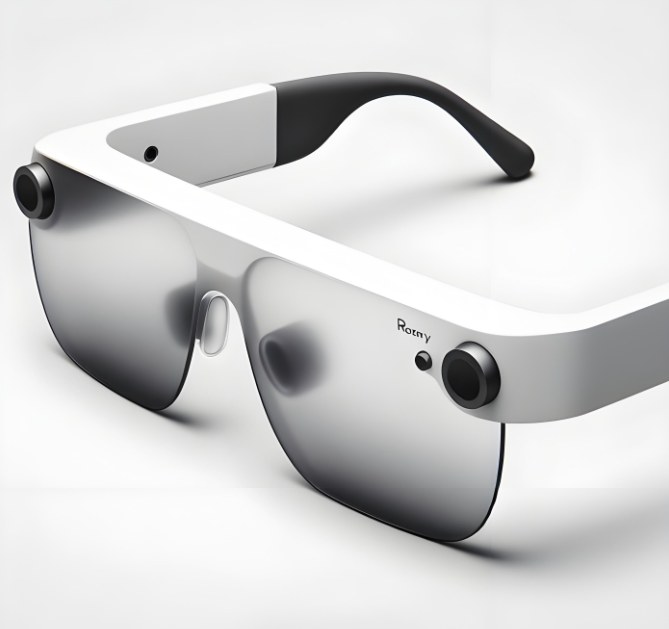
Almost every camera glasses launch is sold on a short, heavily edited clip: a descent, a sprint, a wheel shot. The purchasing decision that follows is usually made on that clip, and it is the wrong evidence. In distribution, the question that decides whether a model stays on the shelf is not what the launch video shows but how often a real rider presses record, for how long, and what happens to the file afterwards. Buyers who specify around the launch clip tend to order a camera; buyers who specify around the usage pattern order a product.
The launch clip is a studio artefact
A launch clip is typically shot in good light, on a stabilised mount, by someone who knows the route, with the battery at full charge and the storage card empty. It is edited, so heat, dropped frames and file fragmentation never appear. Real ride video looks different: the first two minutes are the school run, the middle is a headwind, and the last ten minutes are a rider deciding whether the footage is worth keeping. When you scope a model, ask the supplier to describe the recording profile rather than the highlight. If the answer is a resolution and a frame rate with no mention of bitrate, thermal behaviour or file rollover, the specification is not yet complete.
What riders actually record
Across the categories buyers in Germany, the UK, the Netherlands, France, the US and Canada tend to describe, ride video falls into a small number of repeatable uses. None of them require cinematic quality, and several of them actively punish it.
- Incident capture. A short buffer before and after a near miss. This rewards loop recording, a stable timestamp and a file that can be handed to an insurer without a proprietary viewer.
- Commute logging. Long, low-attention recording where battery life and heat matter more than resolution.
- Route and climb documentation. Short clips triggered deliberately, often with an overlay the rider wants to keep.
- Group and club rides. Social footage, usually shared from a phone within minutes, which makes transfer speed a feature.
- Coaching and position review. Repeated short takes from a fixed mount, where consistent framing beats image quality.
Only the fourth of these resembles the launch clip. The rest are short, boring and repeated, and they are what your return rate and review score will be built on.
Specifying for the pattern, not the highlight
The practical consequence is that storage, power and thermal decisions should be made against the shortest and longest realistic recording, not the average. A model that records beautifully for ninety seconds and throttles at minute twelve will generate complaints that no firmware update fully removes. This is the same engineering argument behind the wider AI glasses market trends discussion, where category growth is driven by everyday use rather than showcase features.
| Decision point | What to ask the supplier | Why it matters to the importer |
|---|---|---|
| Recording modes | Measured runtime per mode, with bitrate and resolution stated | A single headline figure cannot be defended in a product listing |
| File handling | Loop recording, file rollover size, container format, timestamp behaviour | Determines whether footage is usable after an incident |
| Thermal behaviour | Throttling point and recovery, tested in still air and in motion | Drives returns and negative reviews more than image quality |
| Storage | Card class supported, maximum capacity, whether the card ships | Affects landed cost and the unboxing experience |
| Radio and compliance | CE RED scope per hardware revision, FCC Part 15 B/C, UKCA on request | Documents are issued per model and revision, not per brand |
| Skin contact | EN 1811 nickel release for the frame and nose pads | Applies to any item worn against the skin |
| Battery shipping | UN38.3 report and SDS for the cell as configured | Air freight is refused without them |
Where an importer should say no
Say no when a supplier offers a runtime figure without a stated mode. Say no when the compliance pack is described as covering "the range" rather than a named model and hardware revision. Say no when the camera firmware cannot be updated in the field, because the first thermal fix will otherwise be a factory return. And say no when the supplier treats the camera as an accessory to the frame rather than the frame as a mount for the camera; the second framing is the one that survives a season of real riding. The Vox Ride cycling glasses were scoped against the usage list above rather than a descent clip, and the how we build and test page sets out the IQC, IPQC, FQC and OQC gates at AQL 2.5 major and 4.0 minor that a camera model has to pass before it ships.
Commercial terms and the paper trail
MOQ is 500 units as standard, 500 for a logo, 1,000 for custom packaging and 2,000 for firmware or app white-label, with AI glasses at 300 units. Stock samples ship in 3-5 days and configured samples in 7-15 days, and the sample cost is credited against mass production. Production runs 25-35 days, or 12-20 weeks where ODM tooling is involved, on EXW, FOB Shenzhen or DDP air and sea terms. Warranty is 12 months with 2 % free replacement parts shipped with the order. The document set follows the model and hardware revision: CE RED to EN 300 328, EN 301 489 and EN 62368-1, FCC Part 15 B/C, UKCA on request, RoHS 3, REACH SVHC screening, battery UN38.3 and SDS, and EN 1811 where the frame touches skin. Toy scope under EN 71-1/-2/-3 and EN 62115 is decided by the age grading printed on the packaging and booked with an accredited laboratory per build. EU and UK importer duties, including WEEE, BattG, DEEE/Triman and EORI/VAT registration, sit with the importer. The CE RED document checklist is a useful template even for a wearable with a camera, and the MOQ, sampling and lead times page sets out how those thresholds interact. If you want a second model in the range, the Vox One AI Glasses share the same document logic, and the full AI Glasses line shows how the platforms differ.
Before you place a tooling commitment, write the usage pattern into the specification: the shortest and longest recording a rider will realistically make, the file they need at the end of it, and the revision the compliance pack must name. Then send that document to us through the contact page and ask for a measured runtime table per mode against it. If the supplier cannot produce that table, the launch clip is the only evidence you have, and it is not enough to buy on.
Questions buyers ask
How long can a rider realistically film on one battery charge?
That depends entirely on the recording mode, resolution and bitrate you specify, so ask the supplier for a measured runtime table per mode rather than a single headline figure. Treat any number that is not tied to a stated mode and test condition as marketing.
Do camera glasses need CE RED approval to enter the EU?
Yes. A camera with wireless connectivity falls under the Radio Equipment Directive, and the test scope is booked per hardware revision with an accredited laboratory. Documents are supplied per model and hardware revision, not once for a product family.
Related: more on ai glasses for cycling · buyer guides · customisation tiers