Cycling Glasses Helmet Compatible Fit Checklist
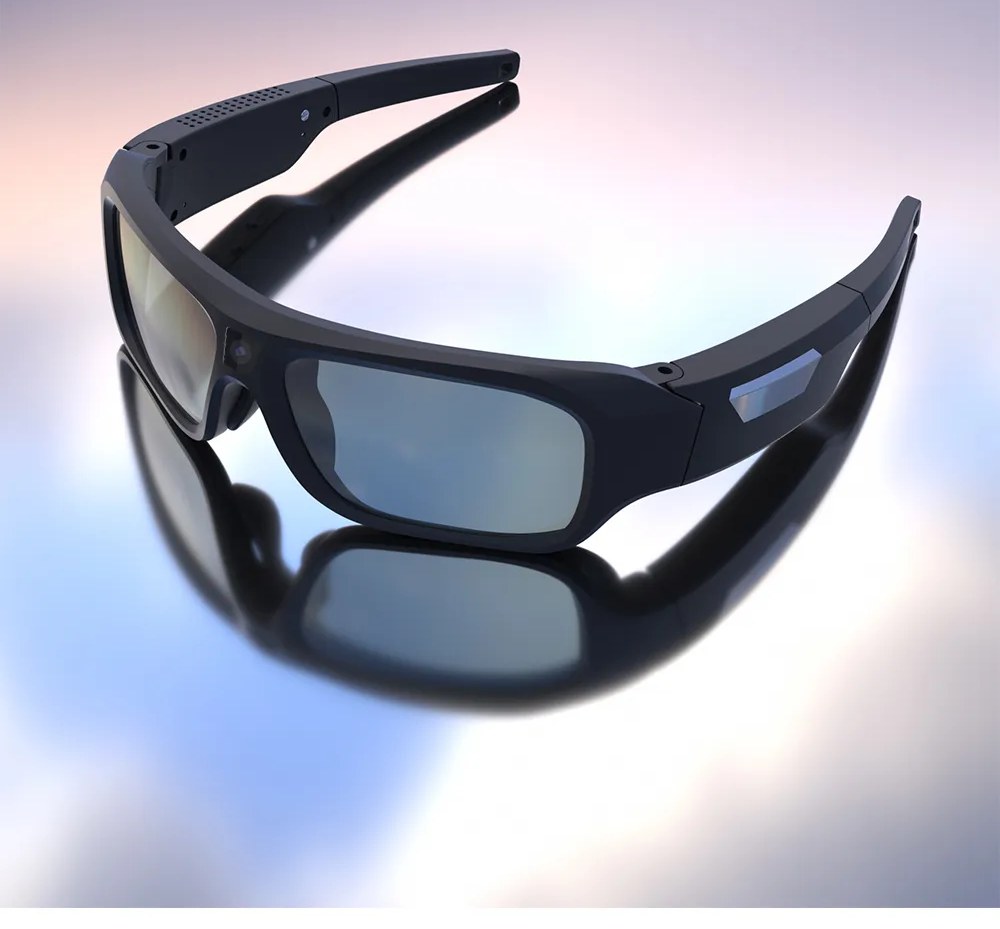
AI glasses for cycling are subject to three non-negotiable physical constraints: helmet strap contact, temple clearance over ears or hair, and retention during head movement. Unlike consumer sunglasses, these devices carry weight, heat and vibration that shift their position relative to the skull. A mismatch at any of these interfaces leads directly to return requests—not technical faults. This checklist maps the verification steps that must occur before finalising a sample order, aligned with WingPhoenix’s how we build and test process and documented in every CE RED document checklist.
Temple Thickness and Hinge Profile
Temple thickness is measured at the thickest point between hinge and earpad contact zone—not at the temple tip. Standard cycling helmets apply lateral compression across the temporal bone; temples over 7.5 mm thick risk pressure hotspots or slippage. WingPhoenix’s Vox Ride cycling glasses use a tapered 6.2 mm temple with recessed hinge housing to reduce lateral bulge. For custom builds, hinge depth must be specified in millimetres before tooling release—no post-sample geometry changes are possible.
Hair-Out Clearance Zone
The space between the temple’s inner surface and the wearer’s temporal hairline determines whether the glasses stay seated during long rides. This zone is not adjustable in production: it is set by the distance from hinge axis to temple inner curve and the temple’s vertical sweep angle. Models intended for European and North American markets require ≥12 mm vertical clearance at the mid-temporal point. The Vox One AI Glasses, designed for broader face shapes, maintain this clearance across all size variants—but only when paired with helmets rated for eyewear use (EN 1078 Class B).
Helmet Strap Interface Points
Two strap locations interact directly with AI glasses: the occipital strap (back of head) and the temporal strap (above ear). The occipital strap must pass below the temple’s rear anchor point—not over it—to avoid upward lift. The temporal strap must sit flush against the temple without folding or creasing the material. WingPhoenix validates this interface using standard EN 1078 test helmets during FQC, as described in our factory testing protocol. If your target helmet uses non-standard strap routing, share its cutaway diagram before sampling.
Retention Under Vibration and Sweat
Retention is tested at IPQC using a 3-axis shaker (5–50 Hz, 1.5 g RMS) while simulating sweat film via controlled glycerol mist. Retention failure occurs if the device shifts >3 mm horizontally or rotates >5° vertically. All models in the AI Glasses line meet this threshold—but only when temple pads and nose pads are used as shipped. Custom pad materials or third-party accessories void the retention validation and require retesting.
Compliance Alignment with Physical Build
CE RED and FCC Part 15 compliance depend on antenna placement relative to the temple structure. Any change to temple thickness, internal cavity volume or metal content requires retesting per CE RED document checklist. Battery UN38.3 and SDS documentation also scale with temple-integrated battery capacity. These dependencies mean physical fit cannot be decoupled from regulatory scope—both must be locked before the first sample run.
| Check Point | Pass Threshold | Verification Stage | Owner |
|---|---|---|---|
| Temple thickness (max) | 7.5 mm at hinge-to-earpad midpoint | Pre-sample CAD review | Buyer + WingPhoenix engineering |
| Hair-out vertical clearance | ≥12 mm at mid-temporal point | Physical sample fit test | Buyer lab or certified test house |
| Occipital strap path | Strap passes below temple rear anchor | Helmet + glasses interface test | Buyer + WingPhoenix FQC |
| Retention under vibration | ≤3 mm horizontal shift, ≤5° rotation | IPQC shaker test | WingPhoenix factory |
| Antenna-to-temple spacing | No metal within 8 mm of antenna trace | PCB + housing stack-up review | WingPhoenix RF team |
| Battery integration scope | UN38.3 + SDS issued per temple battery revision | Pre-shipment documentation gate | WingPhoenix OQC |
- Confirm temple thickness and hinge offset in writing before sample configuration begins
- Share your target helmet model’s EN 1078 classification and strap routing diagram
- Validate hair-out clearance using the physical sample—not renderings or spec sheets
- Require full CE RED, FCC and battery documentation before approving mass production
- Book EMC and low-voltage compliance tests with your accredited lab per hardware revision, as outlined in MOQ, sampling and lead times
- Review firmware white-label scope early: minimum order is 2,000 units per firmware and app customisation
Fit failures originate upstream—in the specification handover, not the assembly line. WingPhoenix treats physical compatibility as a shared engineering checkpoint, not a post-purchase support issue. To begin, send us the specification including your helmet model, target user age range, and required retention conditions. We will confirm which models from the product catalogue align with your fit requirements—and flag where a new revision is needed before sampling.
Questions buyers ask
Why do AI glasses fail helmet compatibility even when they look slim?
Temple thickness, hinge protrusion and lens curvature affect pressure points under helmet straps. Fit depends on mechanical interface—not just visual profile.
Can we adjust temple thickness after sampling?
No. Temple geometry is fixed per hardware revision. Thickness, hinge offset and earhook angle must be verified before the first sample build.
Related: more on ai glasses for cycling · buyer guides · customisation tiers