Connected Toy Safety Standards: Radio vs Toy Test Scope
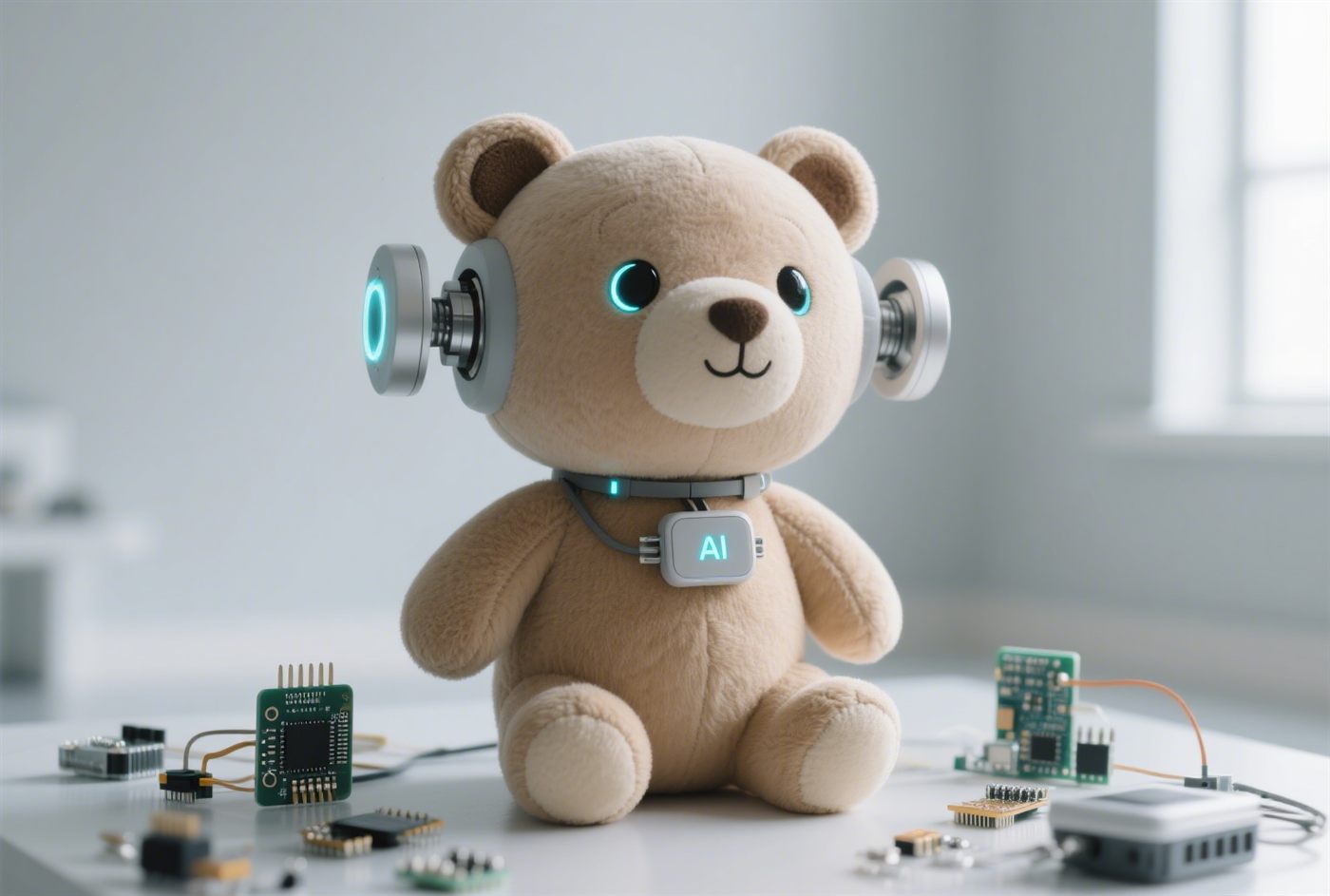
A connected toy is two products in one file. It is a toy, so it falls under the Toy Safety Directive 2009/48/EC and the EN 71 series. It is also a radio device, so it falls under the Radio Equipment Directive, which in practice means CE RED. Buyers who treat these as one test plan tend to discover the gap late, usually when a notified body or a customs officer asks for a document that nobody booked. The cleanest approach is to split the test plan at the quotation stage and keep the two scopes visibly separate in your supplier file.
What the toy scope actually covers
The toy scope is triggered by the age grading printed on the packaging, not by the electronics inside. If the packaging says 3+, the mechanical and physical tests in EN 71-1 apply: small parts, sharp edges, cords, seams on plush. EN 71-2 covers flammability, which matters most for textile bodies and any fibre filling. EN 71-3 covers migration of certain elements from accessible materials, including coated plastics and printed fabrics. EN 62115 then adds the electrical safety requirements specific to electric toys, which is where battery compartments, charging ports and the temperatures reached by motors and LEDs are examined.
For an learning robot sold as a toy, that combination is the baseline. The point for a buyer is that the toy scope is not a single certificate. It is a set of tests booked per build, and a change of fabric, filling, paint or enclosure material can invalidate part of it.
What the radio scope adds
The radio scope is independent of the toy scope and follows the hardware, not the age grading. For a Wi-Fi or Bluetooth device the typical set is EN 300 328 for the radio spectrum, EN 301 489 for electromagnetic compatibility, and EN 62368-1 for safety of the electrical equipment. A device that also charges over USB-C brings the charger and its own compliance into the file. This is where an rf toy device differs from a plush animal with a squeaker: the radio tests exist whether or not a child ever pairs the toy.
Two consequences follow. First, the radio module supplier's own reports are useful evidence but they do not replace testing of the finished product, because the antenna, enclosure and firmware all affect the result. Second, radio firmware changes can matter. A supplier that treats a firmware update as a purely cosmetic event is telling you something about how it manages compliance.
Where the two scopes overlap and where they do not
| Test area | Comes from | Triggered by | Renewal risk |
|---|---|---|---|
| Small parts, seams, cords | Toy scope (EN 71-1) | Age grading on packaging | Change of fabric or pattern |
| Flammability of plush | Toy scope (EN 71-2) | Textile and filling | New filling supplier |
| Migration of elements | Toy scope (EN 71-3) | Accessible coatings and prints | New paint or ink |
| Electric toy safety | Toy scope (EN 62115) | Battery, charging, motors | Cell or charger change |
| Radio spectrum | Radio scope (EN 300 328) | Any transmitter | Antenna or power change |
| EMC | Radio scope (EN 301 489) | Any transmitter | PCB or enclosure change |
| Electrical safety | Radio scope (EN 62368-1) | Mains or charging circuit | Charger change |
Notice what is missing: nothing in that table covers your obligations as the seller. WEEE, BattG, DEEE/Triman and EORI/VAT registration sit with the importer in each market. A factory can hand over declarations and test reports; it cannot register you in Germany or France. Buyers who assume otherwise usually find out during a marketplace compliance review.
A short checklist before you approve tooling
- Write the age grading down first, because it decides the toy scope. If marketing wants 3+ and engineering built for 6+, resolve that before the lab booking, not after.
- Ask for the test plan split into toy scope and radio scope, with the standards named per line.
- Confirm the lab is accredited for both scopes, and that the booking is tied to a named hardware revision.
- Ask what happens to the reports when a material, antenna, cell or charger changes.
- Separate the importer duties in writing, and check who holds the registration numbers in each destination market.
- Check the battery documents: UN38.3 plus SDS, and for skin-contact items EN 1811 nickel release.
If you are sourcing an companion robot rather than a toy, the same split applies but the toy scope may not. A companion robot is not a monitoring or emergency-response device, and the age grading decides whether the toy file is opened at all. Where the product sits outside the toy definition, the file is usually radio scope plus a documented risk assessment.
Procurement points that decide the outcome
Compliance cost scales with revisions, so the supplier's revision discipline matters more than its price list. A factory that freezes a hardware revision, labels it, and books tests against that label will cost you less over two years than one that ships silent changes. Ask how revisions are numbered and how you will be told when one happens. The factory page describes how we build and test in Shenzhen, and the customisation tiers set out where a change of packaging or firmware crosses into a new compliance booking.
Commercial terms interact with this. Standard MOQ is 500 units, logo 500, custom packaging 1,000, and firmware or app white-label 2,000; AI glasses sit at 300, ring, education and companion models at 1,000, and service robots are quoted per project from 50 units. Samples run 3-5 days for stock and 7-15 days configured, with sample cost credited against mass production, and production is 25-35 days, 30-40 for education and 12-20 weeks for ODM tooling. Warranty is 12 months with 2 % free replacement parts shipped with the order, and QC runs IQC, IPQC, FQC and OQC at AQL 2.5 major and 4.0 minor. The MOQ, sampling and lead times page has the detail to put in your timeline.
Two documents decide whether a supplier is worth shortlisting: a test plan that names standards per line, and a revision policy you can audit. The supplier vetting guide walks through the questions, and the buyer resources section collects the rest. Where a supplier cannot show either document, say no and move on; the cost of a re-test in Europe is rarely recovered from a lower unit price.
Send us your age grading and destination markets with the specification, and we will return a split test plan showing which lines are toy scope and which are radio scope, so your lab booking and your importer registrations can start in parallel.
Questions buyers ask
Does a connected plush toy need both EN 71 and CE RED testing?
Yes, in most cases. The toy scope (EN 71-1/-2/-3, EN 62115, Toy Safety Directive 2009/48/EC) applies because it is a toy, and the radio scope (EN 300 328, EN 301 489, EN 62368-1) applies because it transmits. These are separate test plans booked with an accredited lab, and both are decided per hardware revision.
Who is responsible for WEEE and packaging registration on a connected toy?
The importer. EU and UK importer duties such as WEEE, BattG, DEEE/Triman and EORI/VAT sit with the importer, not the factory. A supplier can supply documents and declarations, but registration and reporting remain the buyer's obligation in each market.
Related: more on ai toys & dolls · buyer guides · customisation tiers