Companion Robot for Seniors: Support, Not Monitoring
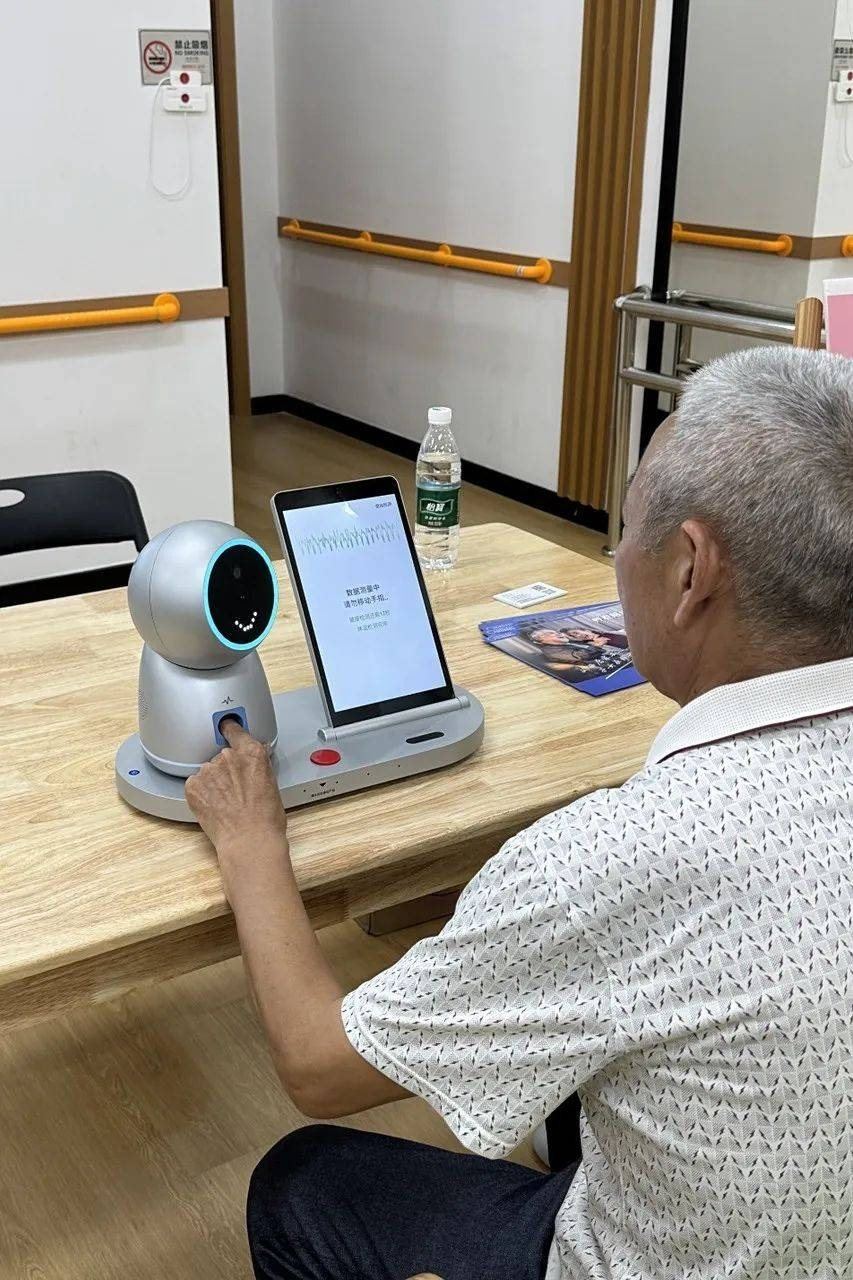
The commercial pressure in care settings is easy to understand: operators want engagement for residents and reassurance for families, and a single device that appears to do both is tempting. The problem is that "companion" and "monitoring" carry different certification scopes, different liability, and different expectations on the part of a care home's insurer. A companion robot elderly care programme can be defensible, but only if you decide where the line sits before you write the packaging copy. This article sets out how to draw that line in a way you can repeat to a buyer, a notified body and a care home manager.
Define the function, not the feeling
A companion device prompts conversation, plays audio, runs language practice, reads reminders aloud and offers wellness suggestions. A monitoring device observes a person's state and triggers an alert to a third party. The second function creates a duty of care that the first does not. Our published policy is explicit: a companion robot is not a monitoring or emergency-response device, and health metrics are wellness guidance, never diagnosis. When you write a specification for a companion robot, keep the verbs behavioural: prompts, suggests, reminds, plays. Avoid verbs of observation and escalation.
This matters commercially as much as legally. A care home that buys on an implied monitoring promise will discover the gap at the worst moment, and the resulting dispute will not stay with the home. It will reach your brand and your importer.
A checklist you can put in front of a supplier
Use the table below as a specification annex. It separates what a companion build should claim from what belongs to a different product category, so that an engineering change cannot quietly move the device across the line.
| Decision point | Companion scope | Monitoring scope (not this product) |
|---|---|---|
| Primary function | Interaction, reminders, language practice, wellness prompts | Continuous state observation and alerting |
| Output to third party | None by default; user-initiated only | Automatic notification to a carer or call centre |
| Health data wording | Wellness guidance, never diagnosis | Clinical interpretation with a stated duty of care |
| Certification booked | CE RED (EN 300 328, EN 301 489, EN 62368-1), FCC Part 15 B/C, RoHS 3, REACH SVHC screening, battery UN38.3 + SDS | Separate scope plus documented risk assessment |
| Age grading | Set by the packaging; toy scope EN 71-1/-2/-3 and EN 62115 applies only if graded as a toy | Not applicable |
| Marketing boundary | No fall detection, no emergency call, no remote observation claim | Would require its own claims substantiation |
What the paperwork actually contains
Documents are supplied per model and per hardware revision, which is the detail buyers most often miss. A change of sensor, radio module or enclosure can invalidate a test report, so the certificate you receive should name the revision you are buying. For a companion build we work to CE RED with EN 300 328, EN 301 489 and EN 62368-1, FCC Part 15 B/C, RoHS 3, REACH SVHC screening, and battery UN38.3 with SDS. UKCA is available on request. Toy scope is decided by the age grading printed on the packaging and booked with an accredited laboratory per build, not assumed from the product shape. The CE RED document checklist is a useful template even when the hardware is not a wearable, because the revision-control discipline is the same.
If your roadmap includes a service robot rather than a companion, expect a different package: an EMC and low-voltage scope, a class 1 laser statement for the LiDAR, and a documented risk assessment. Do not let a supplier send you a companion report and describe it as covering a service robot.
Where the importer's obligations sit
WEEE, BattG, DEEE/Triman registration, EORI and VAT sit with the EU or UK importer, not the factory. This is worth stating plainly in the supply agreement, because a care home customer will ask who takes the device back at end of life. Build the answer into your commercial terms before the first purchase order.
- Confirm the age grading and therefore whether toy scope applies.
- Confirm the hardware revision named on each test report.
- Confirm that no marketing asset uses observation or escalation language.
- Confirm who registers WEEE, batteries and packaging in each destination market.
- Confirm the sample route before committing: stock samples ship in 3-5 days, configured samples in 7-15 days, and sample cost is credited against mass production.
- Confirm your MOQ early: companion models at 1,000 units, custom packaging at 1,000, firmware or app white-label at 2,000.
Saying no, and saying it early
A supplier who agrees to add "fall alert" to a companion product without a new certification scope is telling you something about how they handle every other claim. Use the supplier vetting questions to test that, and review the OEM/ODM process to see where a specification change is captured. If your range also includes wellness hardware, keep the claims architecture consistent across the Health & Wellness line and the smart health ring; a buyer who sees one loose claim will assume the rest are loose too. Production runs 25-35 days after confirmation, so there is time to fix wording before tooling, but not after.
The concrete next step is to write a one-page function boundary for the product, list the certification scope you expect it to sit in, and send that specification to the factory for comment before you request samples. You can send us the specification and we will tell you which parts of it belong to a companion build and which parts belong to a different device entirely.
Questions buyers ask
Can a companion robot in a care home double as a fall or emergency monitoring device?
No. Under our published policy a companion robot is not a monitoring or emergency-response device, and no firmware claim should suggest otherwise. If a care provider needs monitoring, that is a separate product category with its own certification scope and liability.
What is the minimum order for a companion robot, and how long does a white-label build take?
Companion models start at 1,000 units for standard MOQ, with firmware or app white-label also at 2,000 units and custom packaging at 1,000. Production runs 25-35 days after confirmation, and ODM tooling adds 12-20 weeks.
Related: more on ai companions · buyer guides · customisation tiers