Camera Glasses Stabilisation: Why Sensor Specs Mislead Cyclists
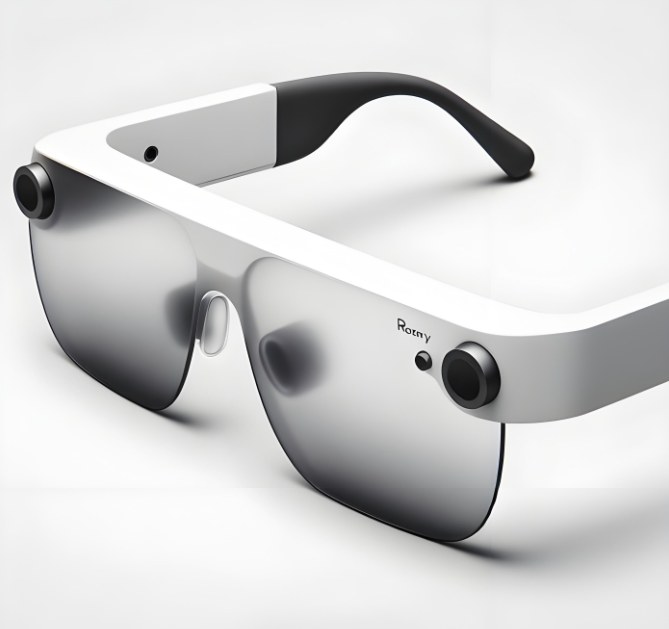
Most stabilisation discussions in cycling camera glasses start in the wrong place. Buyers ask for the sensor part number, the resolution and the frame rate, then assume image quality follows. On a bicycle the dominant disturbance is not the rider's motion but the vibration the road feeds into the frame, and that disturbance sits in a frequency band that sensor specifications do not describe. The answer to whether the footage will be usable lives in the mount, the lens assembly and the firmware tuning, not in the sensor line of the datasheet.
Motion and vibration are not the same input
Electronic image stabilisation was developed largely around handheld and body-worn use. The algorithm estimates global motion between frames and shifts the crop window to compensate. Walking produces low-frequency, fairly predictable movement. A bicycle produces something different: a constant high-frequency buzz from the road surface, transmitted through the bars, the stem and the frame, varying with tyre pressure, surface type and speed. The stabilisation loop has to decide what is rider intent and what is road noise, and if it was tuned on walking data it will often treat the buzz as intent and chase it.
This is why two products with the same sensor can behave completely differently on the same descent. The sensor sets the ceiling on what is possible. The tuning decides how much of that ceiling the rider actually gets.
Rolling shutter turns vibration into distortion
Most sensors in this class read out line by line rather than capturing the whole frame at once. That readout takes time, and during that window the scene moves. On a bike, the vibration is fast enough that different lines of the same frame are exposed at meaningfully different points in the shake cycle. The result is not blur but a characteristic wobble, a skew, or a jelly-like distortion at the frame edges. No amount of post-processing removes it cleanly, because the information was never captured.
This is the point where the sensor specification stops being useful. A higher-resolution sensor with the same readout architecture produces the same distortion, just with more pixels describing it. Buyers who want to understand how this plays out across the range should look at the wider AI Glasses line rather than comparing single numbers.
Where the real engineering decisions sit
Three mechanical and firmware choices matter more than the sensor line.
- Mount stiffness and damping. A rigid mount transmits everything. A mount with a controlled compliant element attenuates the band that causes the worst distortion, at the cost of some positional accuracy.
- Lens and sensor mass. Lighter assemblies respond to high-frequency input more readily. Mass distribution inside the temple arm changes the resonant behaviour of the whole unit.
- Firmware tuning per revision. Stabilisation profiles are tuned against a specific mechanical build. Change the frame material, the mount or the lens, and the profile is no longer valid.
That third point is the one that catches importers. A supplier can demonstrate excellent stabilisation on a sample, then ship a mass-production unit with a substituted mount or a revised lens, and the profile silently stops matching the hardware. The factory and test process is where that risk is managed, and it is worth asking directly how a supplier controls it.
What to put in the specification and the purchase order
Write the requirement in terms of test conditions, not adjectives. "Good stabilisation" is unenforceable. A defined surface, a defined speed and a defined mount are.
| Item | What to specify | Why it matters |
|---|---|---|
| Test surface and speed | Named surface type and a stated speed range for the acceptance clip | Makes the stabilisation claim testable rather than descriptive |
| Hardware revision lock | Firmware profile tied to a stated revision of frame, mount and lens | Prevents a silent substitution from invalidating the tuning |
| Readout behaviour | Confirmation of how the supplier characterises rolling shutter at the target speed | Distortion is captured, not corrected, so it must be assessed at source |
| Certification scope | CE RED test scope booked per hardware revision with an accredited laboratory | Radio and safety scope follows the revision, not the product name |
| Skin contact | EN 1811 nickel release screening for parts touching the face | Applies to frames and nose pads on skin-contact items |
| Battery documents | UN38.3 test summary and SDS with watt-hour rating per unit | Required for air freight and for the importer's own file |
| Importer duties | Written allocation of WEEE, BattG, DEEE/Triman, EORI and VAT | These sit with the importer, not the manufacturer |
Commercial terms and where to say no
Standard terms are a 500-unit MOQ, with logo at 500, custom packaging at 1,000 and firmware or app white-label at 2,000. Samples run 3-5 days from stock or 7-15 days configured, with sample cost credited against mass production, and production at 25-35 days. The full schedule is set out in the MOQ, sampling and lead times note. The firmware and app customisation page covers what a white-label engagement involves.
Say no when a supplier will not state the hardware revision behind a stabilisation claim, when certification is described as held rather than booked per revision, or when the acceptance criteria are adjectives rather than test conditions. A supplier who cannot answer the revision question will not be able to answer it after the tooling is cut either. The CE RED document checklist is a reasonable template for the paperwork conversation, and the buyer resources section covers the rest of the document set.
For a cycling-specific build, the Vox Ride cycling glasses page shows how the platform is configured, while the Vox One AI Glasses page is the reference for the general-purpose variant. Send your test surface, speed range and revision-control requirement through the contact form and we will tell you which parts of the specification we can commit to in writing.
Questions buyers ask
Why does electronic image stabilisation behave differently on a bicycle than on a helmet or handheld camera?
A bicycle transmits high-frequency road vibration through the frame and bars, and that vibration interacts with rolling shutter readout rather than with gross camera movement. Electronic image stabilisation algorithms tuned for walking or panning often have no model for that frequency band, so the footage looks worse than the sensor specification suggests.
What should a buyer ask a supplier before committing to a cycling camera glasses order?
Ask for the test conditions behind any stabilisation claim, the hardware revision the firmware was tuned on, and confirmation that the CE RED test scope is booked per revision with an accredited laboratory. Ask what happens to the stabilisation profile when the lens, mount or frame material changes.
Related: more on ai glasses for cycling · buyer guides · customisation tiers